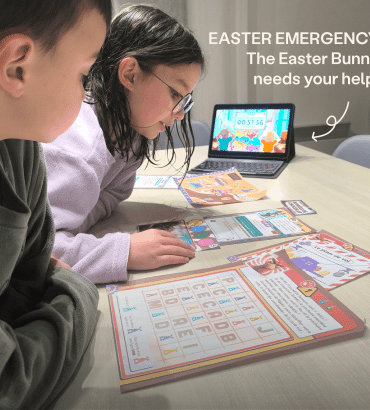
An escape room at home fits in a shoebox. The rest is the story.
The same message reaches us every week: “I want to run an escape room at home, but I have no idea what to buy.” The honest answer is: far less than you think. A game that works rests on puzzles that chain together properly, not on a cupboard full of props. We have seen birthday parties succeed with three padlocks and a torch, and $150 setups where the children were bored after twenty minutes.
This page lists what we actually use: the basics, the padlocks that do most of the work, hiding places, atmosphere props, and the question that comes up constantly, whether to buy a boxed mystery game or print your own. Amazon links are affiliate links: the price is the same for you, and it helps us keep the free puzzles online.
The basics: what you really need
Before spending anything, take stock of what you already own. In most homes, 80 % of what an escape room needs is already in a drawer or a toolbox.
| Category | What it is | Cost |
|---|---|---|
| Essential | A printer, paper, scissors, a speaker for the soundtrack, a timer everyone can see | $0, you already own it |
| Very useful | Two to four combination padlocks, a box or case that closes | $15 to $30, reusable forever |
| The wow factor | UV torch and invisible ink, crime scene tape, magnifying glasses | $10 to $25 |
| Skip it at first | Cryptex, electronic locks, safes, smoke machines | Save these for your third game |
The one prop that changes everything, and it is free
The countdown. A 60 minute timer on the television or a tablet in the middle of the table does more for the atmosphere than any decoration. Without it, players take their time. With it, they whisper, they run, they split the work between them. There is a free one further down this page.
Build your prop list for free
Answer three questions, what you are running, where it happens and how many players, and the tool below gives you the exact list with quantities. Tick what you already own, and what is left is what you actually need to go and find.
Your prop list, in three clicks
Tell us what you are running and you get the exact list, with quantities and what actually matters. Tick what you already own, and only the gaps are left.
Combination padlocks: the workhorse
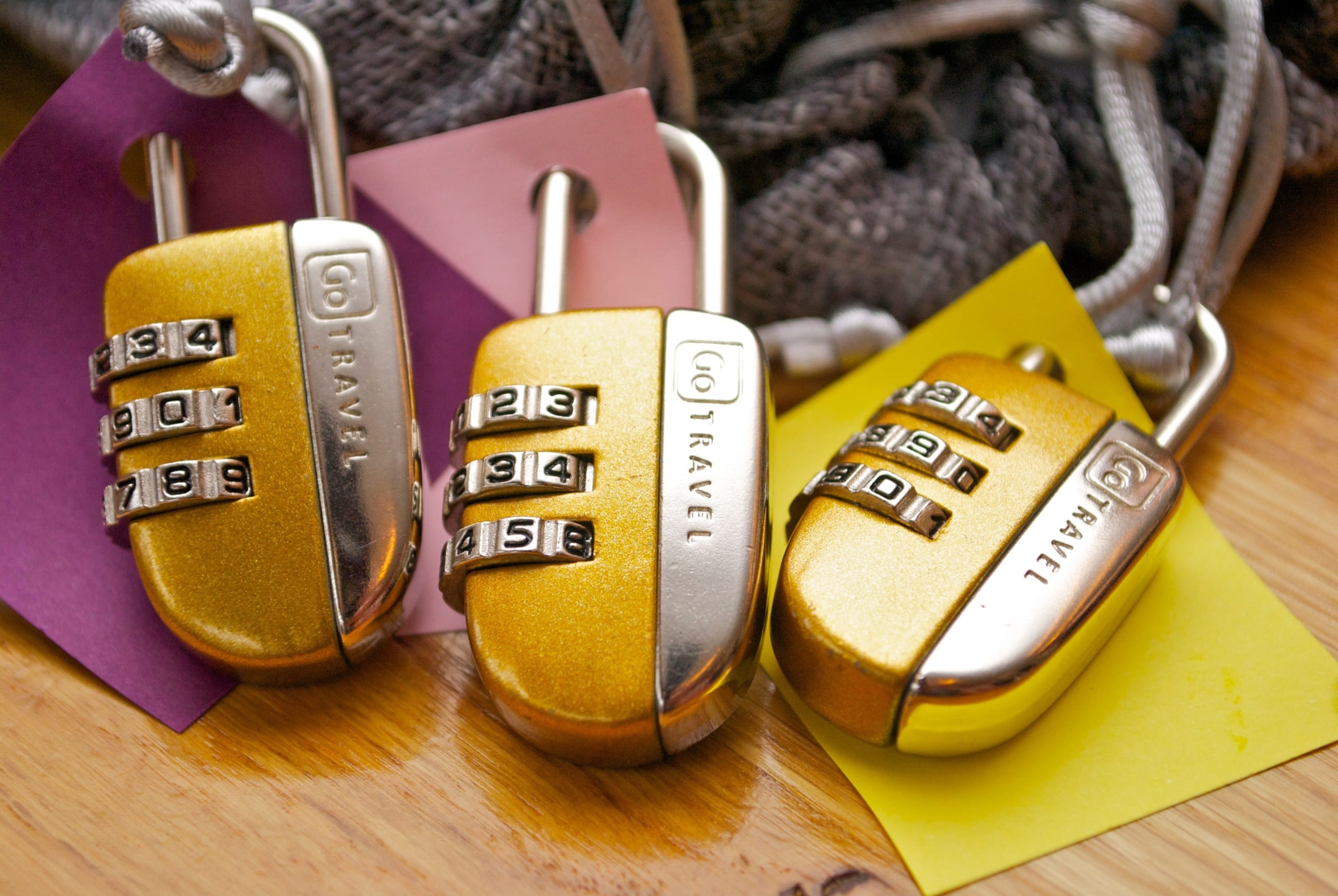
A combination padlock turns any puzzle into a physical obstacle. Players find a number, they dial it, it opens or it does not. No arguing, no “Mum, is that right?”: the padlock settles it. That is what makes a home game as tense as a commercial room.
Which type to choose
| Type | What it encodes | Best for |
|---|---|---|
| 3 wheels | A 3 digit number, 000 to 999 | Children aged 6 to 9, short puzzles |
| 4 wheels | A year, a PIN, the result of a calculation | The standard. 90 % of our scenarios |
| 5 wheels | A full date, a large number | Teenagers and adults, multi step puzzles |
| Letter dials | A 4 or 5 letter word | Vocabulary puzzles, anagrams |
| Directional | A sequence of arrows: up, down, left, right | Pre readers, maps and mazes |
The habit that saves the game
Write your codes on a piece of paper and keep it in your pocket. A combination padlock resets in seconds, but a padlock locked on a forgotten code, mid game, in front of six excited children, is the only real disaster available to you. We always test every padlock open and closed before the players arrive.
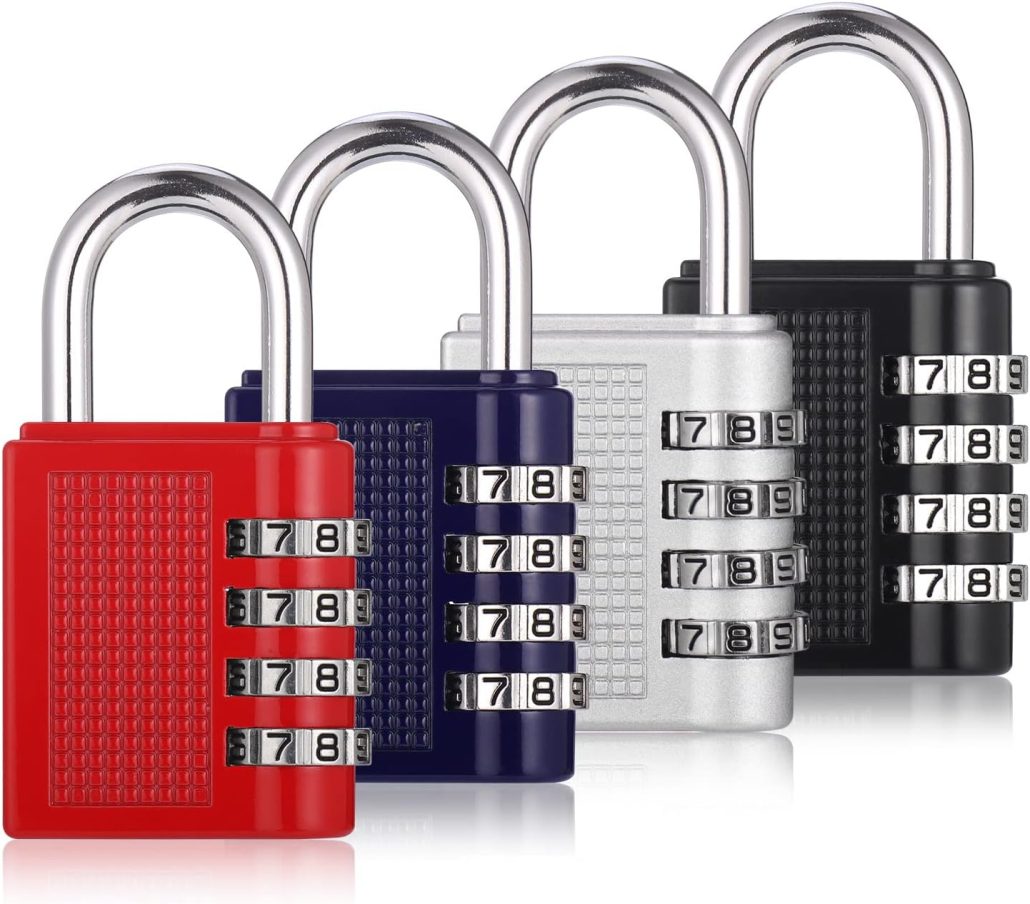
Set of four 4 digit combination padlocks
The starter set. Four different codes, so four independent puzzles.
View on Amazon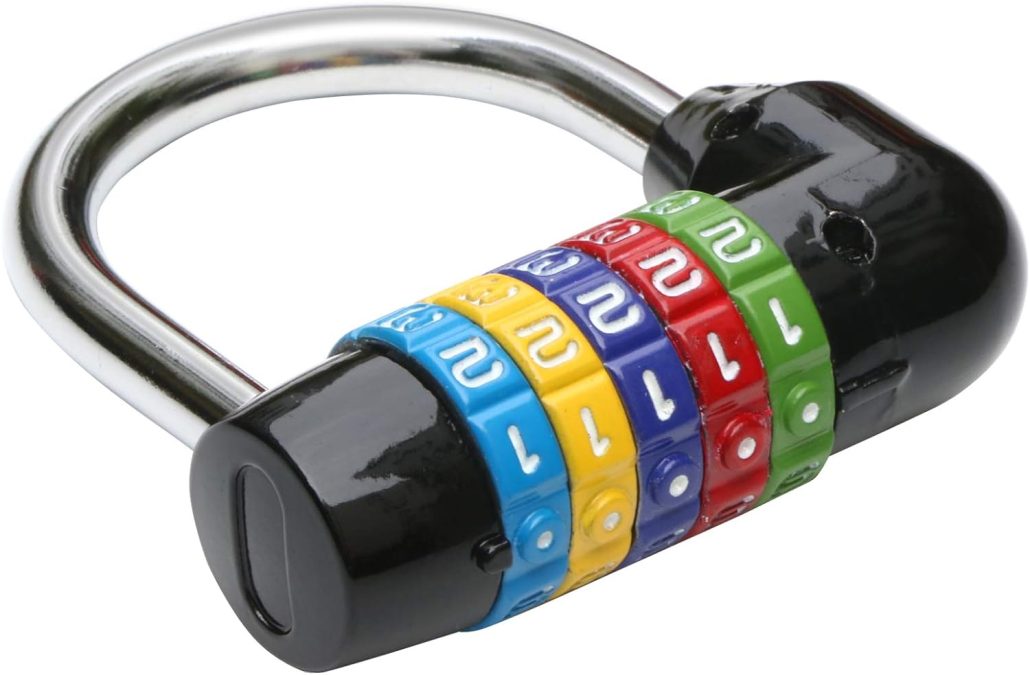
5 digit combination padlock
Five wheels: enough for a full date or a five figure number.
View on Amazon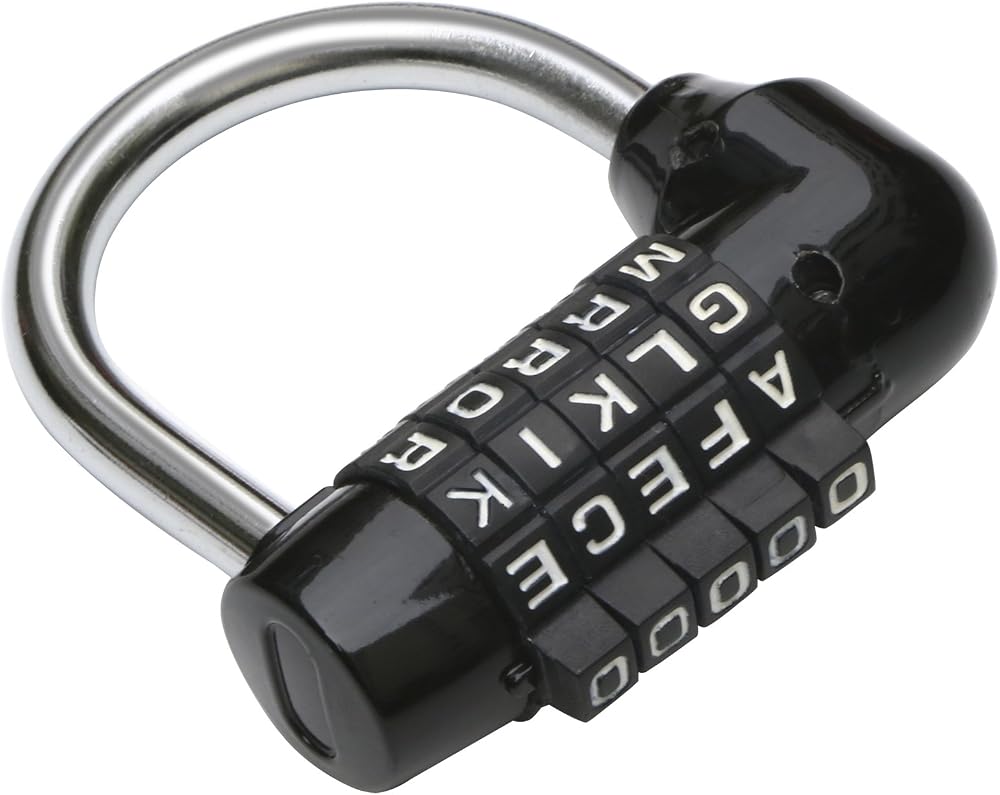
5 letter combination padlock
The code is a word, not a number. Far more satisfying to crack than a digit sequence, and it varies things up from the two padlocks above.
See on Amazon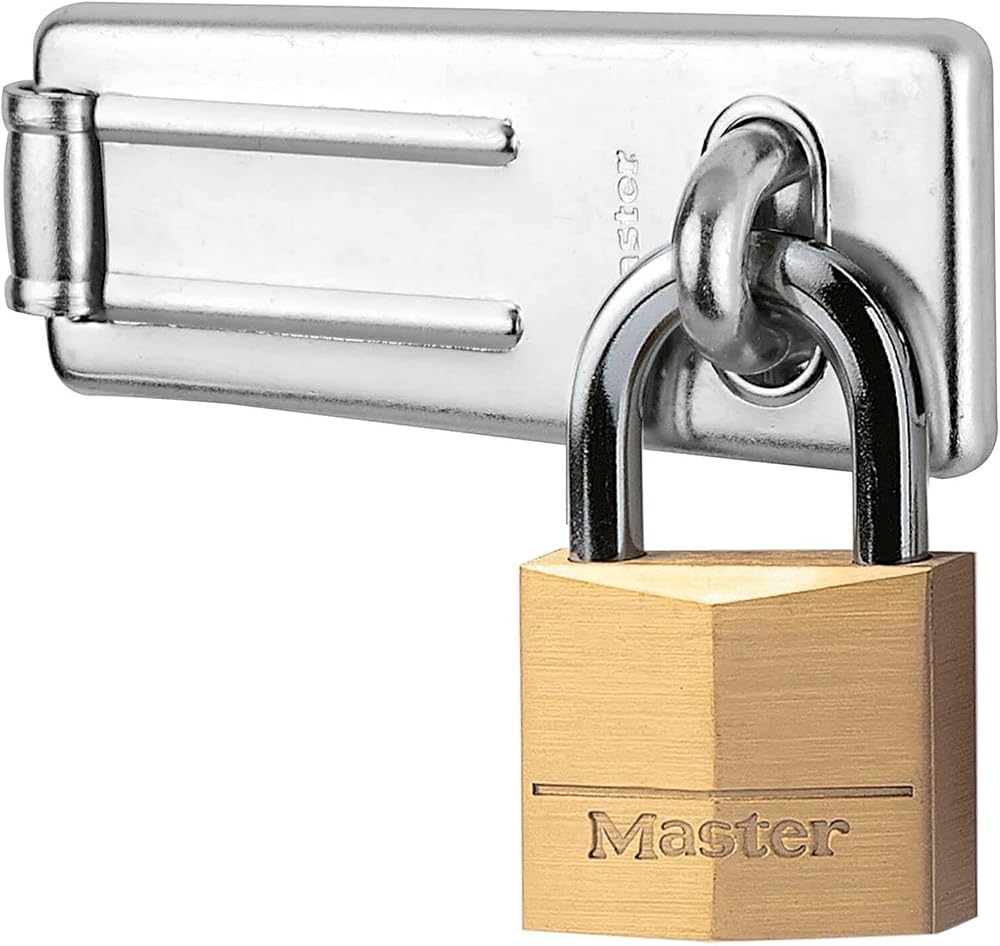
Multi padlock hasp
The part nobody knows about. It lets you close one box with four padlocks, so the box only opens once all four puzzles are solved.
See on AmazonHow many padlocks for one game?
Three, for an hour of play. That number comes up in nearly all our scenarios: a first box that yields an object, a second that yields a clue, a third that holds the reward. Past four, players lose track of what opens what, and you spend the game refereeing.
Boxes and hiding places
Once the padlocks are sorted, you need something to lock. The simplest option is still a shoebox with a hole punched in the side and a padlock through it: it costs nothing and it works. The props below earn their place when the container itself is the puzzle.
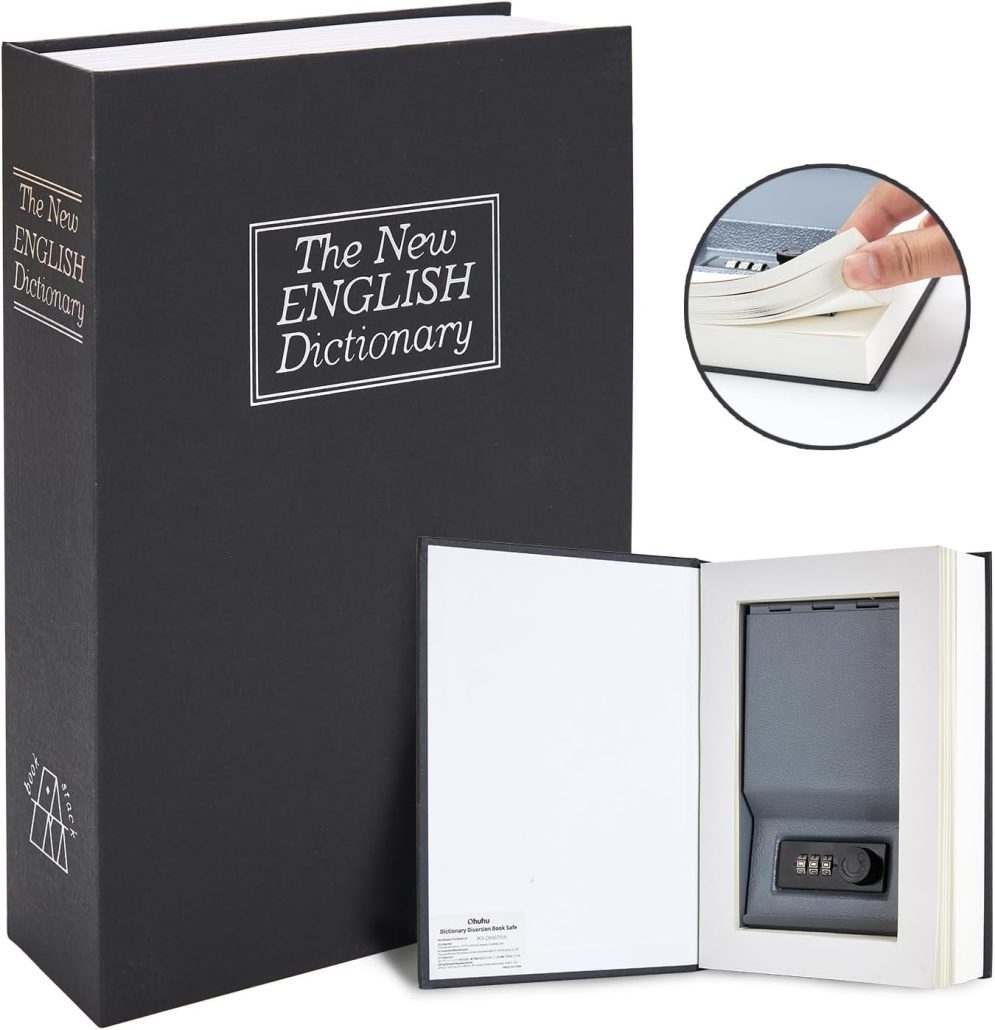
Wooden chest with a hidden opening
No padlock at all: the mechanism is the puzzle. Works well as the final box.
View on Amazon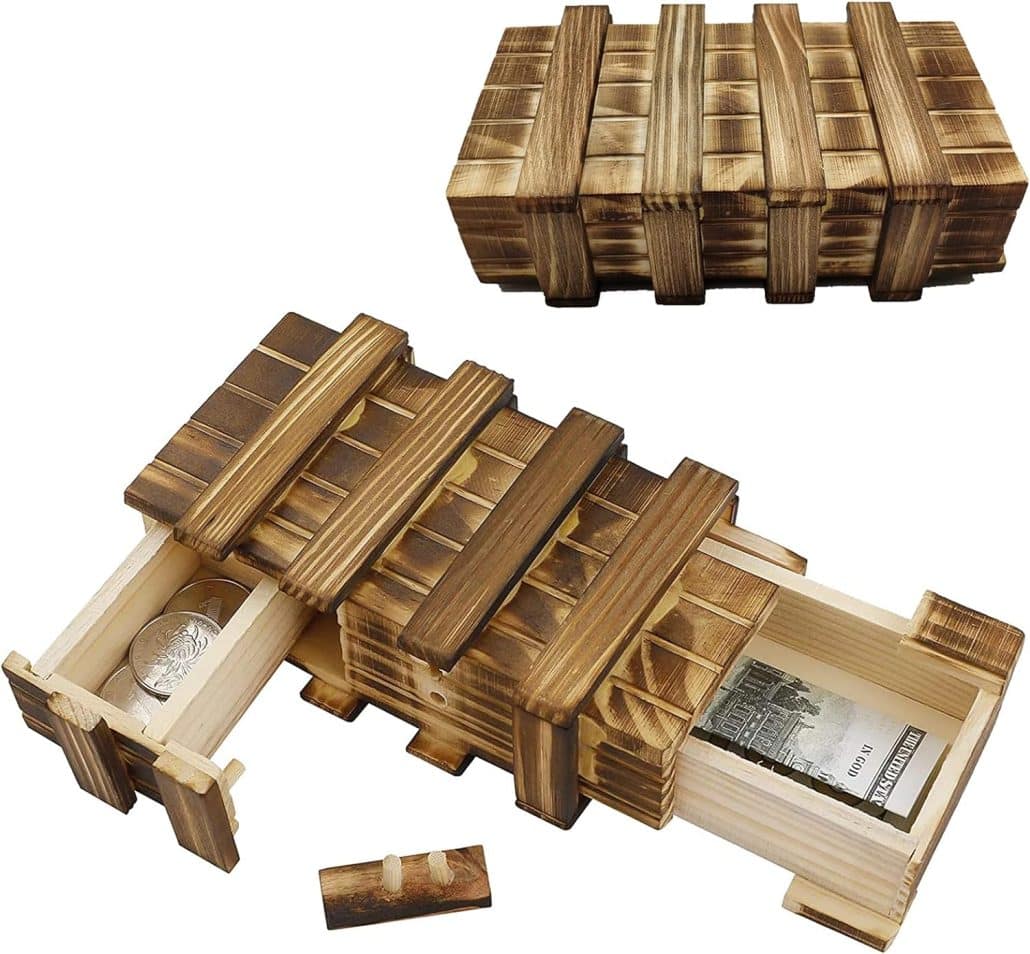
Wooden puzzle box
Opens by sliding panels in the right order. A puzzle in its own right.
View on Amazon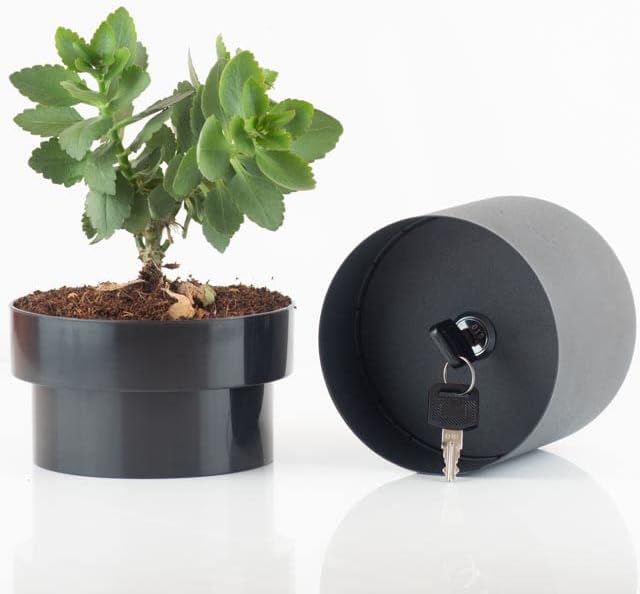
Fake food tin with a screw off base
Hides in a kitchen cupboard. Nobody ever picks it up first.
View on Amazon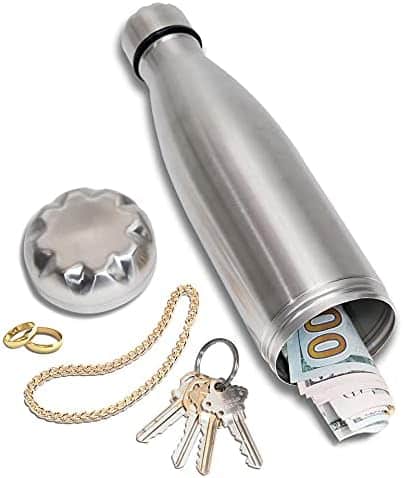
Stainless steel bottle with a hidden compartment
The base unscrews. A key fits inside without a problem.
View on AmazonWhere to hide things, in practice
The hiding places that work best for us: under a chair (nobody looks there), in the vegetable drawer of the fridge, taped behind a picture frame, at the bottom of an open cereal box. The ones that do not work: anything high up, which children cannot reach, and anything that needs furniture moved.
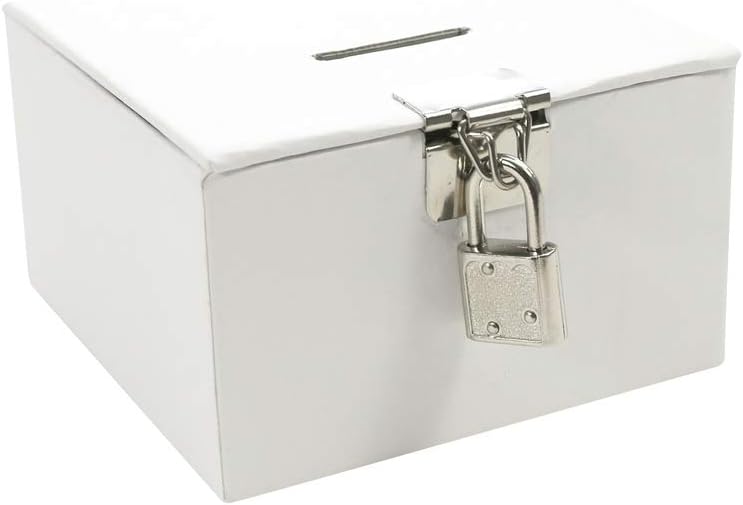
Wooden treasure box with padlock and keys
Small wooden chest. Closes on a clue or on the final reward.
View on Amazon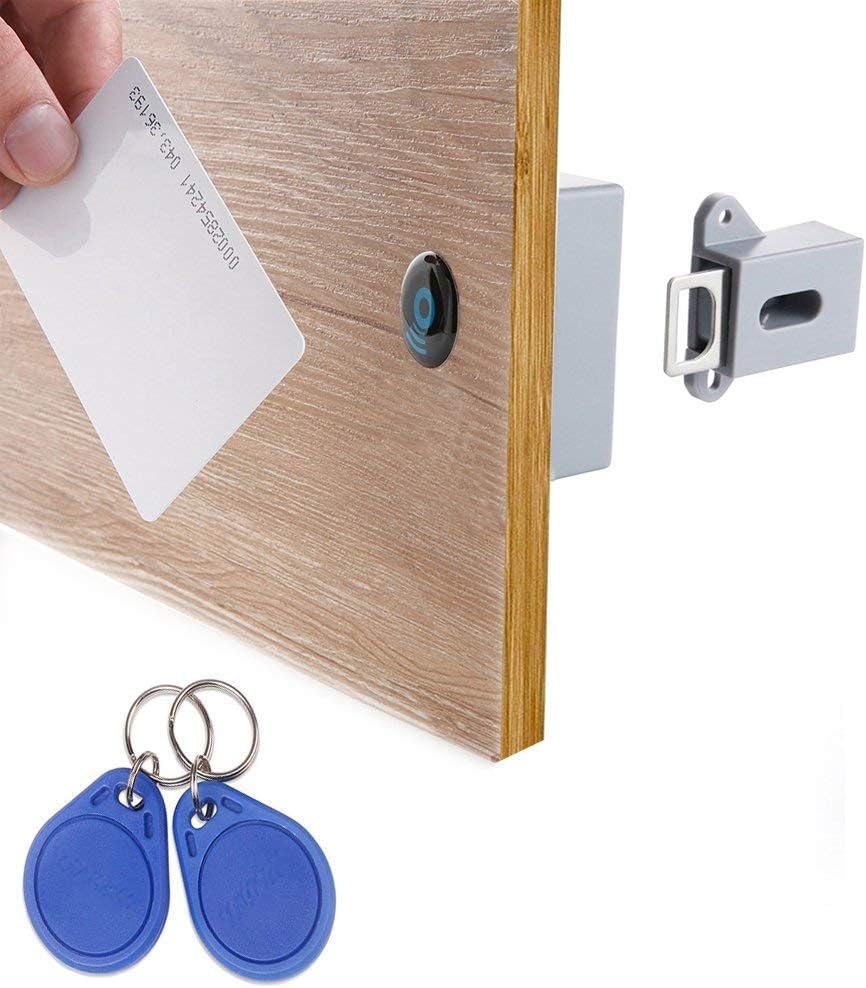
Hidden RFID cabinet lock
Fits under a drawer. The drawer opens when the right badge passes over it.
View on Amazon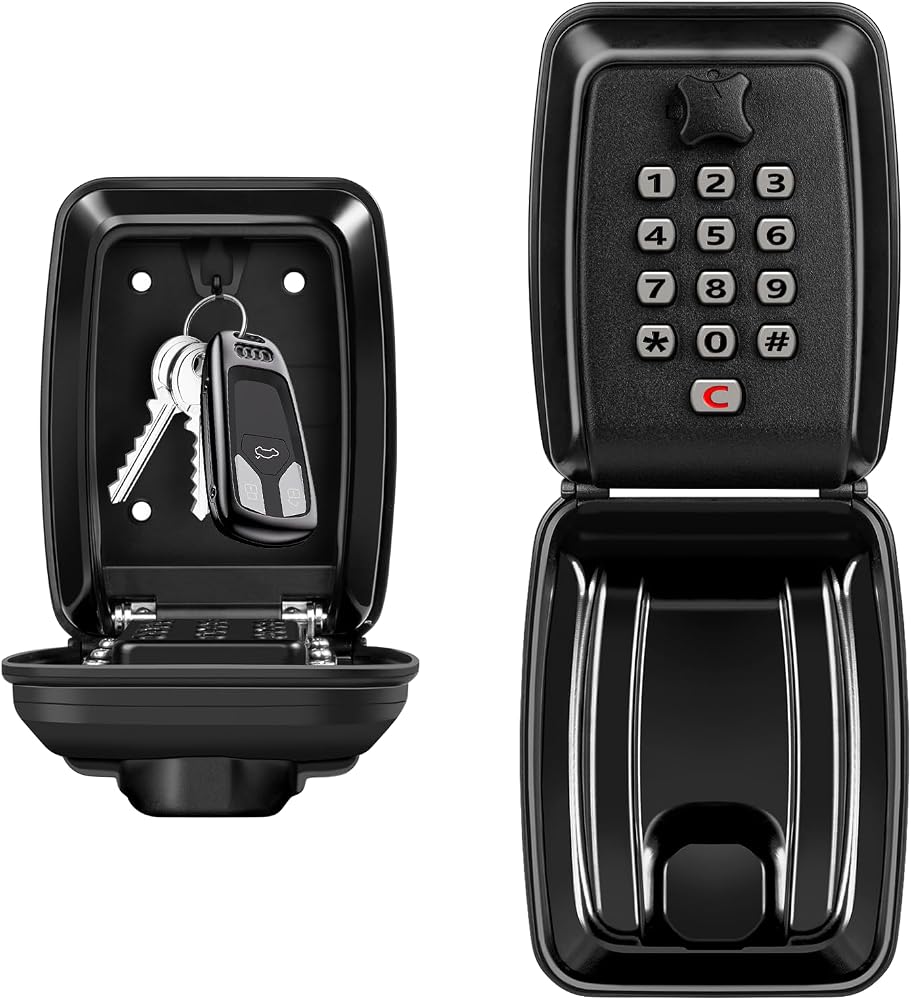
Outdoor key safe with code
Clamps onto a railing or a gate. Perfect for a garden treasure hunt: the code found inside unlocks the next stage.
See on AmazonAtmosphere props
These do nothing for the logic of the game and everything for the memory of it. A child will still talk about the UV torch three years later; the maths puzzle will be long forgotten.
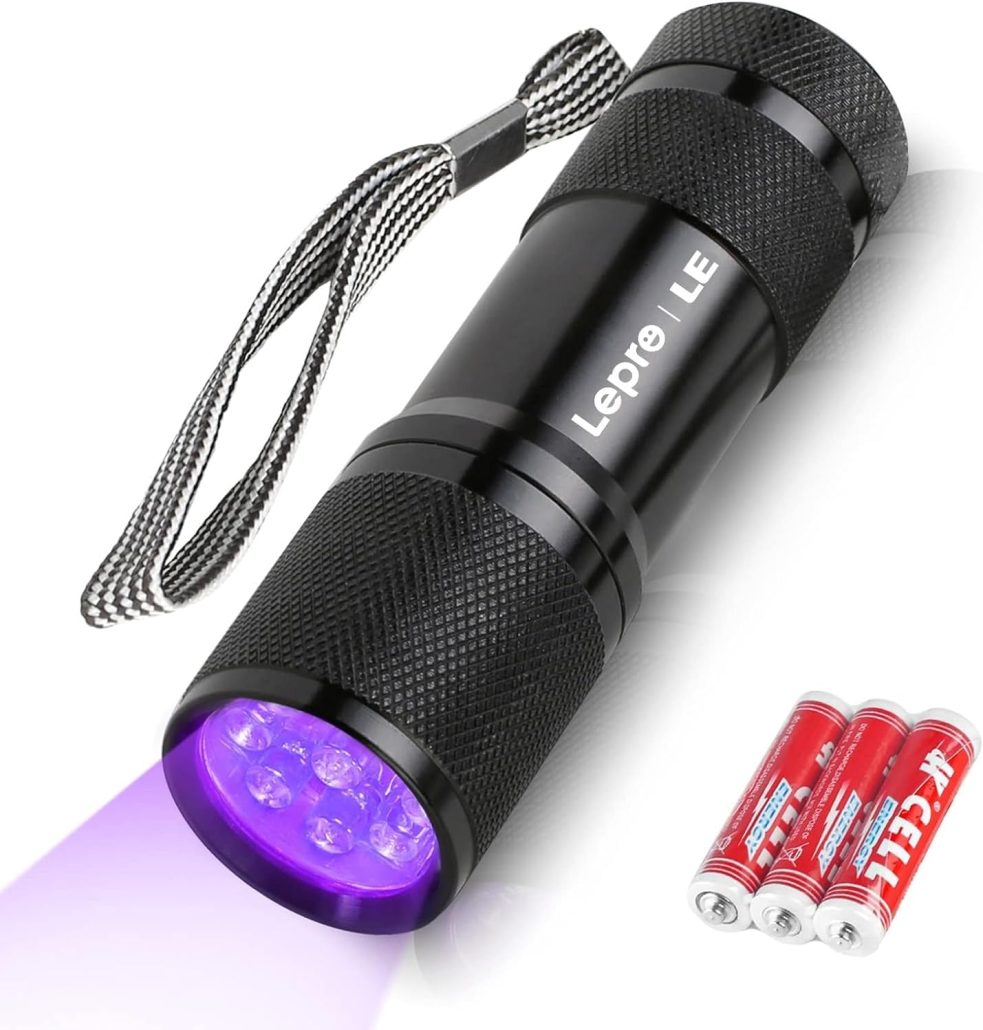
UV torch and invisible ink pen
The message only shows under the light. Guaranteed effect with children.
View on Amazon
Crime scene barrier tape
Thirty seconds across a doorway and the living room becomes a crime scene.
View on Amazon
Set of six detective magnifying glasses
One per child, or there will be a fight. Hand them out at the briefing.
View on Amazon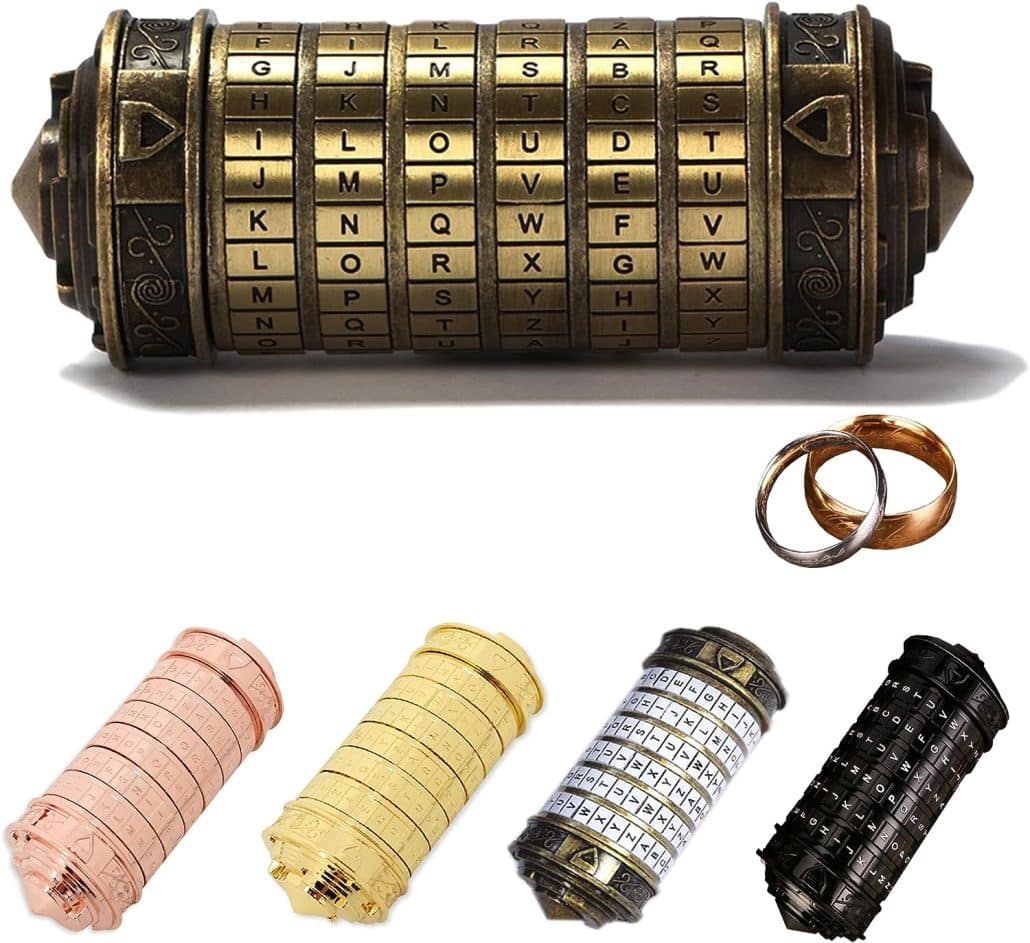
Da Vinci Code cryptex
A five letter password instead of digits. The prop that gets the biggest reaction on the table.
View on Amazon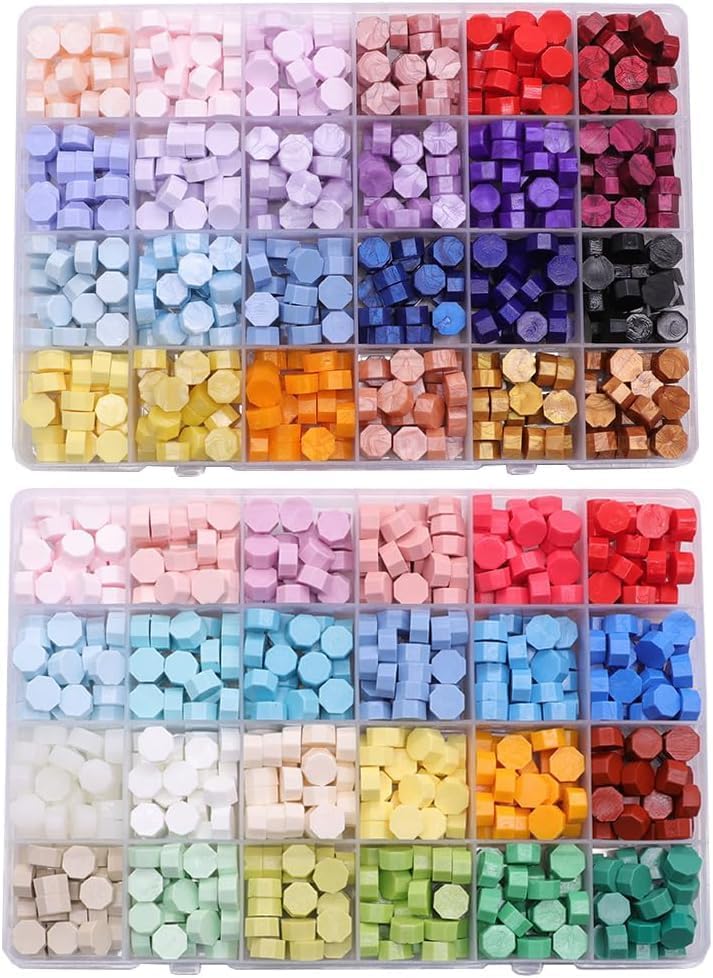
Sealing wax kit
For sealing the clue envelopes. Players break a wax seal instead of unfolding a sheet of paper folded in four.
See on Amazon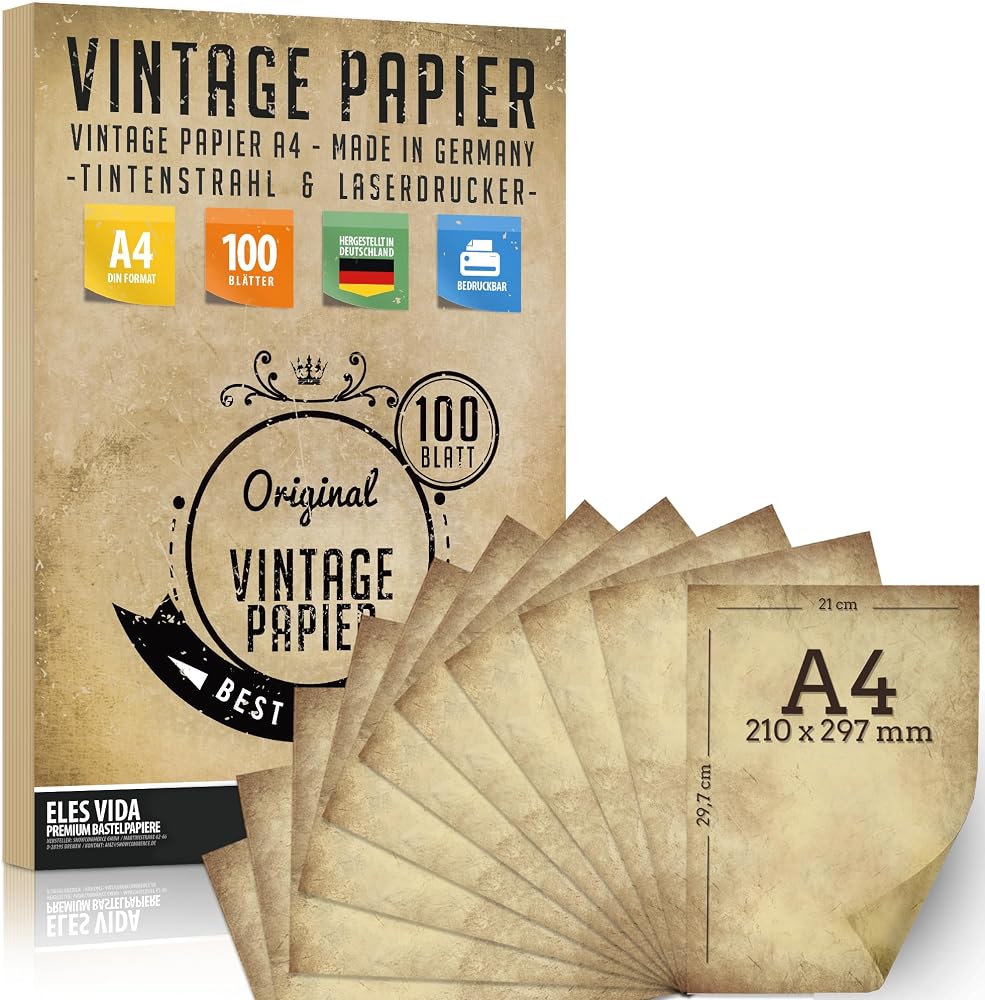
Aged A4 paper, 100 sheets
Load it into the printer instead of plain white. The kit comes out looking like an old document with no extra work at all.
See on Amazon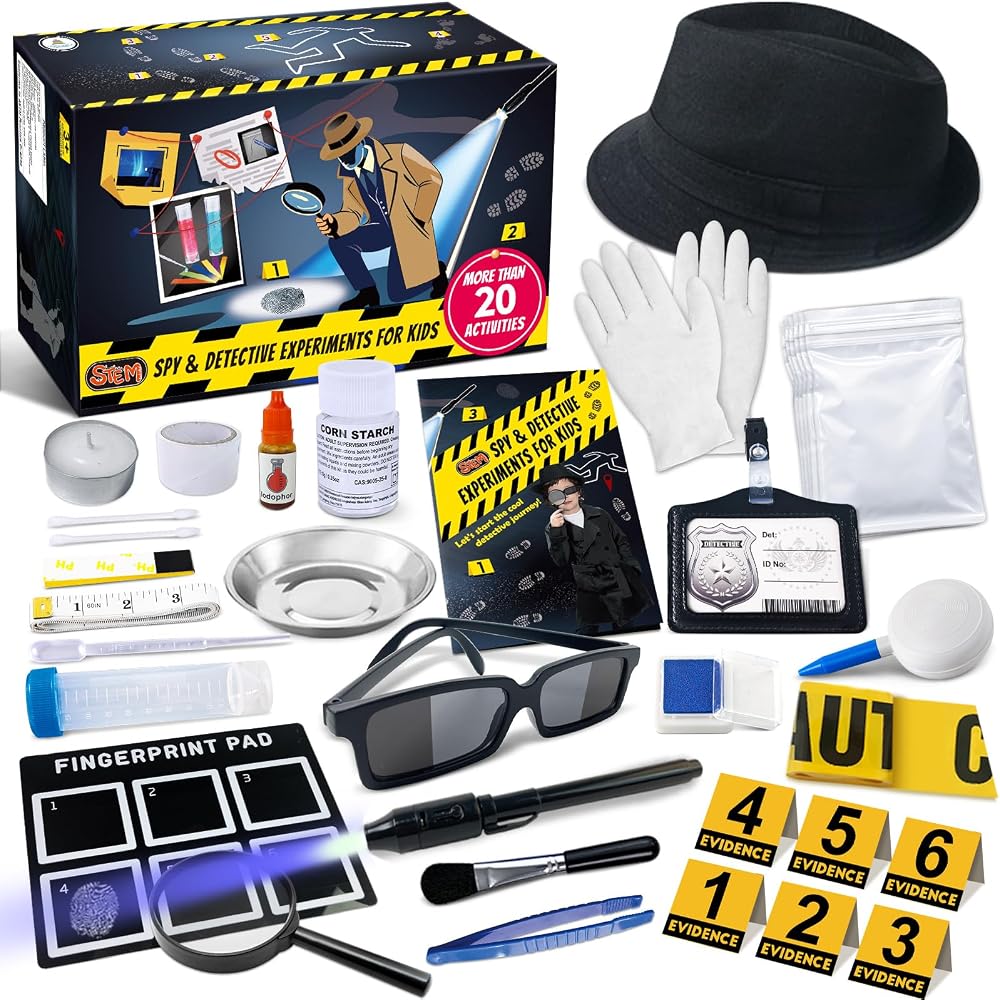
Detective kit for kids
Magnifier, fingerprint powder, tweezers. For a detective birthday party, this is what turns a worksheet into an actual crime scene.
See on Amazon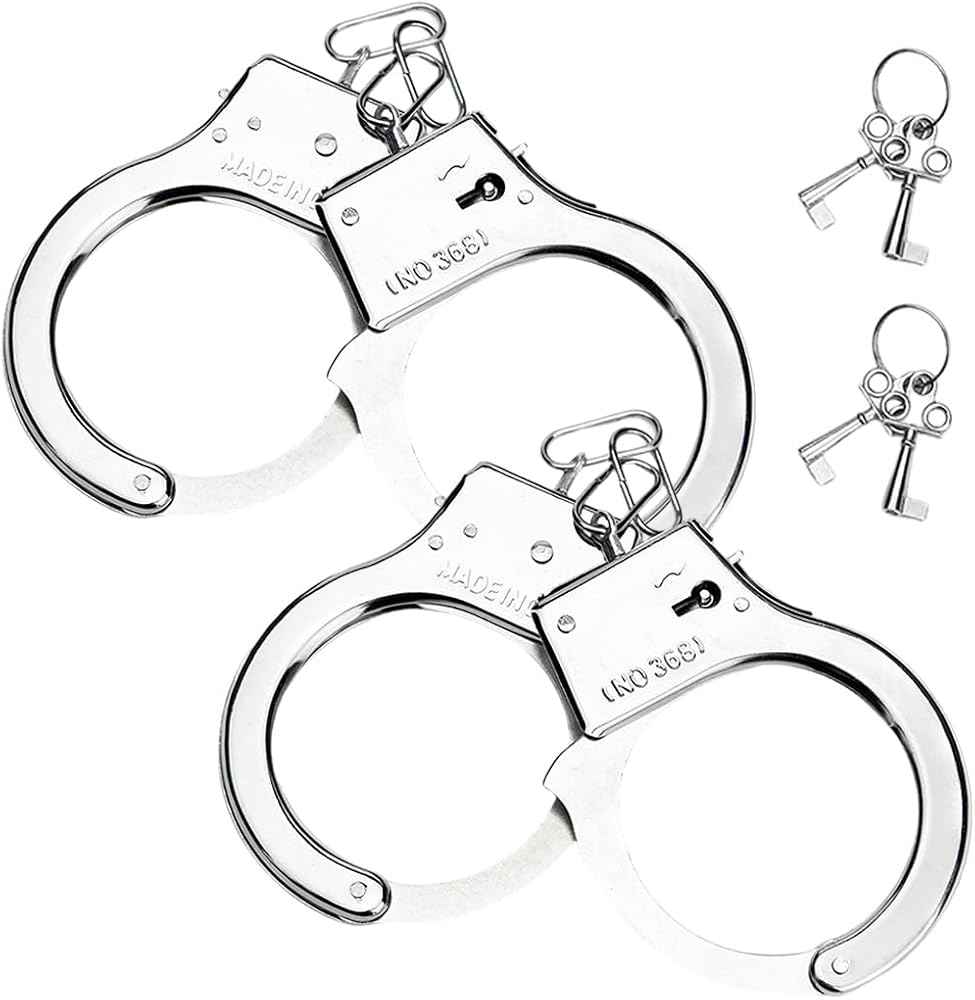
Toy handcuffs with keys (pack of 2)
They are toys, not serious gear, and it shows. But for chaining a box to a kitchen chair for an hour, they do the job.
See on Amazon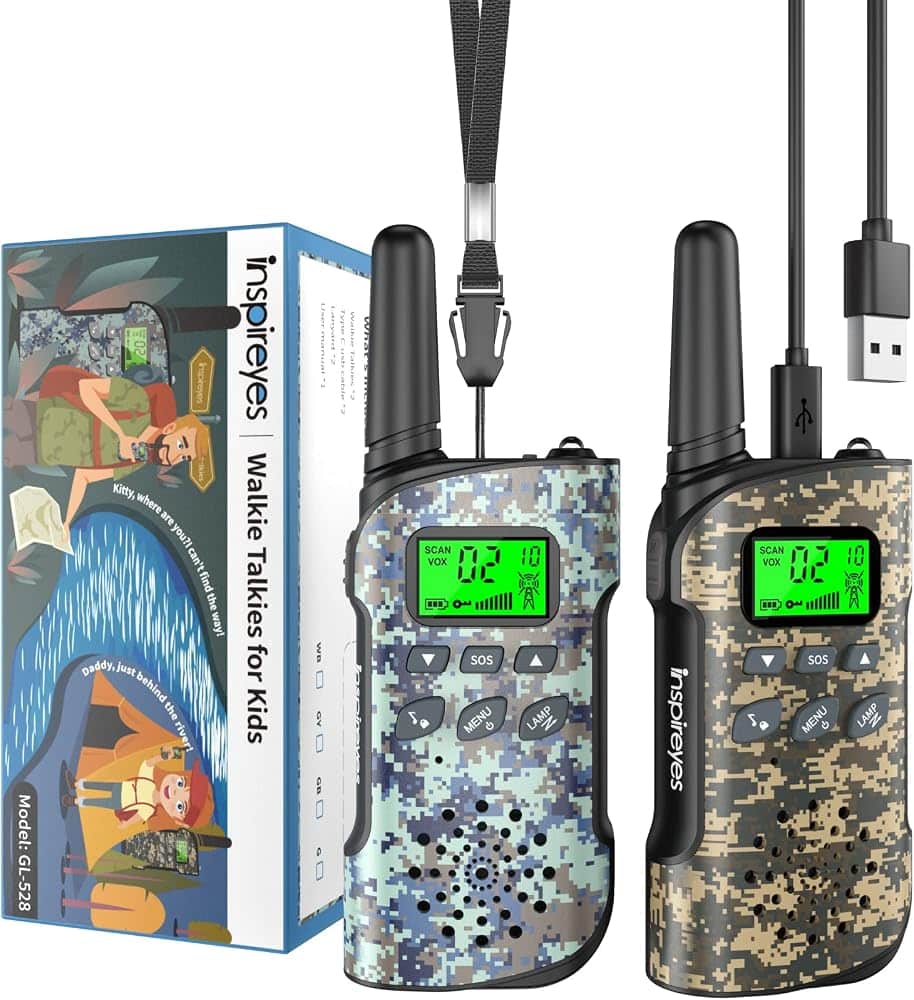
Walkie talkies (pack of 2)
For outdoor games. The game master stays at base and feeds clues over the radio, which kids enjoy as much as the puzzles themselves.
See on AmazonThe UV torch is by far the best effect per dollar on this page. You write a message in invisible ink on a perfectly blank sheet, leave it among the other documents, and wait. The moment someone thinks to run the light over it is always a silence followed by shouting.
What to avoid
Candles, matches and anything that burns. You are not in a supervised room with a game master behind a camera. For a dark atmosphere, an LED string and one torch per player gives the same result without the risk.
Boxed mystery game or printable kit?
This is the question we are asked most, so here is a straight answer. A mystery box is a physical package that arrives by post, containing printed documents, sometimes props, and a story to play through in one evening. They exist on subscription and as one offs, between $25 and $60 depending on the publisher.
Escape Kit does not sell a physical box. We sell what goes inside it, as a PDF you download and print at home. Same game: same puzzles, same story, same length. What changes is that there is no cardboard, no shipping cost and no waiting.
| Mystery box delivered | Printable kit | |
|---|---|---|
| Typical price | $25 to $60 plus shipping | One flat price, no shipping |
| Delivery | 2 to 5 days | Instant, even at 10 pm the night before |
| Replayable | No: the material is consumed | Yes: reprint as often as you like |
| Number of players | Fixed by what is in the box | Free: print as many sets as you need |
| Paper quality | Professional, heavy stock | Whatever your printer does |
| As a gift | Looks good wrapped | Needs printing before you can wrap it |
Our honest view: if you want a handsome object to put under the tree, a physical box does that better. If you want to play this weekend, run the game for fifteen children instead of six, or use the same story again next year with different guests, the PDF wins every time.
What you need at home
| Item | What it is for | Essential? |
|---|---|---|
| A printer | The kit is a PDF. Black and white is fine for most scenarios. | Yes |
| Scissors | Some documents need cutting out (cards, puzzle pieces). | Often |
| A speaker or the TV | For the soundtrack and the countdown. The atmosphere rests on it. | Strongly advised |
| A room to tidy | A cluttered living room makes hiding places unreadable. Ten minutes. | Yes |
| Two or three padlocks | They replace sealed envelopes and make the game far more tense. | No, but it changes everything |
Free 60 minute countdown with soundtrack
Open it full screen on a television or a tablet in the middle of the table, press play, and start the game. It is the single prop that changes the atmosphere most, and it costs nothing.
Frequently asked questions
What supplies do I need for an escape room at home?
The minimum: a printer, paper, scissors, a speaker for the soundtrack and a timer everyone can see. Add two to four combination padlocks and a box that closes, and you have enough for an hour of play. Everything else is decoration.
How many padlocks do I need?
Three for a one hour game: one box that yields an object, a second that yields a clue, a third that holds the reward. Past four, players lose track of which code opens which box.
A five minute test that avoids the only real accident
Before the players arrive, walk the whole game yourself at speed: open every envelope in order and check that each code matches the box it is meant to open. Five minutes that rule out the one thing that can genuinely ruin the session, a puzzle whose answer is still sitting in the printer.
Does Escape Kit sell a physical mystery box?
No. Escape Kit sells what goes inside the box, as a PDF you download and print at home. The puzzles, the story and the length are the same as a delivered box, without the cardboard, the shipping cost or the wait.
What does escape room equipment cost?
Between $0 and $30. Nothing at all if you stick to what you already own; around $15 for a set of four combination padlocks, which will serve every game you run afterwards. Atmosphere props (UV torch, tape, magnifiers) add $10 to $25.
Can I run a game without buying anything?
Yes. A sealed envelope replaces a padlock, a password given out loud replaces a code, and a shoebox replaces a chest. Less spectacular, but the game still works.
The question we get most at support
“Can I play too?” Yes, on one condition: someone else sets the game up while you are out of the room. The manual is written to be followed by a person who does not know the story. Otherwise you will know every answer, and an hour of pretending to search is a long hour.
Where can I find a 60 minute countdown?
Higher up this page. It is free, runs full screen on a television or tablet, and includes the tension soundtrack. It is the prop that changes the atmosphere most, and it costs nothing.