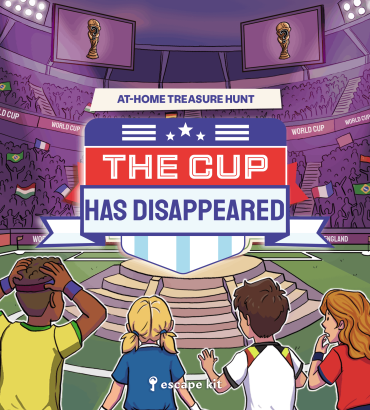
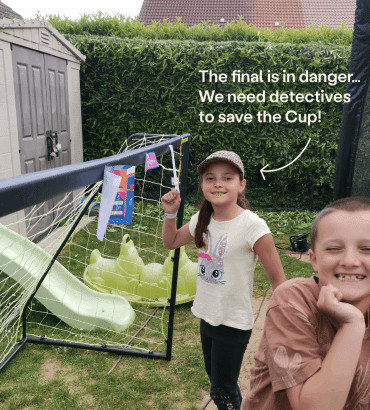
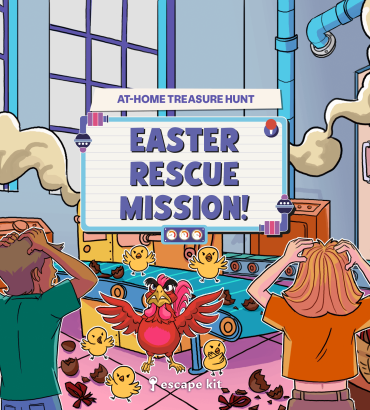
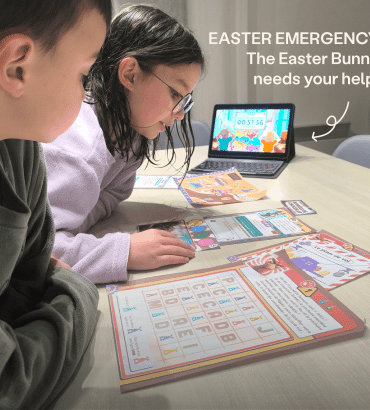
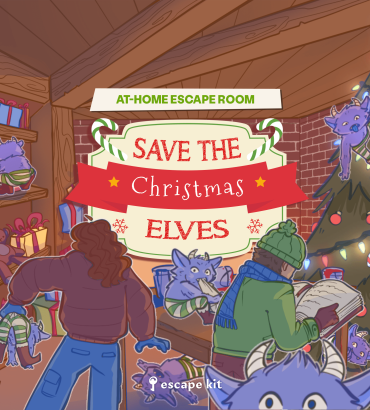
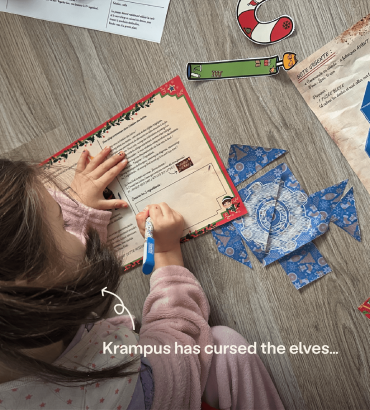
An escape room kit is a complete game you download, print at home and play the same evening. No boxed set to order, no delivery to wait for, and no booking sixty miles away for a Saturday slot that was gone three weeks ago.
You pay once, print as many copies as you have teams, and the game is yours for good. That last part is what separates a printable kit from a boxed mystery game: a box gets played once and then sits in a cupboard.
On this page: what is actually inside a kit, how it works, how to pick the right one, what a kit costs against the alternatives, and the mistakes that spoil an evening.
What is inside an escape room kit
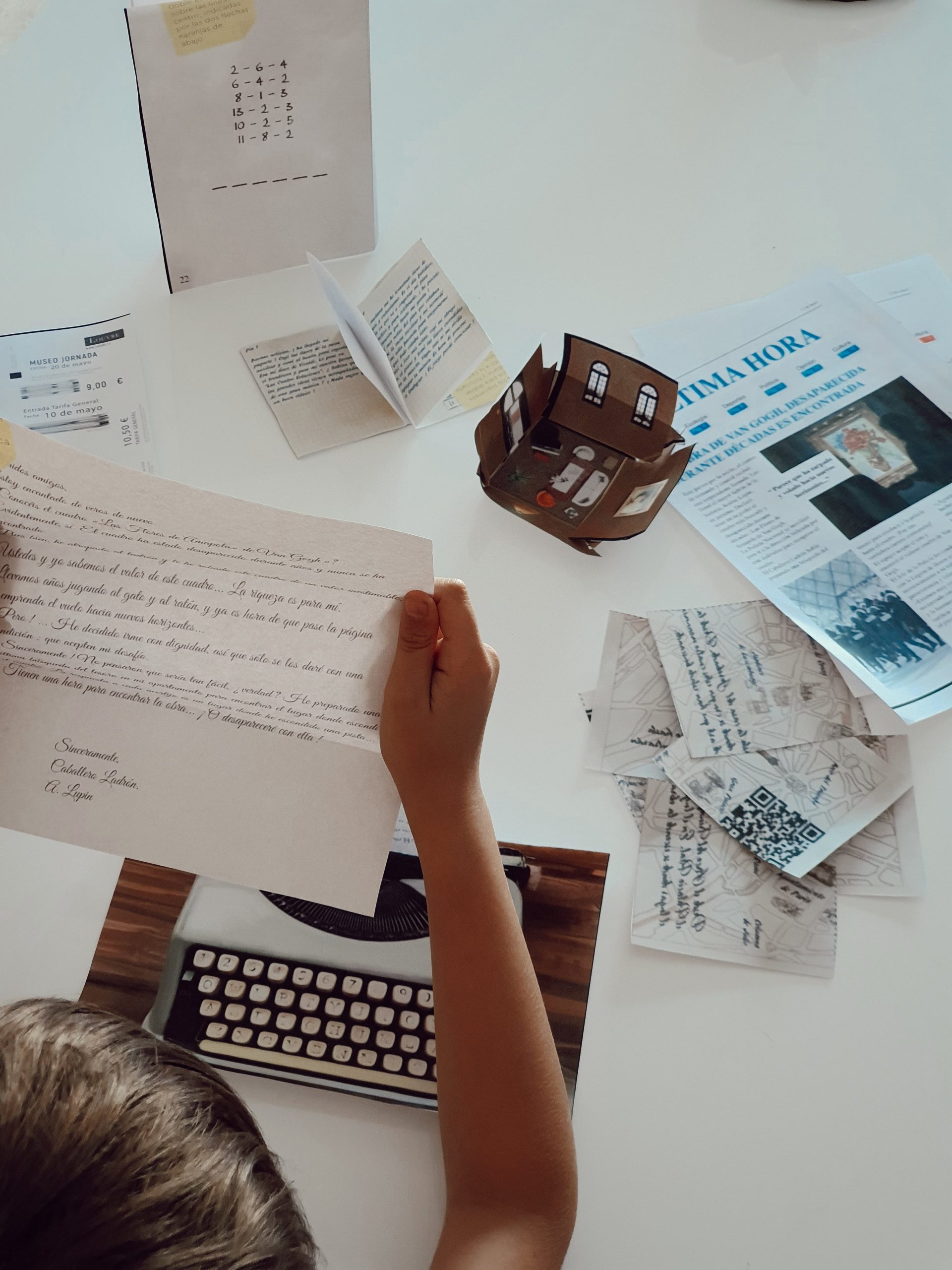
Every kit is a PDF bundle. Open it and you get four things:
| What you get | What it is for |
|---|---|
| The puzzle pack | Between 6 and 12 puzzles, laid out to be printed and cut. This is the game itself |
| The game master booklet | The full story, every answer, and hints to give out when a team gets stuck |
| Printable decoration | Posters, labels and envelope fronts that turn a living room into the setting |
| Audio files | A 60 minute countdown with a soundtrack, plus the voice intro that opens the story |
There is nothing else to buy. Padlocks and treasure chests look good in photos, but a labelled envelope that stays shut until someone finds the right number does exactly the same job.
Print in black and white
Every kit is designed to stay readable in greyscale, which matters when you are printing three sets. Only puzzles built around colour need a colour printer, and the game master booklet says so explicitly when that happens.
How a printable escape room works
The structure is always the same. Each puzzle produces a code. That code opens the next envelope. The last code opens whatever you decided the prize would be.
| Step | What you do | How long |
|---|---|---|
| 1. Download | The PDF arrives in your inbox straight after checkout | 2 min |
| 2. Print | One full set per team, on ordinary A4 or Letter paper | 10 min |
| 3. Prepare | Cut, sort into envelopes, hide them around the room | 20 min |
| 4. Play | Read the intro aloud, start the countdown, let them work | 60 min |
| 5. Finish | Compare times, hand out the prize, talk through the puzzles | 15 min |
One person does not play. They read the story, watch the clock and hand out hints before frustration sets in. With one team that role is light. With three or four it is a real job, and it is also the only way to see the whole story unfold.
The PDF lands in your inbox at checkout. Print one set per team, hide the envelopes, and you have an hour of game for the whole group.
See the kits →Three questions, one kit that actually fits. Nothing is sent anywhere.
Which escape room kit to choose
Two things decide it: the age of the youngest player, and the occasion. Theme matters more than difficulty once the age is right, because a group that likes the story will push through a puzzle they find hard.
Escape room kits for adults
Adults ask for something different from what works with children: not more puzzles, but puzzles that resist. The format that holds a table of grown ups is the investigation, where each clue rules out a suspect rather than pointing at a hiding place. If that is what you are after, we keep a separate selection of escape room kits for adults with the harder scenarios and the murder mystery formats.
Heists, murder investigations and art thefts. Nothing to read aloud, no adult supervision needed, and they work just as well for a dinner party as for a stag or hen do.
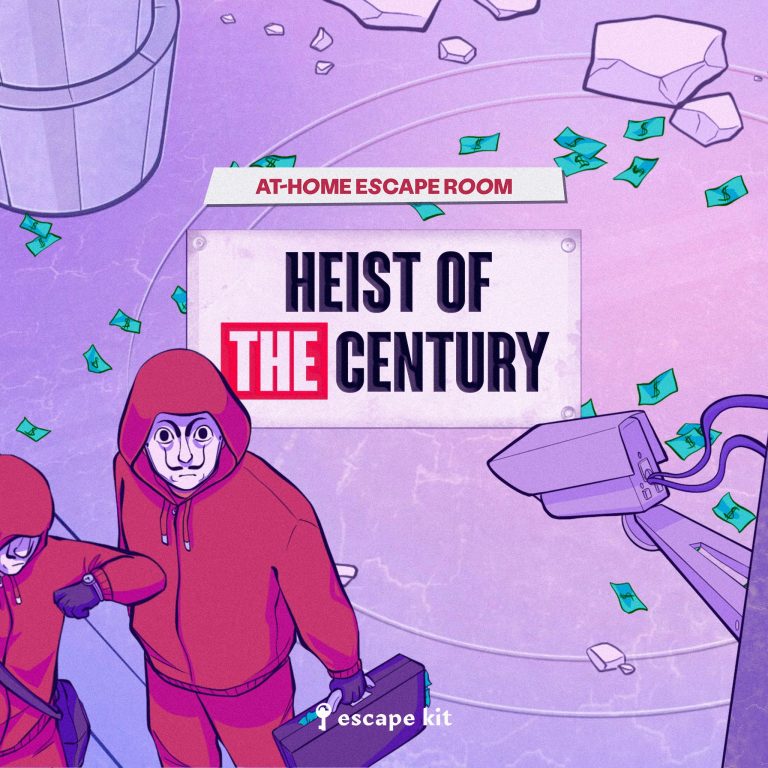 Heist of the century16 + years oldA bank job, the go to kit for adult groups
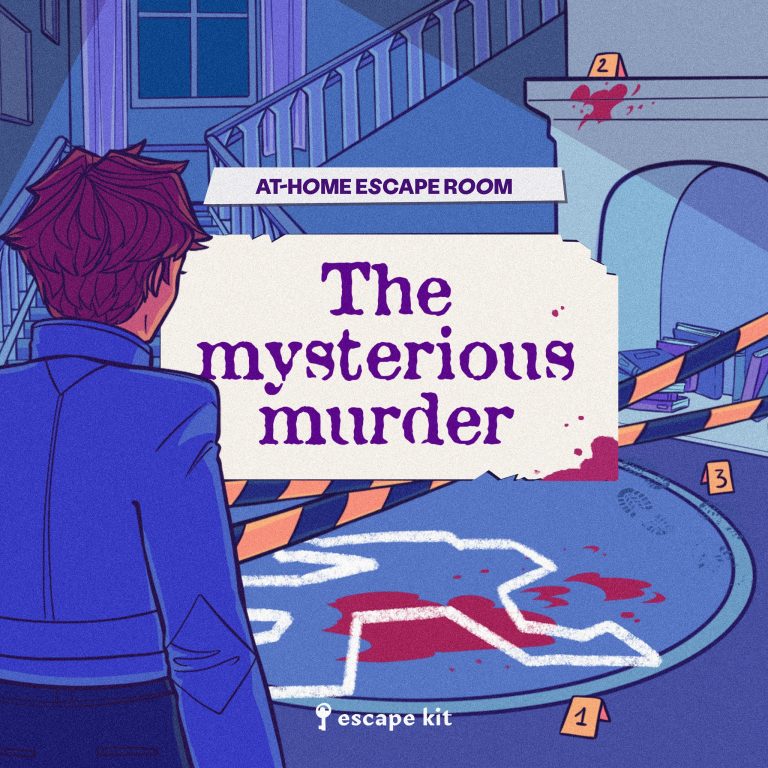 The mysterious murder14 + years oldA murder mystery dinner in printable form
 Arsène’s masterpiece14 + years oldAn art heist, lots of short puzzles running side by side
Escape room kits for teens and teenagers
From about thirteen, a group will notice within minutes if a game was built for younger kids and quietly check out. What holds them is tension and a story worth following.
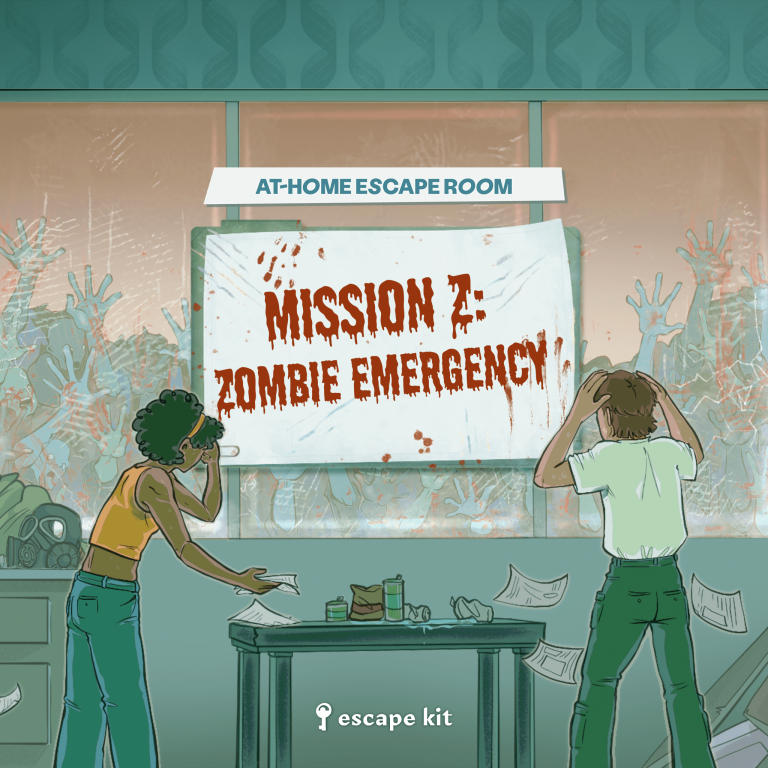 Mission Z: Zombie Emergency+13 years oldA zombie outbreak, ages 13 and up
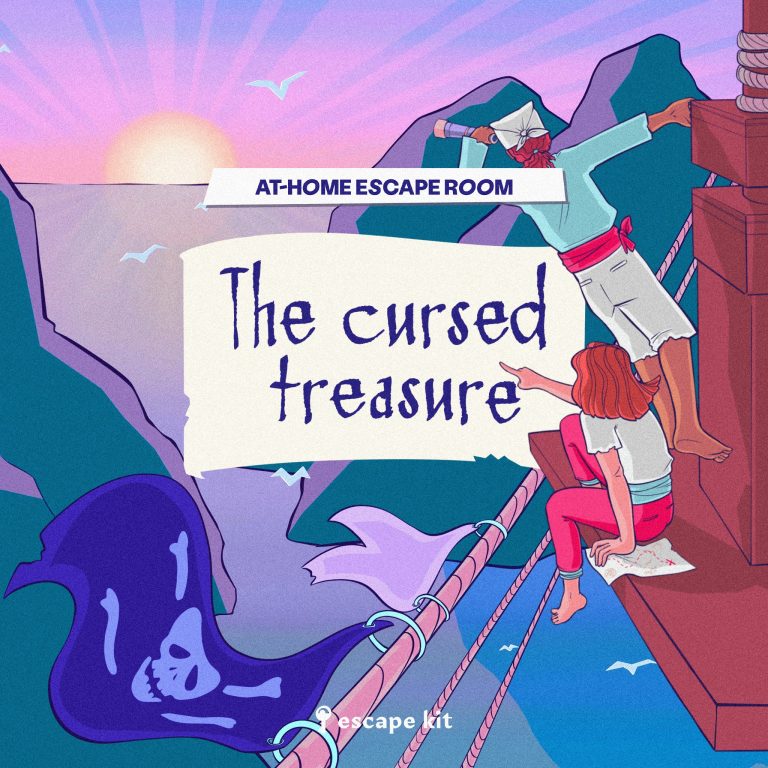 The cursed treasure8-14 years oldPirates, ages 8 to 14, also works outdoors
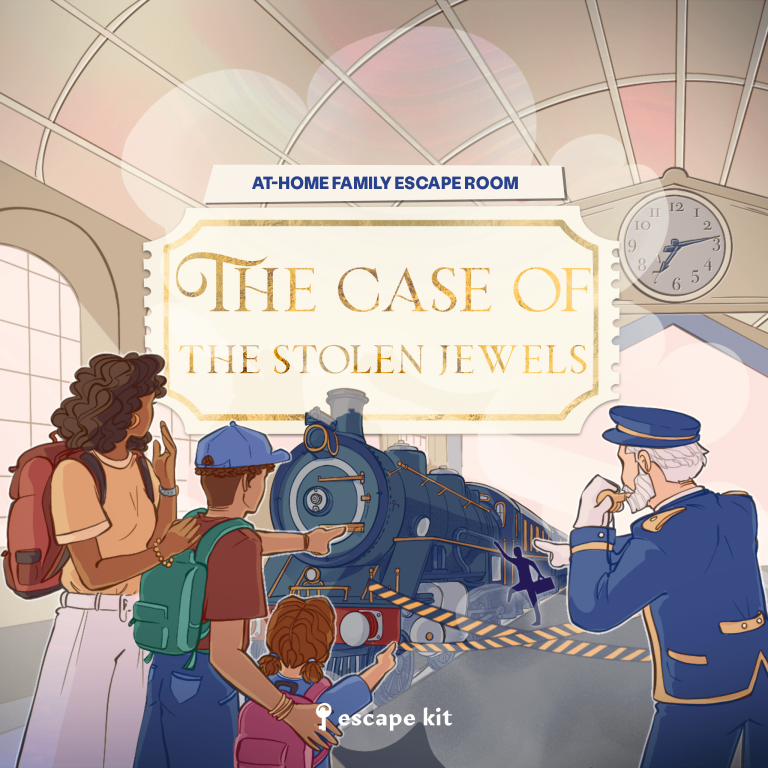 The case of the stolen jewelsFamilyA family format that spans mixed age groups
Escape room kits for kids
With children the rule is the opposite: a home escape room kit for kids should be solvable without an adult reading every card aloud. Pictures, colours and key padlocks rather than combination locks, and a story short enough to finish before the cake. From four years old the puzzles are visual, from eight they become written, and from ten a coded alphabet starts to be the best part of the evening.
Sorted by age band because the gap between a five year old and a ten year old is enormous. Below seven, an adult reads and the puzzles use pictures instead of words.
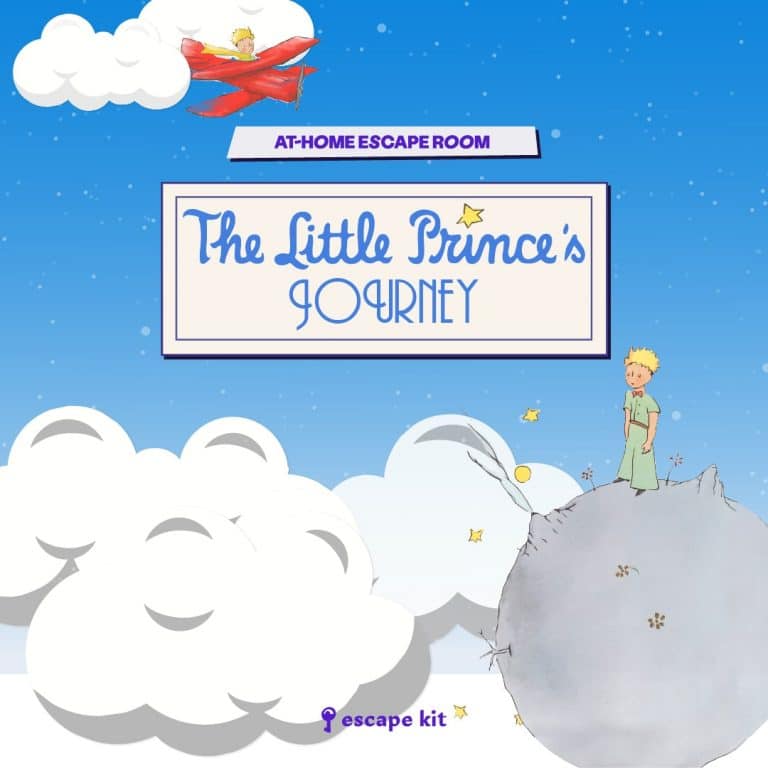 The Little Prince’s journey3-6 years oldGentle story, puzzles with no reading at all
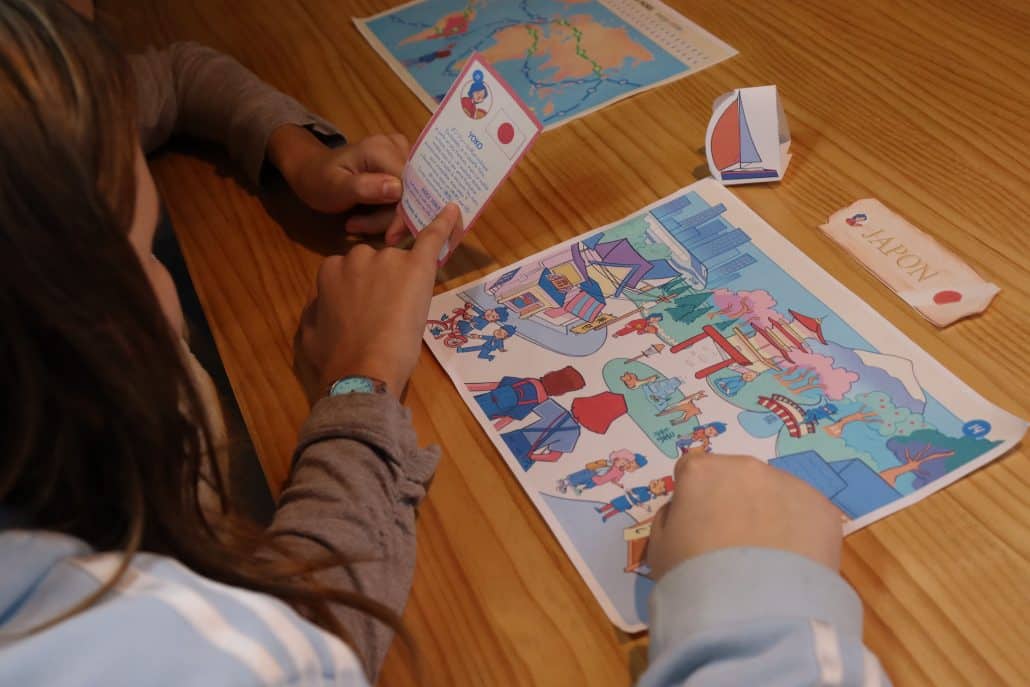
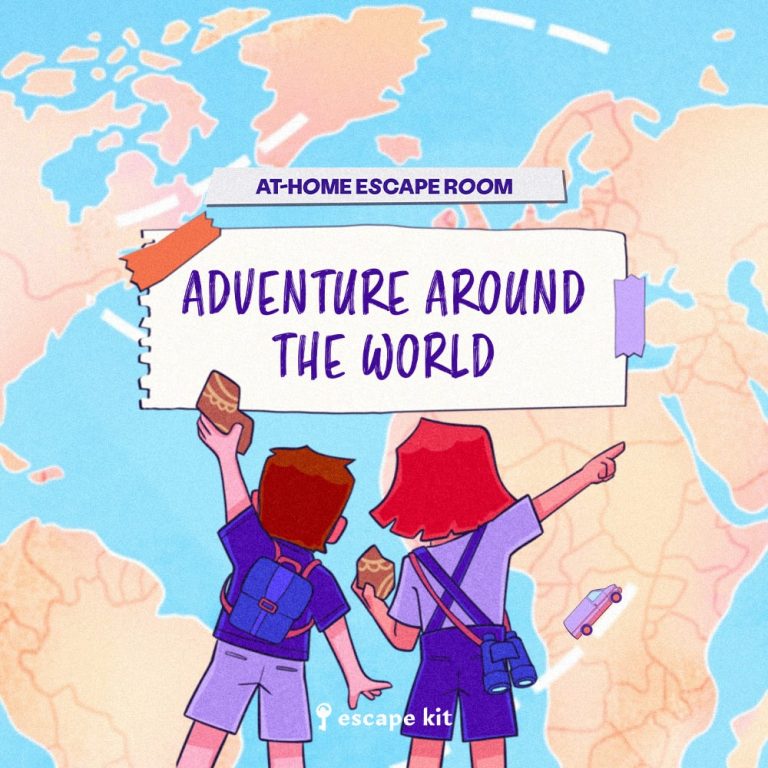 Adventure around the world6-10 years oldA trip around the globe, with maps and countries
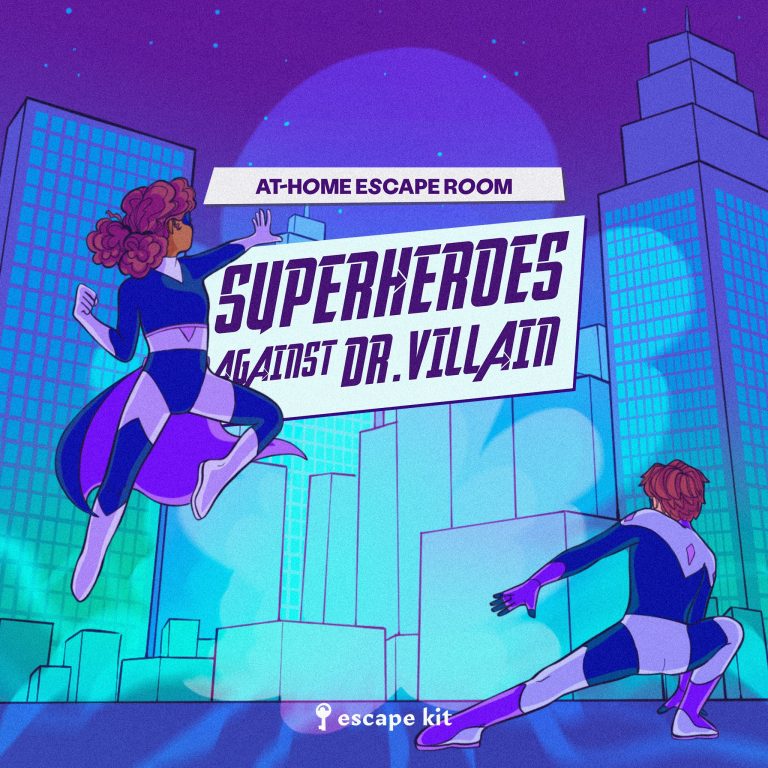 Superheroes against Dr. Villain7-11 years oldSuperheroes, plenty of moving around the room
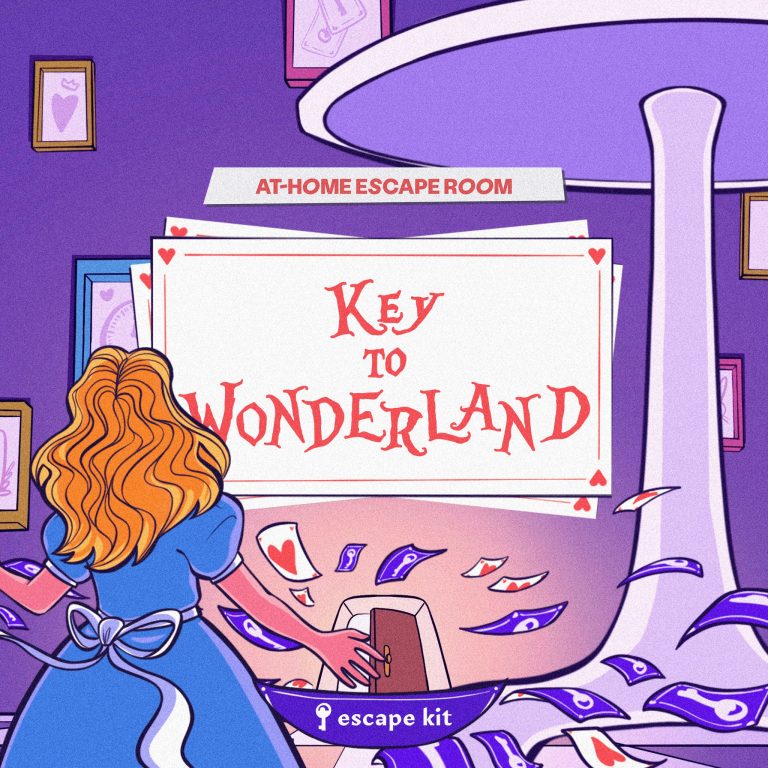 Key to Wonderland8-11 years oldWonderland, for children who enjoy a proper puzzle
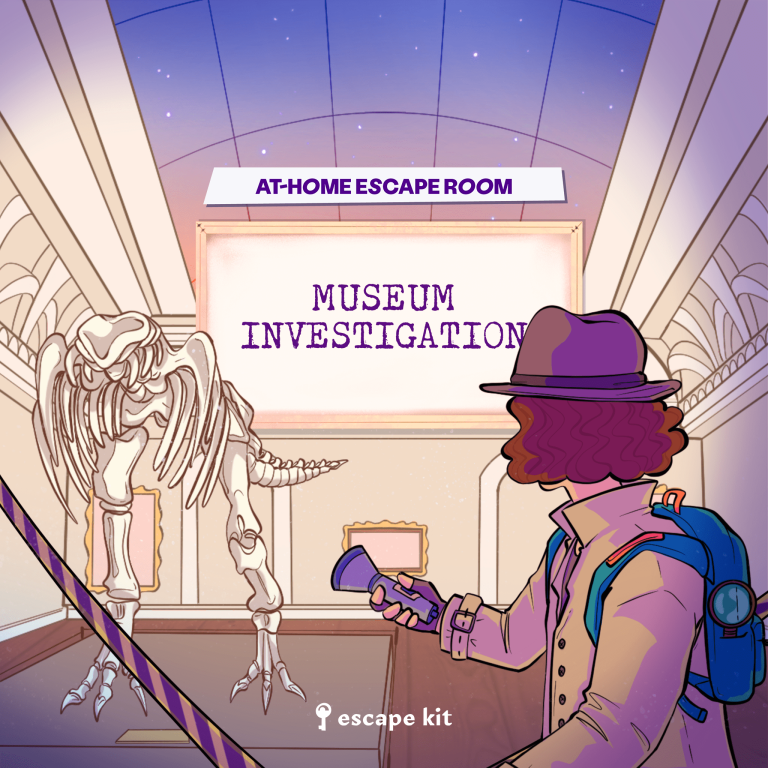 Museum investigation4-6 / 7-12 years oldAn investigation, comes in two versions by age
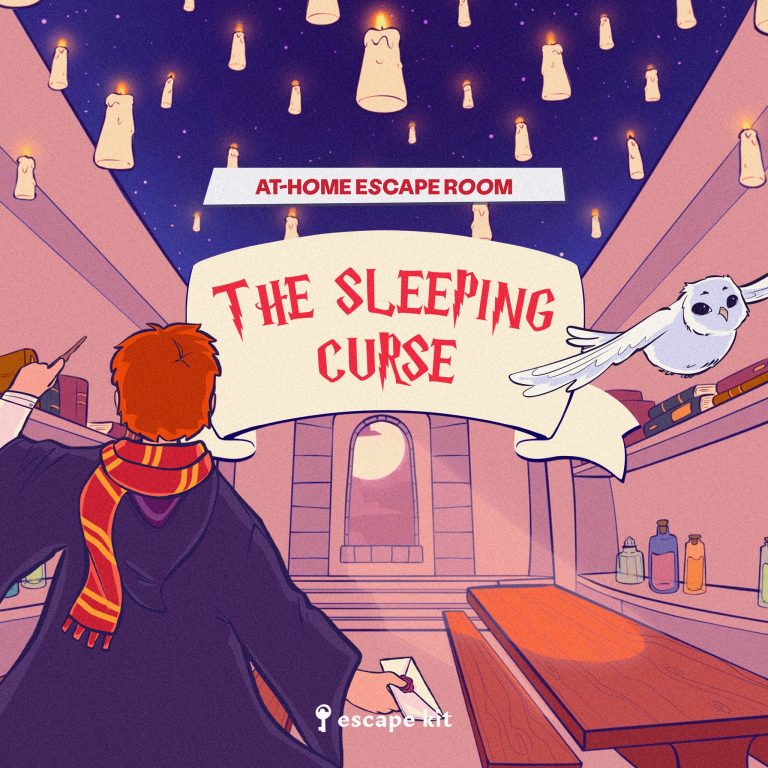 The sleeping curse6-10 years oldA spell to break, ages 6 to 10
If you would rather build the whole thing yourself, we have a step by step guide to making a DIY escape room, a list of puzzles and clues that work and a round up of escape room themes to pick from. For a group of more than six, read organising one for a large group. And if you want the soundtrack without buying anything, the free escape room music is there too.
Heist of the century
The one adult groups keep coming back to. A bank job with a real deadline, puzzles that assume you can handle a cipher, and nothing to read aloud. Works for four people at a dinner table or twenty split into teams.
Museum investigation
Two versions in the same PDF, one for 4 to 6 year olds and one for 7 to 12. That is the answer to a party where the ages are all over the place: everyone plays the same story at their own level.
An at home escape room, and what makes it different
An at home escape room is the same idea as a commercial venue with two things removed: the booking and the journey. You play in your own living room, with your own hiding places, at the hour that suits you. What replaces the set design is the story, and that is exactly what a printed kit brings.
The comparison that matters is not kit against venue, it is the three ways of running an escape room at home: buy a kit, build one yourself, or go out.
| At home with a kit | At home from scratch | A commercial venue | |
|---|---|---|---|
| Ready when | Tonight. Download, print, cut. | In two to four hours of writing | On the date they have free |
| Players | Any number, one set per team | Any number | Usually 6 to 8 per room |
| Cost logic | Paid once, printed as often as you like | Padlocks, card stock, ink | Per person, every time |
| Play it again | Yes, with a different group | Yes, if you kept the props | No, you know the answers |
| Travel | None | None | There and back, with the group |
The line that decides for most people is the third one. A venue charges per person and caps the room at six to eight players, so a group of sixteen means two bookings and two time slots. A home escape room kit is bought once and printed once per team, which is why birthdays and office afternoons end up here.
What you need at home to run one
Less than people expect. A printer, scissors, a few envelopes and a phone for the soundtrack. Everything else is already in the room: a fridge, a bookshelf, a mirror, a coat pocket. The hiding places are the ones every home has, which is precisely why an at home escape room works without props.
The only real constraint: print in colour if the puzzles use colour coding, and print before the day itself. A printer that runs out of ink twenty minutes before the guests arrive is the single most common way a home escape room goes wrong.
What an escape room kit costs against the alternatives
The comparison people usually make is with a commercial escape room or a boxed mystery game. On price the gap is wide, and it widens further with group size.
| Printable kit | Boxed mystery game | Escape room venue | |
|---|---|---|---|
| Price | 20.69 for the whole group | 25 to 45 per box | 25 to 35 per person |
| Group size | unlimited, split into teams | 4 to 6 players | 4 to 6 per room |
| Available | instantly, by download | delivery time | subject to booking |
| Play again | yes, reprint any time | no, once only | no |
| Travel | none | none | there and back |
Where the maths turns
For four players a boxed game and a printable kit cost about the same. From eight players upward the kit is the only one that does not scale with headcount, because you are paying for the game, not for the seats.

What you need at home
Less than people expect, and most of it is already in the house.
| Item | What for | Essential? |
|---|---|---|
| A printer and paper | One set of sheets per team | Yes |
| Envelopes or plastic wallets | Keeping puzzles in order | Yes |
| Scissors and pens | Cutting out and writing down | Yes |
| A phone or speaker | The countdown and soundtrack, both included | Recommended |
| One to three combination padlocks | Makes opening things physical | No, just nicer |
| A box or chest | For the prize at the end | No, a shoebox works |
Four mistakes that spoil the evening
Picking above the age of the youngest player. The most common one by far. A nine year old handed a kit rated 13 and up gives up inside ten minutes, and takes the group with them.
Teams that are too big. With eight people on one puzzle, two solve and six watch. Three to five per team, and make an extra team instead of a crowded one.
Nobody running the game. Whoever plays cannot give hints. With one team you can get away with it. With three you cannot.
Teams sitting on top of each other. Two metres of separation sounds like nothing but it is enough. One shouted code and the team next door has skipped two puzzles.
💡 The expert’s tip
Set the game up the night before and photograph every hiding place. On the day you will have forgotten where the fourth envelope went, and a game master hunting through his own hiding places in front of ten people loses the room in thirty seconds.
Frequently asked questions
What is an escape room kit?
A complete game supplied as a PDF: the puzzles, a game master booklet with all the answers, printable decoration and a 60 minute audio countdown. You download it, print it and play at home the same day.
How much does an escape room kit cost?
20.69 for the kit, whatever the size of your group, because you may print it as many times as you have teams. A commercial escape room charges 25 to 35 per person and a boxed mystery game costs 25 to 45 for a single play.
How many people can play with one kit?
As many as you like. Split the group into teams of three to five and print one set per team. Everyone plays the same story at the same time and you compare finishing times at the end.
Do I need padlocks or a chest?
No. A labelled envelope that only gets opened once someone finds the right code does the same job. Padlocks make it more tactile, but the game is designed to work without them.
Not sure which one to pick?
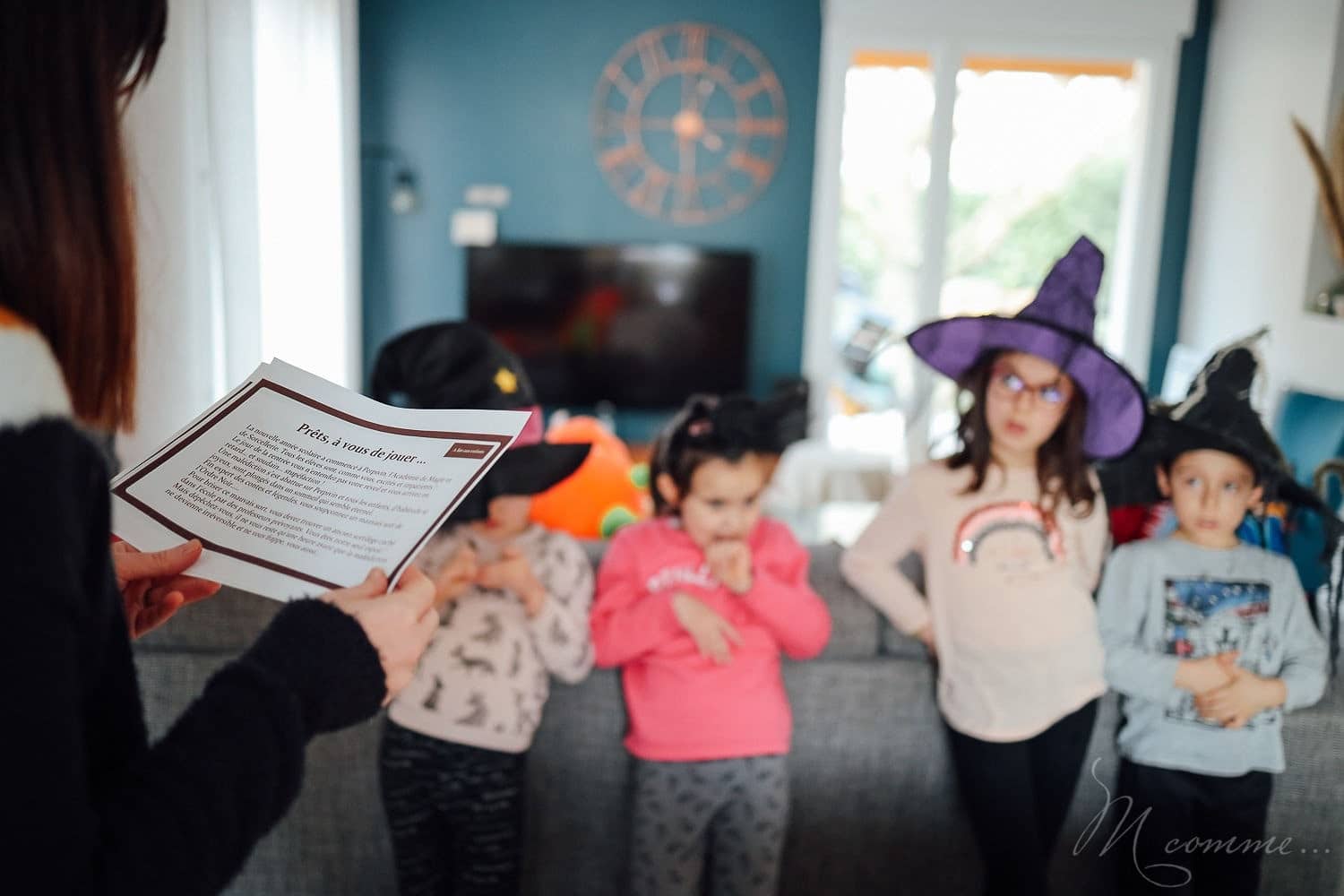
Every product page lists the age rating, the playing time and the number of puzzles. When two stories appeal equally, go with the theme the group already likes. That pulls harder than any puzzle design.
How long does it take to set up?
About 30 minutes: printing, cutting, sorting into envelopes and hiding them. Most people do it the night before, not on the day itself.
Can I print the kit more than once?
Yes. The kit is yours once you buy it, so you can reprint it for another group, another party or the same children a year later.
Is it suitable for young children?
From three years old, with an adult reading aloud and puzzles built on pictures instead of words. Every kit carries its own age rating on its product page.
Can you do an escape room at home?
Yes, and it is the most common way people play now. You need a printed kit or a game you have written yourself, a few hiding places and about thirty minutes of setup. No padlocks, no special props and no room to convert: the puzzles carry the game, the house provides the hiding places.
Are at home escape rooms worth it?
For a group of more than six, the arithmetic decides it. A venue charges per person and caps each room at six to eight players, so sixteen people means two bookings on two time slots. A kit is bought once and printed once per team, and you can run it again with a different group. For two or three people looking for a one off outing, a venue still wins on set design.
You print it for tonight, and again next year for the younger one. The kit does not expire and there is no second payment.
See all the kits →
Who writes this page
Clément Pontegnier
Founder of Escape Kit
I have been designing printable escape rooms since 2018, sorted by age group from three years upward. More than 250,000 players have run them, from children’s parties to company evenings with several hundred people.