A commercial escape room takes four to six players. Past that you are booking two rooms, two slots and two bills, and half your group ends up playing a different game from the other half.
At home the problem disappears. A printable kit can be printed once per team, so ten people become two teams, twenty become four, and everyone races the same story at the same time. The price does not move.
On this page: how many people really fit in an escape room, how to split a group, what the evening looks like, which kits suit large groups and what goes wrong past a certain size.
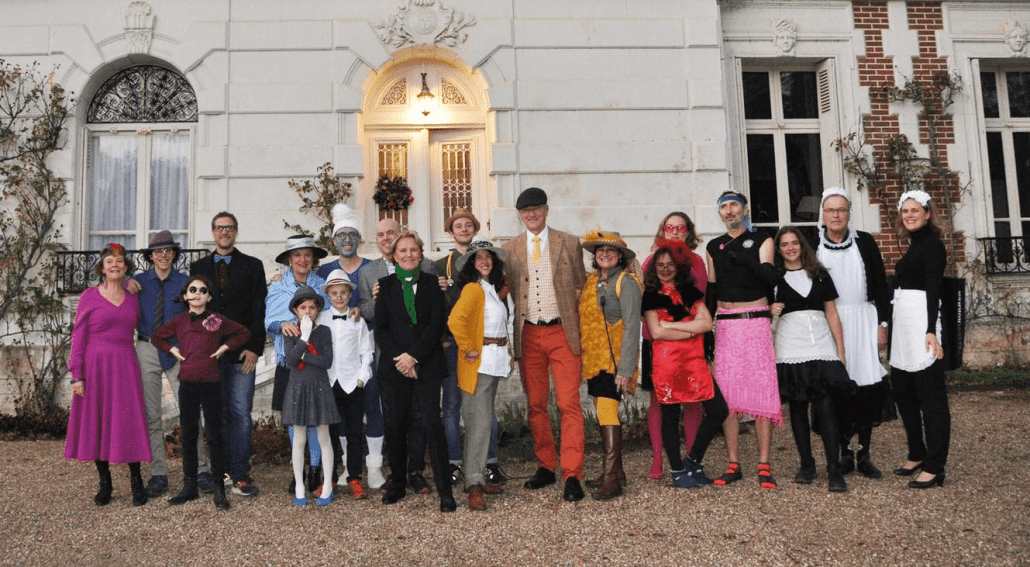
How many people can play an escape room?
In a commercial venue the cap is almost always four to six. That is not arbitrary: the rooms are small, the puzzles sit in fixed places, and by the seventh player somebody is standing in a corner. Some venues take eight, at which point three people play and five watch.
The same limit applies at home, with one difference: you choose the split yourself. The right team size is three to five players. Below that it drags, because there are too few hands for the puzzles. Above it, half the team loses the thread and starts talking about something else.
So the real question is not how many people fit in an escape room. It is how many teams you can run side by side, and there the ceiling is the number of tables you have.
The short answer
A venue: 4 to 6 players. At home with a printed kit: as many teams as you have tables. Each team needs its own full set of sheets and its own corner.
Splitting the group
Work in teams of three to five. With an odd number, make one team of five rather than two of two.
| Group | Teams | Sets to print | Space needed |
|---|---|---|---|
| 8 people | 2 teams of 4 | 2 | Two tables, one room is fine |
| 10 people | 2 teams of 5 | 2 | Two tables, one room is fine |
| 12 people | 3 teams of 4 | 3 | Living room plus kitchen |
| 15 people | 3 teams of 5 | 3 | Two rooms or the garden |
| 20 people | 4 teams of 5 | 4 | Two rooms or the garden |
| 30 people | 6 teams of 5 | 6 | A classroom, a hall, outdoors |
| 50 and more | 10 teams and up | 1 per team | A hall or outdoor space |
Printing is not capped
You buy the kit once and print it as many times as you have teams. At twenty people the evening still costs 20.69 plus paper. At a venue that would be four bookings.
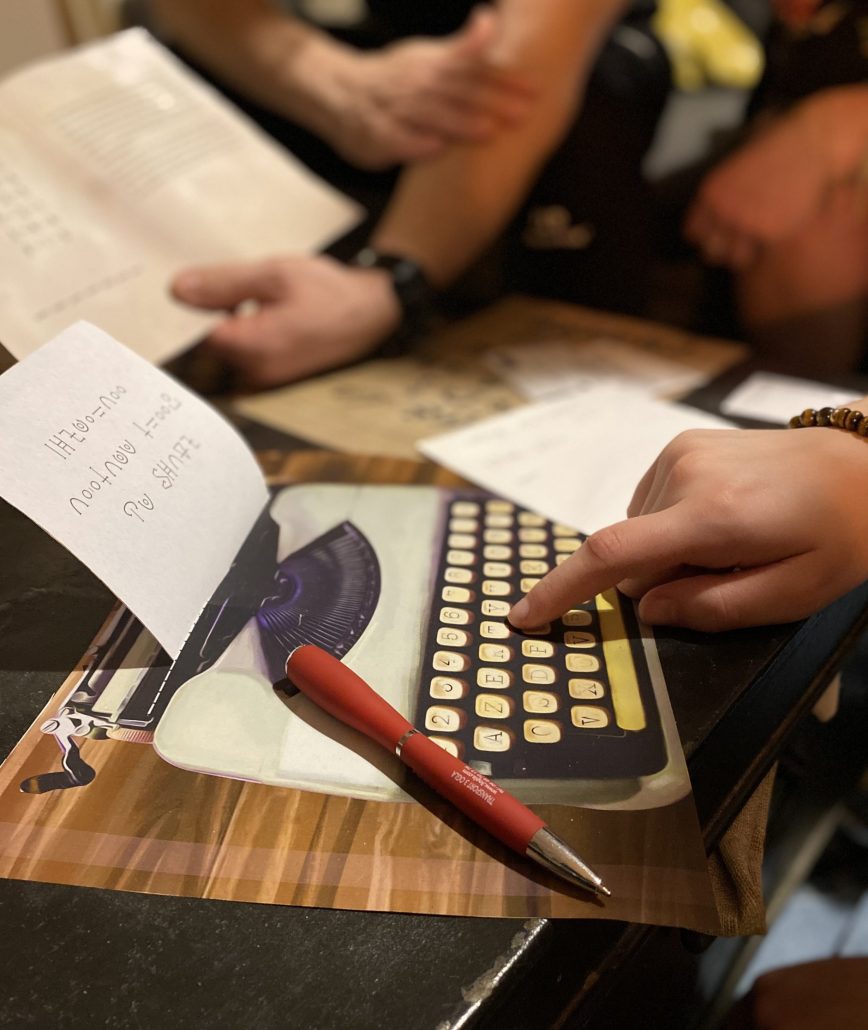
Split into teams of three to five, print the kit once per team and start them all together. The price does not move with the headcount.
See the kits →Escape room at home for 10, 20 or 30 people
The question before a big night is never «which game» but «how do I split everyone up». A printable kit solves the part a commercial venue cannot: you print it as many times as you have teams. Group size stops being a limit and becomes a matter of organisation.
| People | Teams | Copies to print | Running time | Space you need |
|---|---|---|---|---|
| 6 to 8 | 1 team | 1 set | 60 min | One living room is enough |
| 9 to 12 | 2 teams | 2 sets | 60 to 75 min | Two rooms, or one room split in half |
| 13 to 20 | 3 to 4 teams | 3 to 4 sets | 75 min plus debrief | Two or three rooms, or a hall with table islands |
| 21 to 30 | 5 to 6 teams | 5 to 6 sets | 90 min with a break | A hall, one table per team |
| Over 30 | Two staggered waves | One set per team | Two 60-minute runs | A hall plus a waiting area |
Escape room for 10 people
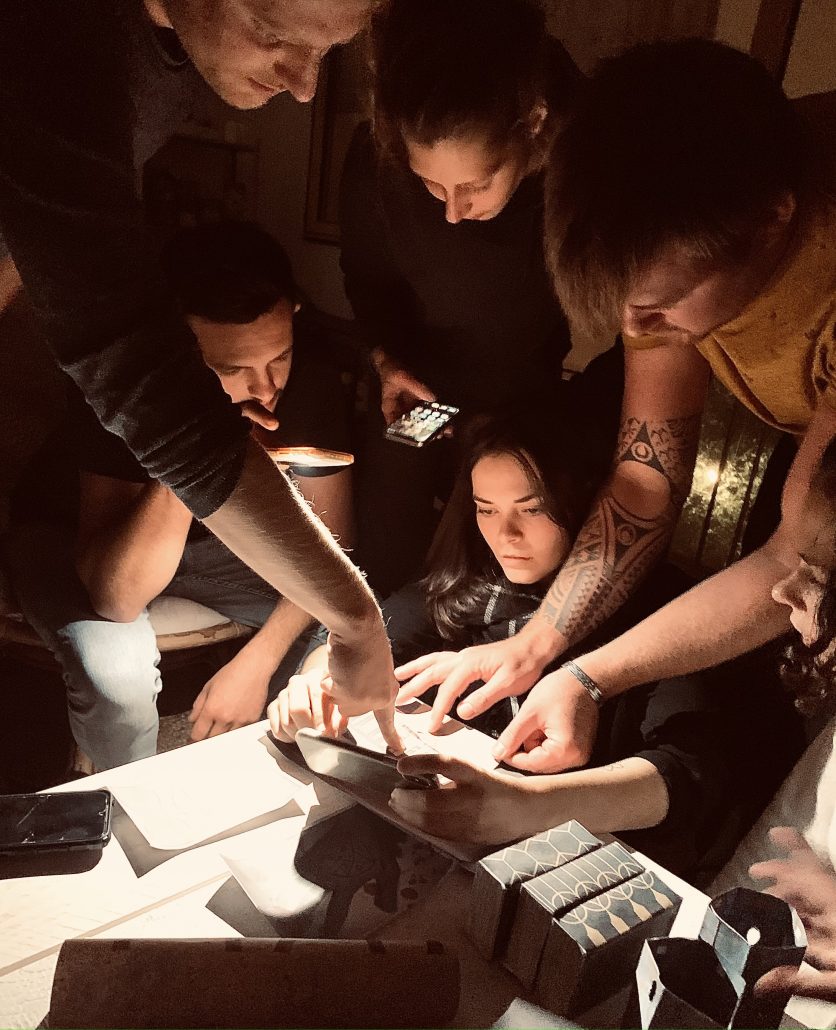
Ten is the point where a single team stops working. Four people solve, six drift off and reach for their phones. Split into two teams of five, give both the same case and start them at the same time. The race replaces the tension that, in a commercial venue, comes from the room itself. Two printed sets, two tables, one visible timer, done.
Escape room for 12 to 20 people
Past twelve you need three or four teams, and here is the mistake almost everyone makes: putting every team in the same room. Answers get said out loud and half the group is handed the solution. Spread the teams across different rooms, or if you only have one hall, across table islands at least three metres apart. Say it up front: if you crack something, whisper it.
Escape room for 30 people or more
At thirty people the evening becomes an event. Two things change. You need a second adult walking between teams, and you need a scoreboard. Without a result at the end the night feels unfinished, so write each team’s time on a sheet taped to the wall. Past forty, start in two staggered waves so you can actually keep an eye on the groups.
Printing rule: one set per team, not per person. A team of four or five shares the documents, and the sharing is part of the game. Handing every participant their own set kills the collaboration and burns five times the paper.
How the evening runs with several teams
About two hours, of which one is the game. The only thing that changes with group size is the printing.
| When | What happens | How long |
|---|---|---|
| Beforehand | Print one set per team, label the envelopes by colour | 20 to 30 min |
| Arrival | Drinks, forming teams, picking team names | 15 min |
| Briefing | Read the story aloud, explain the rules, start the countdown | 5 min |
| The game | Every team works in parallel, you give hints where needed | 60 min |
| The reveal | Compare codes and times, declare a winner | 15 min |
One rule matters more than the rest: one person does not play. They read the story, watch the clock and give hints when a team stalls. With one team that role is light. With four it is the job that holds the whole evening together.
Mark each team’s sheets
Print each team on a different colour of paper, or put a coloured pen mark in the corner. The moment two teams share a table, a puzzle ends up in the wrong pile and someone spends ten minutes solving something that is not theirs.
Three questions, one kit that actually fits. Nothing is sent anywhere.
Which kits work best in large groups
All of them, since every kit can be printed as many times as you like. But the stories that break into clearly separate puzzles hold up best, because a team of five can split up instead of five people leaning over one sheet.
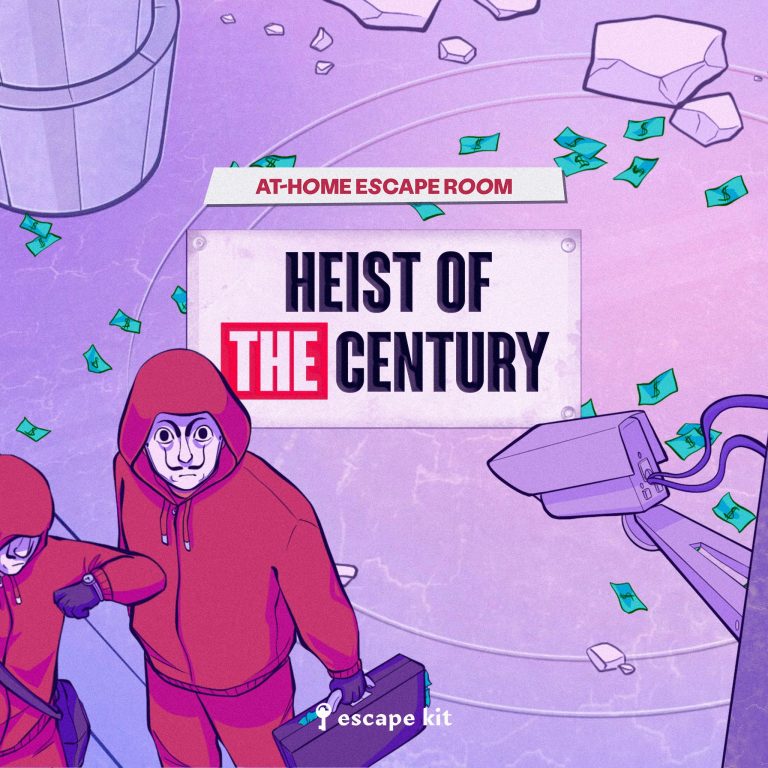 Heist of the century16 + years oldA bank job, the standard choice for adult groups
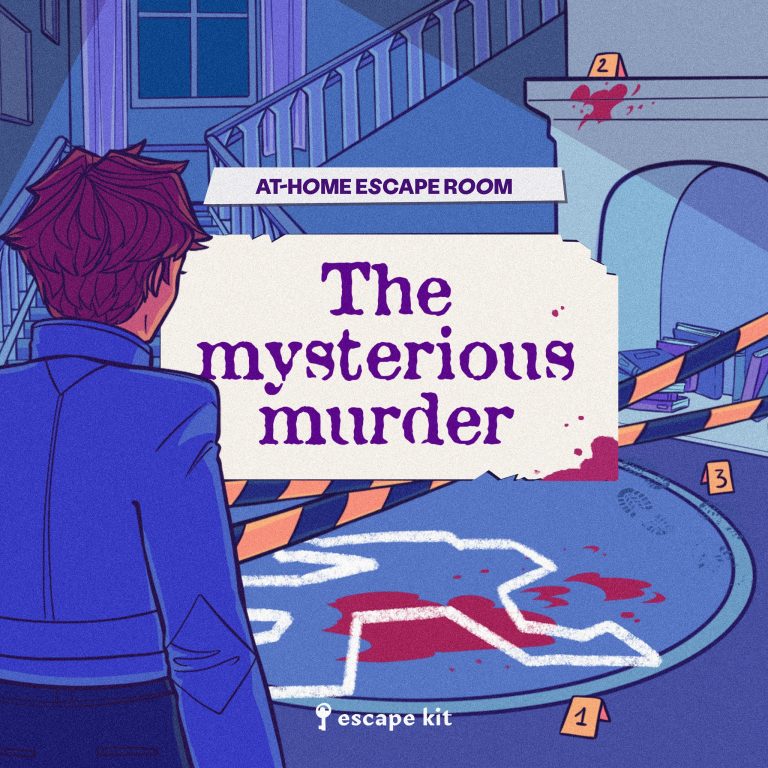 The mysterious murder14 + years oldA murder mystery, works well from eight people up
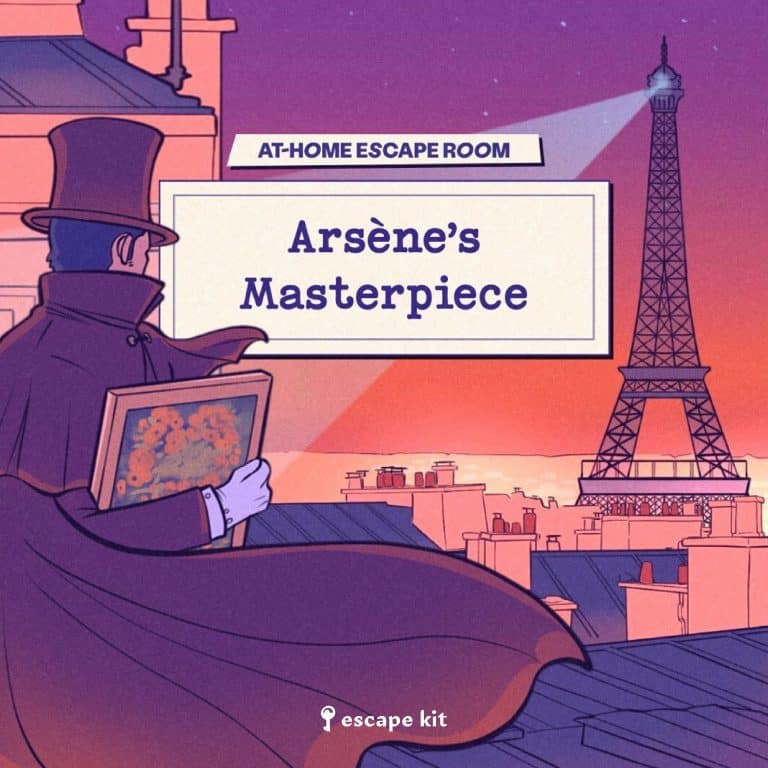 Arsène’s masterpiece14 + years oldAn art heist with lots of short parallel puzzles
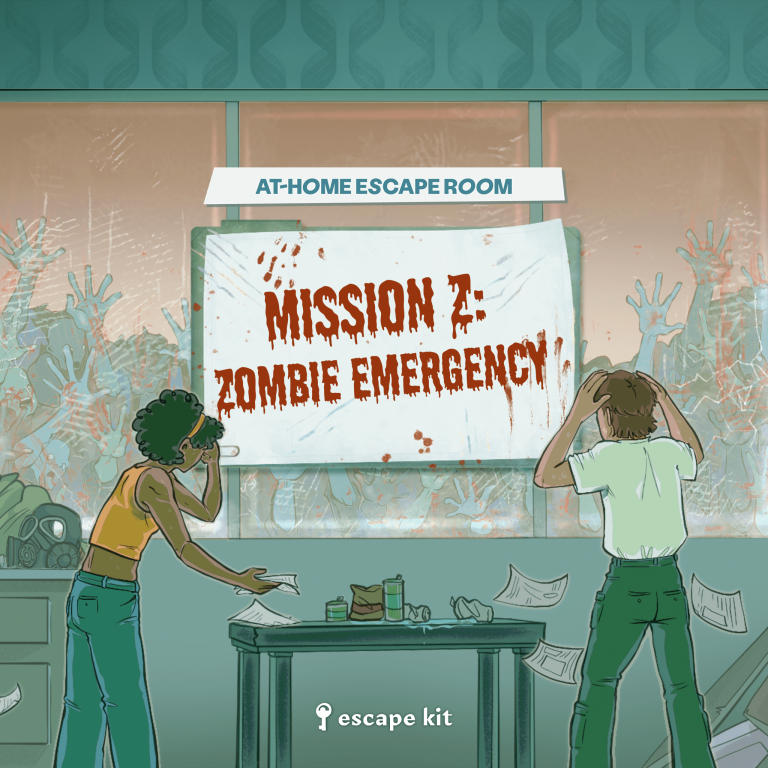 Mission Z: Zombie Emergency+13 years oldA zombie outbreak, for teenagers and young adults
 Museum investigation4-6 / 7-12 years oldAn investigation, and it comes in two versions by age
 The case of the stolen jewelsFamilyA family format, good for mixed age groups
We have a longer piece on organising an escape room for large groups that goes into the room layout. For a crowd of children, the indoor scavenger hunt ideas scale the same way, and 20 birthday party ideas covers what to do with the rest of the afternoon. If you want to write your own, see the DIY guide and the puzzle list.
The case of the stolen jewels
The family format, and the one that holds a mixed group together. Everyone plays the same story whatever their age, which matters when the teams are made of whoever happened to come.
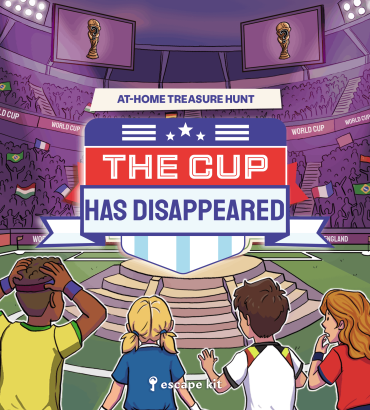
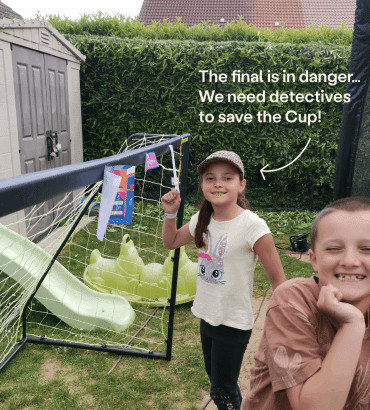
The World Cup Has Disappeared
Ages 7 to 12, football themed, and reliable with a big mixed group of children who do not all know each other.
What you need for a big group
| Item | What for | How many |
|---|---|---|
| Printer and paper | One set of sheets per team | 25 to 40 sheets per team |
| Envelopes | Keeping each team’s puzzles in order | 5 to 8 per team |
| Coloured pens | Telling the teams’ sheets apart | One per team |
| Speaker or phone | The countdown and soundtrack, shared by everyone | One for the room |
| Scissors and pens | Cutting out and writing down codes | One set per team |
| A game master | Time, hints, the reveal | One person, not playing |
Print in black and white
Every kit stays readable in greyscale, which matters at six teams. Only puzzles built around colour need a colour printer, and the game master booklet says so when that happens.
Three things that go wrong past ten people
Teams that are too big. Seven people on one puzzle means two solving and five waiting. Make another team even if it only has three players.
No game master. Someone playing cannot give hints to four teams. This is not optional above two teams.
Teams within earshot. Two metres is enough, but any closer and one shouted code skips two puzzles for the neighbours, which makes the final comparison meaningless.
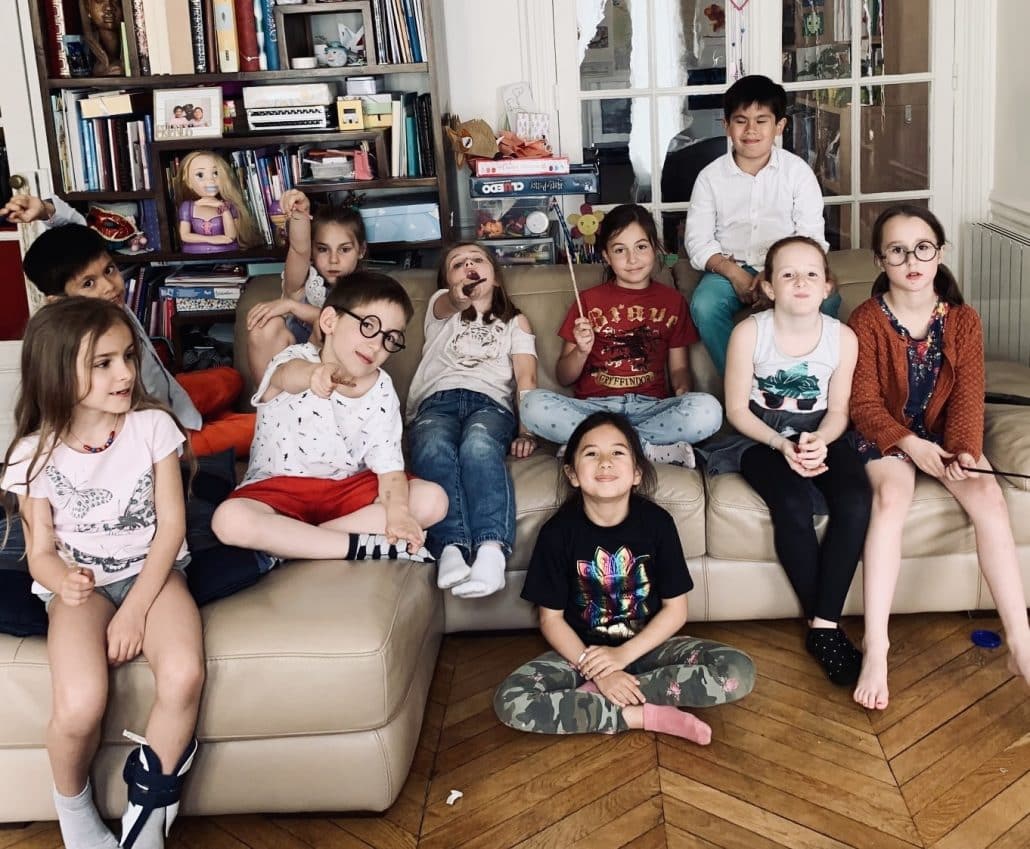
Groups at school, at a club or at work
The same mechanic scales a long way past a friends group. A class of thirty becomes six teams, a youth club eight, a company away day twenty. Setting up still takes half an hour, because you do it once and then photocopy.
For classes there is a page dedicated to running one in a classroom, and for company events above roughly fifty people we run a separate setup with support and adapted material, described on the company page.
💡 The expert’s tip
Print each team on a different colour of paper before you cut anything. The moment two teams share a table, one sheet ends up in the wrong pile and a team spends ten minutes solving a puzzle that is not theirs.
Escape room kits for team building: what changes at work
A printed escape room works as a team building exercise, but not under the same rules as a night with friends. Three differences decide whether colleagues play along or roll their eyes.
First, the running time. Nobody at work has two hours. Plan 45 to 60 minutes of play plus 15 minutes of debrief, and hold to it. Second, how you build the teams. Mix departments, otherwise everyone plays with the people they already talk to all day and no team building happens at all. Third, the theme. A case solved by deduction lands better in an office than a fantasy adventure, because nobody has to put on a costume.
The cost comparison is why companies switch. A commercial venue charges per person and caps you at six to eight players per room, so twenty colleagues means three bookings, three time slots and three rooms. A printable kit is bought once and printed once per team. For branded versions built around a company’s own story, there is a dedicated page for companies.
What always goes wrong at the office: the team that finishes first sits idle for twenty minutes. Keep one extra task in reserve, a final hidden code that settles the scoreboard when two teams tie.
Download the PDF, print one set per team and start everyone at once. No booking, no travel, no six-player cap per room.
See all escape room kitsFrequently asked questions
How many people can play an escape room?
In a commercial venue, usually four to six. With a printable kit at home there is no limit: you split the group into teams of three to five and print one set of the kit per team, and every team plays the same story at the same time.
Can you do an escape room with 10 people?
Yes. Ten people becomes two teams of five, so you print the kit twice and give each team its own table. Both teams start together and you compare finishing times at the end.
Do I have to buy the kit more than once for several teams?
No. You buy the PDF once for 20.69 and print it as many times as you have teams. Six teams still costs 20.69, plus the paper.
Still choosing?
Each product page lists the age rating, the playing time and the number of puzzles. For a large group, favour the kit with the most short puzzles: those take bigger teams better.
How long does an escape room take with a large group?
About 60 minutes, the same as with one team, because every team plays in parallel. Add 30 minutes of preparation before and 15 minutes at the end for the reveal.
Can we play outdoors?
Yes, and with a big group it is often better, because the teams get more distance from each other. Watch for wind: weigh the sheets down or use clipboards.
What is the ideal team size?
Three to five players. Fewer and it drags, more and part of the team disengages. With an awkward number, make one team of five rather than two of two.
Print one set per team and start them together. Four teams or ten, you bought the game once.
See the kits →
Who writes this page
Clément Pontegnier
Founder of Escape Kit
I have been writing printable escape rooms since 2018. The largest run we know of was a company event with several hundred people playing the same kit at once, split into teams across a hall.