DIY Escape Room: How to Build One at Home in an Afternoon
What you are about to discover...
- Step 1: pick a story before you pick a single puzzle
- Step 2: build a chain, not a pile
- Step 3: use puzzle types that need no equipment
- Step 4: or skip the build entirely
- Step 5: the run itself
- Adapting the difficulty to who is actually playing
- Get three ready-made puzzles for your room
-
Questions people ask before their first build
- How long does it take to make a DIY escape room?
- How many puzzles should a home escape room have?
- What age can children do an escape room at home?
- Do I need locks and boxes to build one?
- How do I stop the group solving everything in ten minutes?
- What do I do when they get properly stuck?
- Can adults play a DIY escape room, or is it just for kids?
- What if it rains and I need something indoors at short notice?
- The short version
The first escape room I built at home took me four hours to prepare and lasted eleven minutes. Eleven. The kids solved everything in the wrong order, found the final code by accident, and then asked what was for dinner. If you are about to build your first one, learn from my afternoon: a DIY escape room lives or dies on how you chain the puzzles together, not on how clever each one is.
The good news is that the whole thing costs about the price of a pack of printer paper. You need one room, one story, four or five puzzles that lock into each other, and a timer. Here is the build, step by step, plus a generator further down that hands you three ready-made puzzles for the age group you are dealing with.
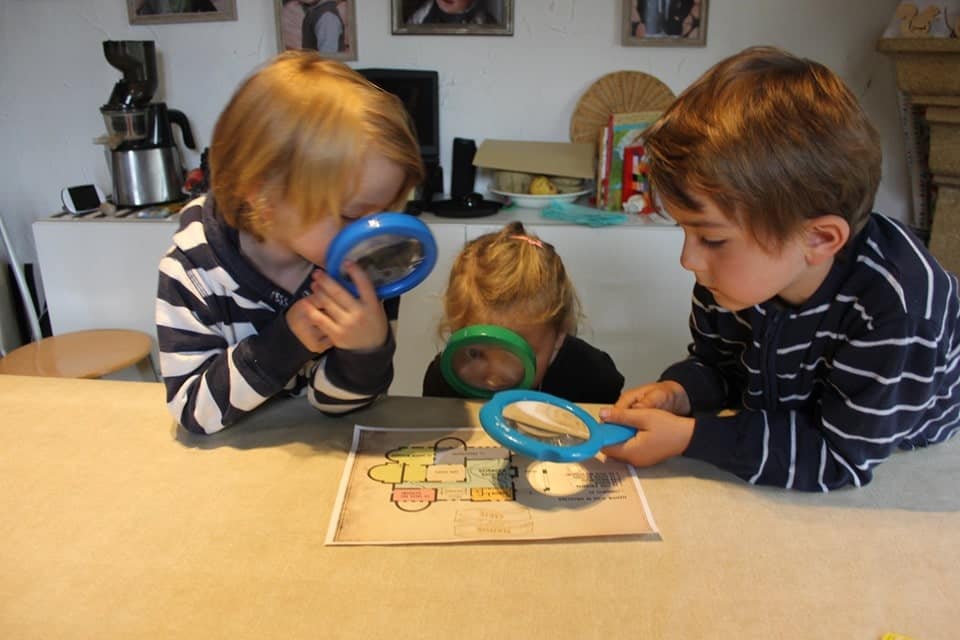
Step 1: pick a story before you pick a single puzzle
This is the step everyone skips, and it is the reason most homemade rooms feel like a worksheet. Players do not solve puzzles because puzzles are fun. They solve puzzles because they want to know what happens next.
Your story needs three things and nothing more: who they are, what went wrong, and how long they have. “You are junior detectives, a painting vanished from the museum last night, and the thief catches a train in sixty minutes.” That is the entire script. Say it out loud at the door, hand over the first clue, start the timer.
If you want more directions to steal from, we listed the ones that work best by age in our guide to escape room themes. Pirates and detectives are safe bets under ten. Heists, hauntings and lab outbreaks land better from twelve up.
Step 2: build a chain, not a pile
Here is the mistake I made. I hid five puzzles around the living room and let the kids loose. They split up, solved them in parallel, and the whole thing collapsed in under twelve minutes.
A room works when each solved puzzle physically hands you the next one. Puzzle one gives a three-digit code. That code opens a pouch. Inside the pouch is a torn map. The map points behind the radiator. Behind the radiator is puzzle two. And so on, until the last answer opens the box with the reward in it.
Four or five links is the sweet spot for a first build. Fewer feels thin, more and you will be untangling arguments instead of watching them play. Write the chain on a sheet of paper before you print anything, and test it backwards from the final box.
Step 3: use puzzle types that need no equipment
You do not need padlocks. Envelopes taped shut, a folded sheet in a book, a box with a paper seal: all of them work as locks as long as the rule is “you only open it when you have the code”.
- Mirror writing. Write the clue backwards, hand them a compact mirror. Takes ten seconds to make, buys five minutes of play.
- The book cipher. “Page 14, line 3, word 2.” Three numbers, one sentence to assemble. Works from age nine.
- Invisible ink. Lemon juice and a cotton bud, revealed with a lamp. Still the single biggest reaction you will get for under a euro.
- The jigsaw code. Print the code large, cut it into six pieces, hide them separately. Forces the group to work together instead of one kid solving everything.
- Sound or smell. A spice jar, a recorded voice memo, a song playing on repeat. Under-used and memorable.
We broke down twenty more of these, with the exact wording to print, in our post on escape room puzzles and clues.
💡 The expert’s tip
Build one deliberately easy puzzle and put it first. The first two minutes decide whether the group leans in or drifts off, and a quick win buys you their attention for the whole hour. Save the hard one for position three, never for the end. A group that fails on the last puzzle remembers losing, not playing.
Step 4: or skip the build entirely
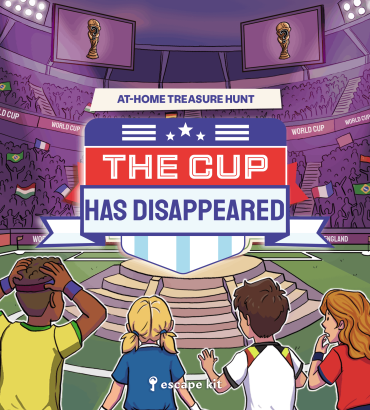
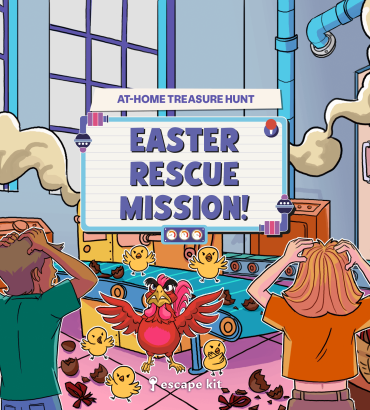
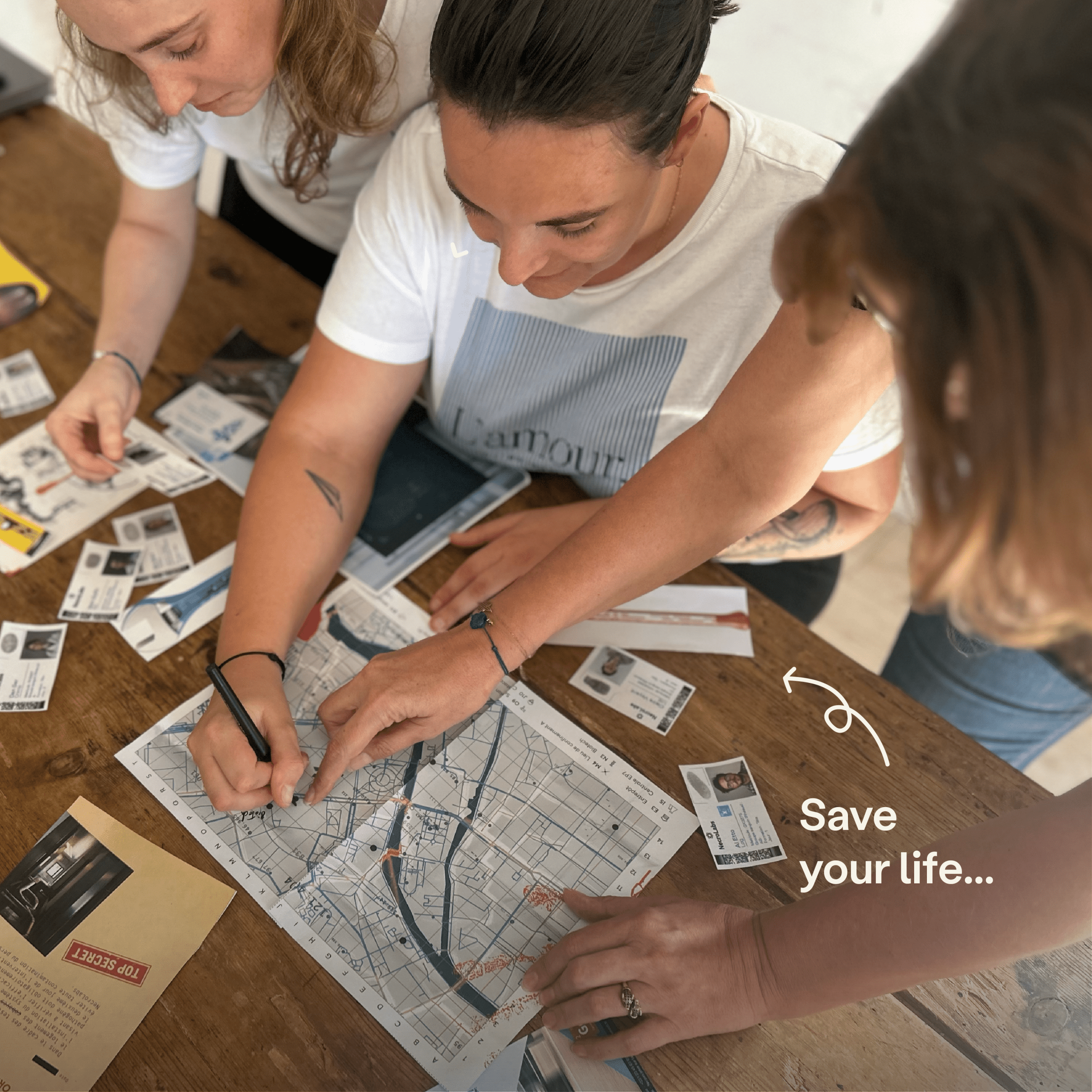
Building your own is genuinely satisfying, and it is also an afternoon of your life plus a printer cartridge. If the party is on Saturday and it is already Thursday, a printable kit does the chaining for you: the puzzles are already tested on each other, the story holds together, and the timing has been checked on real groups.
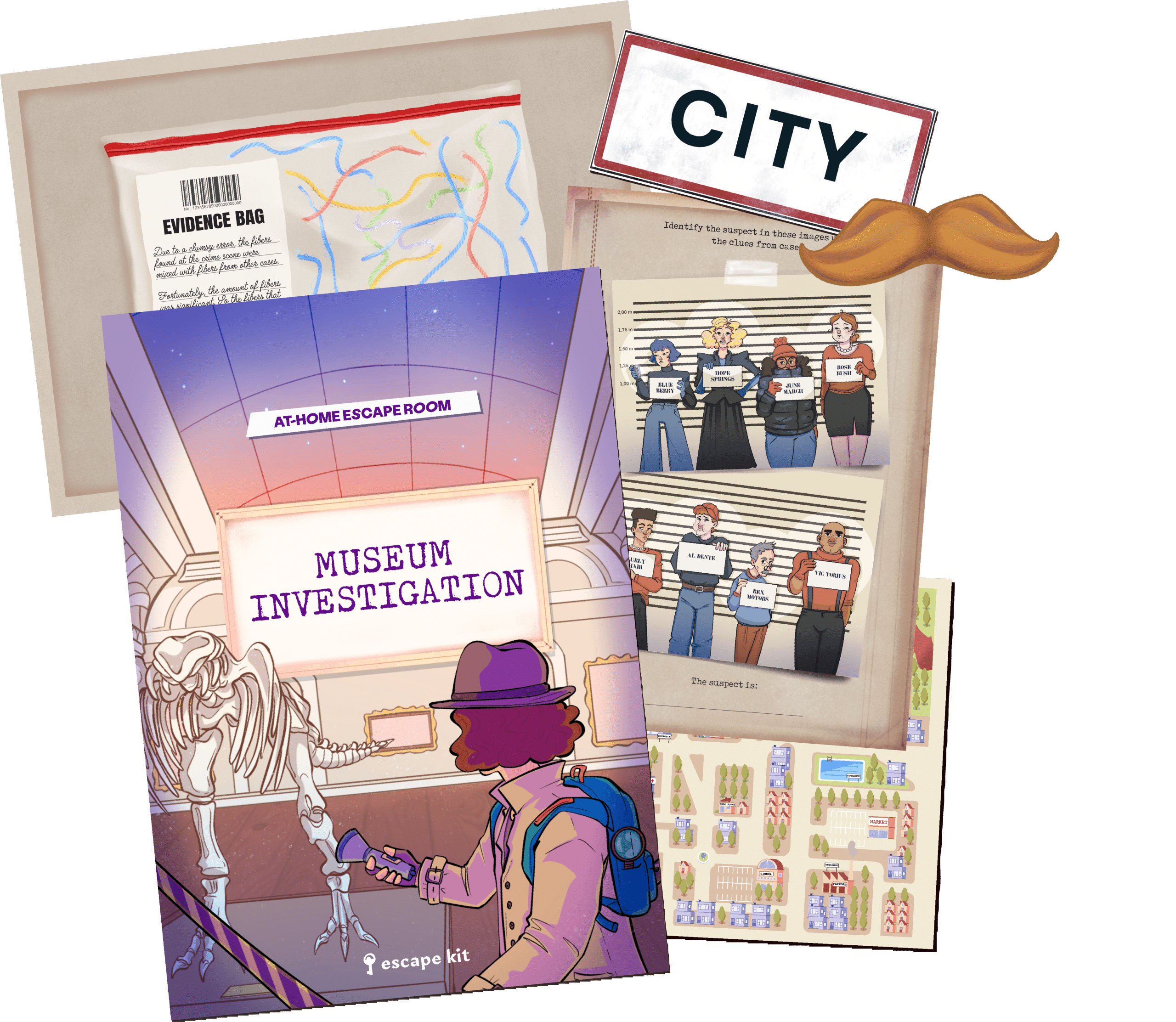
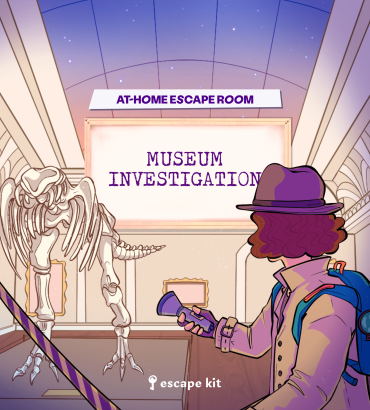
Museum Investigation
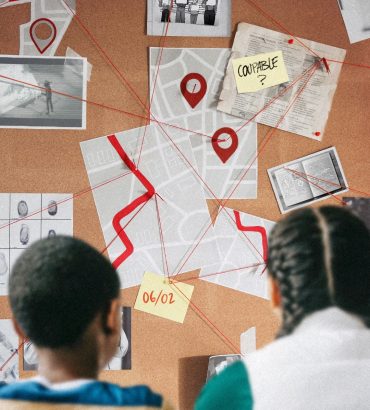
A painting is gone and the suspects are lining up. This is the one to start with if your players are between seven and twelve: the chain is short enough to follow, the evidence bag and mugshot board do a lot of the atmosphere for you, and you print it thirty minutes before they arrive.
Step 5: the run itself
Set the timer where everyone can see it. A phone propped against a mug is fine, and watching the numbers drop does more for the atmosphere than any decoration you could buy.
Then leave the room. This is the hardest instruction in this article and the one that changes everything. Stand in the doorway or the kitchen, come back every ten minutes, and let them argue their way through it. A parent hovering over the table turns a game into a supervised exercise.
Prepare three hints in advance, written on folded paper. When a group is properly stuck, hand one over without commentary. Improvised hints always give away too much, and you will end up solving your own room in front of them.
Adapting the difficulty to who is actually playing
The same room does not work at seven and at fourteen. What changes is not the puzzle count but the amount of reading and the number of steps between a clue and its answer.
- 6 to 8 years. One step per puzzle, pictures instead of sentences, nothing hidden higher than they can reach. Forty minutes maximum.
- 9 to 12 years. Two steps per puzzle, ciphers with a visible key, a real reward at the end. This is the golden age for escape rooms at home.
- 13 and up. Three steps, red herrings allowed, and a story with actual stakes. Add a twist in the last puzzle or they will find it too easy.
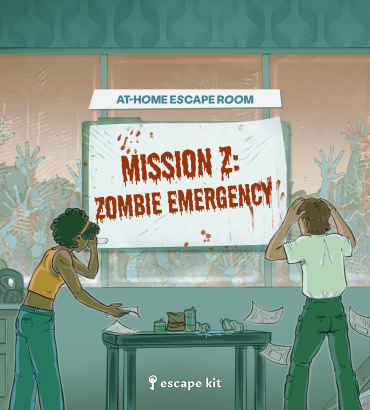
Mission Z: Zombie Emergency
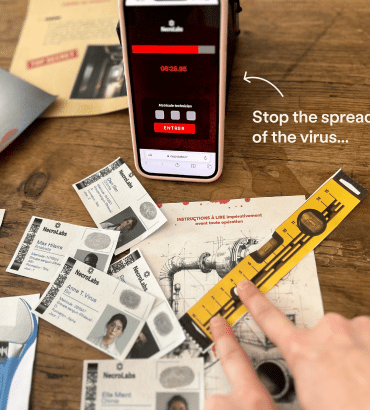
For the thirteen-and-up crowd, where a treasure map stops working. One hour to stop a virus, an intermediate difficulty that assumes they have played before, and no player limit so the whole group stays in it. Thirty minutes to set up.
💡 The expert’s tip
Hide nothing that you would not want found in six months. Every family who builds a room at home loses one clue permanently, usually under a sofa cushion or inside a shoe. Photograph each hiding place before the players come in. It takes two minutes and it is the difference between resetting the room in five minutes and rebuilding it from scratch.
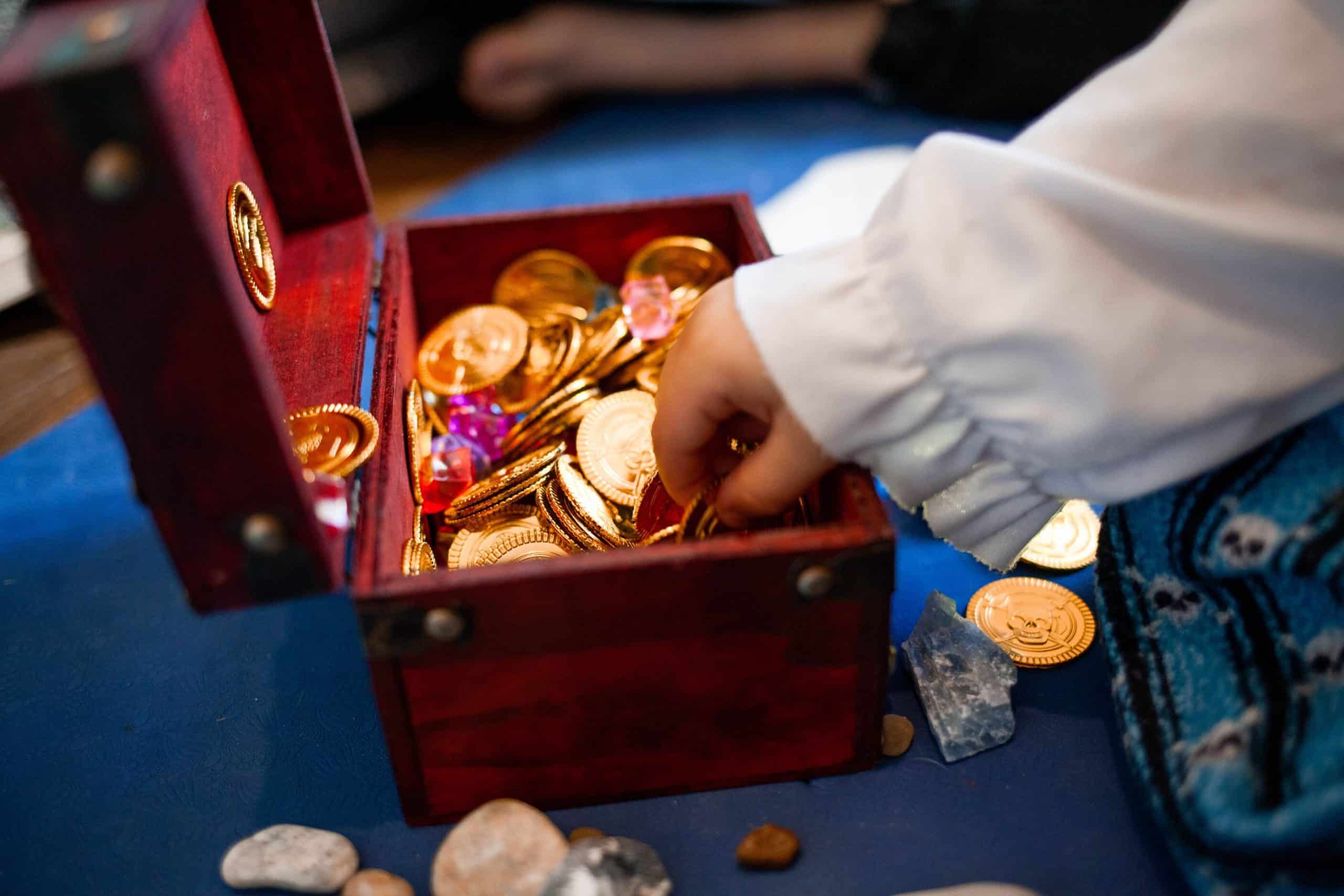
One more thing on the reward. It does not need to be expensive, it needs to be sealed. A box they cannot open until the last code is cracked is worth more than whatever is inside it. Chocolate coins, a printed certificate, the cinema tickets you were going to give them anyway. The same trick works for an indoor scavenger hunt, where the sealed box is often the only structure holding the game together.
Get three ready-made puzzles for your room
Pick a theme and an age group. You get three puzzles that already chain into each other, what you need to make them, and the answer to each one so you can reset the room afterwards.
🔐 The DIY escape room puzzle generator
Three linked puzzles, the materials list, and the answers. Free, no sign-up.
Questions people ask before their first build
How long does it take to make a DIY escape room?
Two to three hours for your first one, including printing and hiding. It drops to about forty minutes once you have a chain that works and you are only swapping the story. A printable kit cuts it to thirty minutes because the puzzles are already tested against each other.
How many puzzles should a home escape room have?
Four to five for a sixty-minute game. Count on eight to twelve minutes per puzzle for a group that has played before, and closer to fifteen for a first time. More than six and the last ones get rushed or skipped.
What age can children do an escape room at home?
From about six, with picture clues and one step per puzzle. Nine to twelve is the sweet spot: they read fluently, they enjoy ciphers, and they are still delighted by invisible ink. Above thirteen you need red herrings and a real twist or it feels babyish to them.
Do I need locks and boxes to build one?
No. Taped envelopes, sealed paper boxes and folded notes work as long as the rule is clear: you only open it once you have the code. Physical padlocks look good but they slow the game down and someone always mistypes the combination.
How do I stop the group solving everything in ten minutes?
Chain the puzzles so puzzle two is physically inaccessible until puzzle one is solved. If everything is visible at once, a group of six will parallelise it and be done before you have sat down. This is the single most common failure of a first build.
What do I do when they get properly stuck?
Hand over a pre-written hint, folded, without saying anything. Three hints prepared in advance is the right number. Improvised hints always reveal too much, and a group that gets a hint at minute twenty still feels like it solved the room.
Can adults play a DIY escape room, or is it just for kids?
Adults play them constantly, usually at New Year or for a birthday. The build is the same, you just add steps between clue and answer and let the story get darker. A murder mystery format scales up particularly well for a mixed group of grown-ups and teenagers.
What if it rains and I need something indoors at short notice?
An escape room is the one game that is better indoors, so a wet Saturday is an opportunity rather than a problem. We keep a longer list of fallbacks in our rainy day activities guide.
The short version
Story first, then a chain of four or five puzzles where each answer unlocks the next hiding place, then a sealed box at the end and a timer everyone can see. Leave the room while they play. That is the whole method, and it works whether you spend an afternoon building it yourself or thirty minutes printing one.
If you would rather not build the chain from scratch, our kits are printable at home, set up in half an hour, and come with the soundtrack and countdown already made. Browse all the escape room kits and pick the one that matches your group.
 By ClémentFan of family board games and new technologies. My favorite Escape Kit is for sure the one about Arsène Lupin, "Arsène's Masterpiece"!