Escape Room Puzzles & Clues
What you are about to discover...
Let’s be honest: we’ve all been there. You’ve watched the movies, you’ve played the high-end immersive games downtown, and now you’re thinking: “I could totally do this at home.“ And you’re right! You can. But once you clear the dining table and grab a pair of padlocks, the big question hits: how to make an escape room that doesn’t feel like a simple homework assignment?
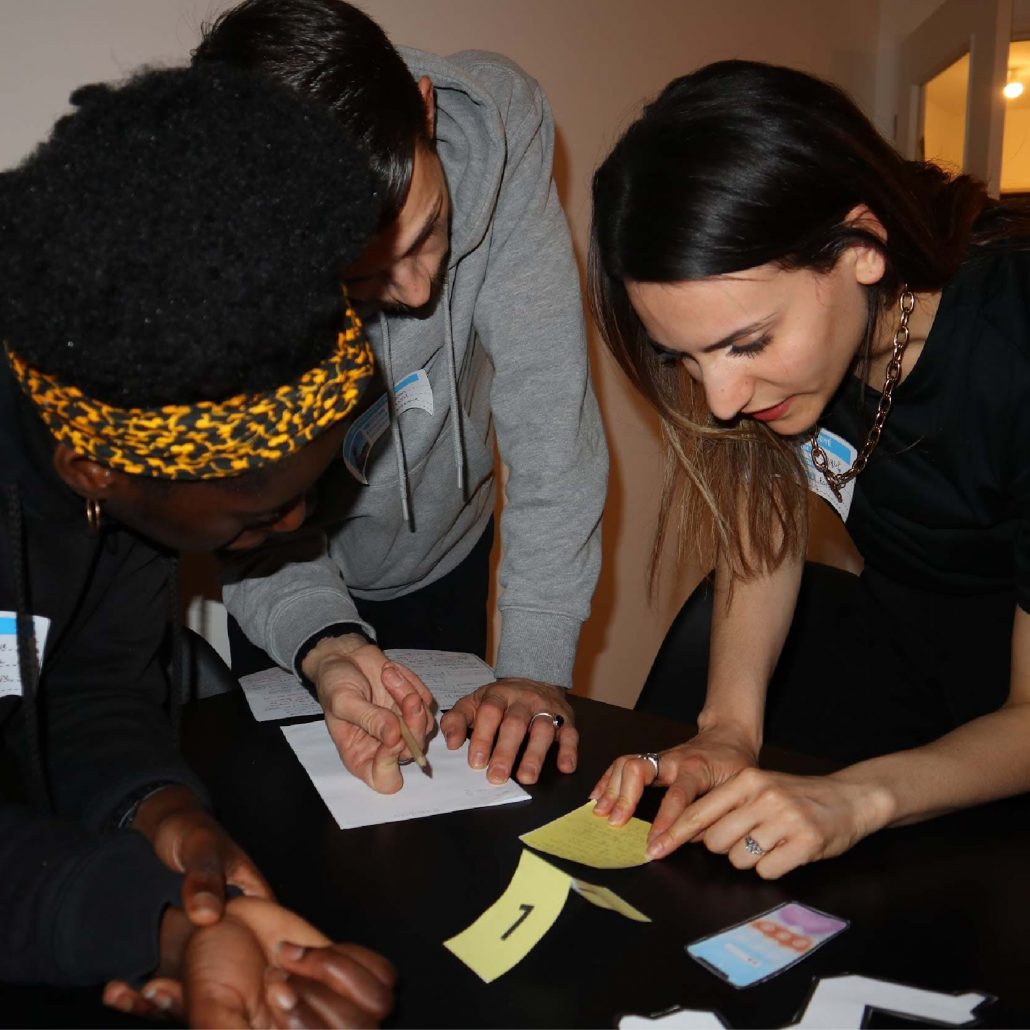
Creating an immersive experience requires more than just locks; it requires a clever mix of escape room puzzles that challenge the brain and escape room clues that guide the story. Whether you’re planning a birthday surprise or a professional team-building session, this guide covers 20 common escape room puzzles and escape room ideas at home to turn you into a master Game Designer.
What kind of puzzles are in an escape room?
If you ask a pro designer what kind of puzzles are in an escape room, they’ll tell you it’s all about variety. If every challenge is a math problem, your players will be bored in ten minutes. To keep the adrenaline pumping, you need to balance four main types of escape room puzzles:
- Physical Manipulation: Moving objects, searching pockets, or assembling parts.
- Mental/Logic: Deciphering codes, solving riddles, or finding patterns.
- Observation: Noticing something “hidden in plain sight” on a wall or in a book.
- Collaboration: Puzzles that require two people to perform different actions at once.
The Cryptographer’s Workshop
Instantly turn any text into diy escape room puzzles. Perfect for your next home adventure!
The Master List: 20 Escape Room Puzzles and Answers
Ready to build? Here are 20 diy escape room puzzles categorized by style to help you flesh out your game. Use these as building blocks for your narrative!
Category A: Ciphers & Secret Writing
1. The Caesar Cipher: Shift the alphabet by 3. Answer: “D” is actually “A”.
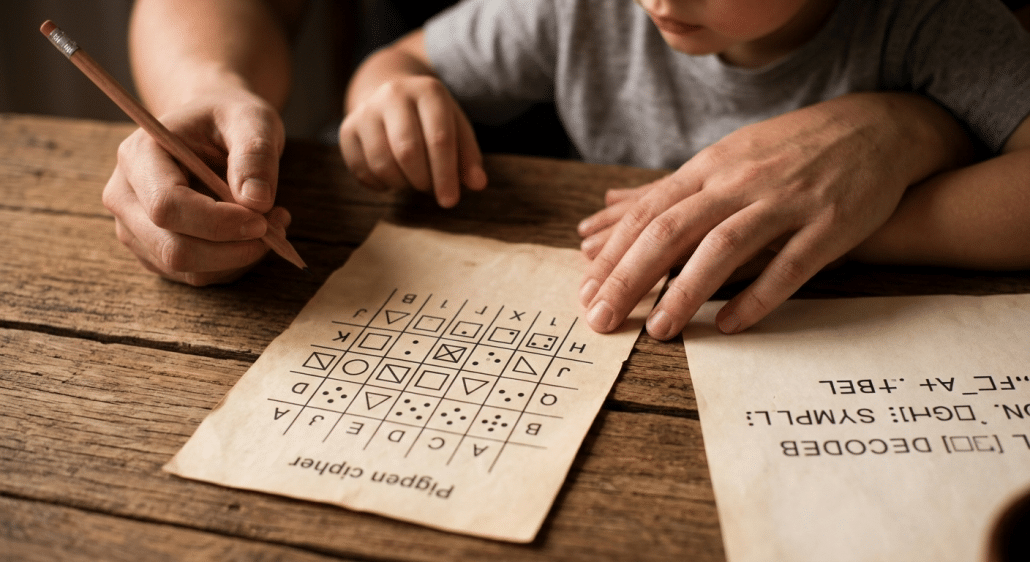
2. The Pigpen Cipher: Symbols based on a grid. Very visual and popular in printable escape room puzzles.
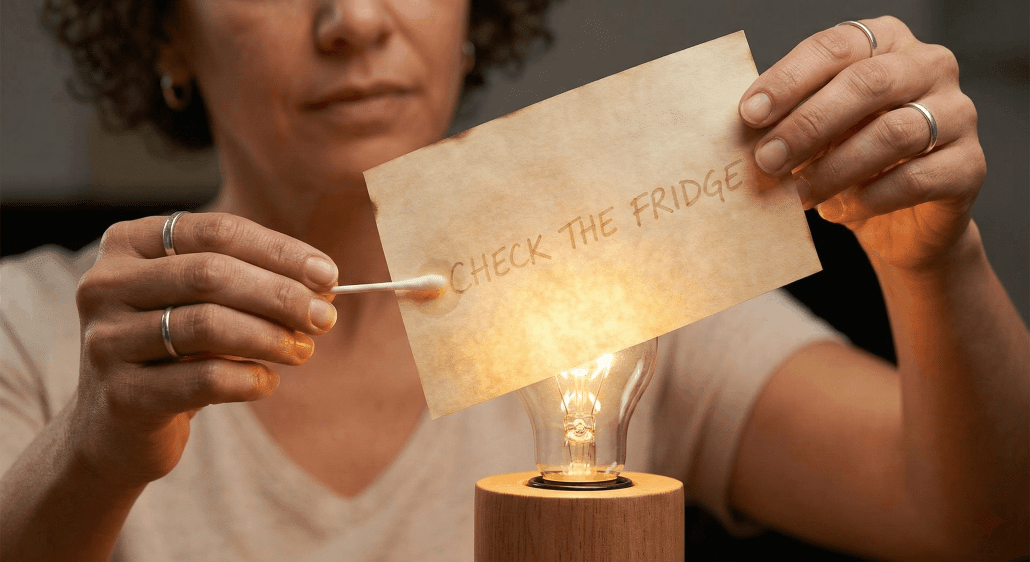
3. Invisible Ink: Use lemon juice or a UV pen. Revealed by heat or a blacklight.
4. The Scytale: Wrap a strip of paper around a specific cylinder (like a pringles can) to reveal the message.
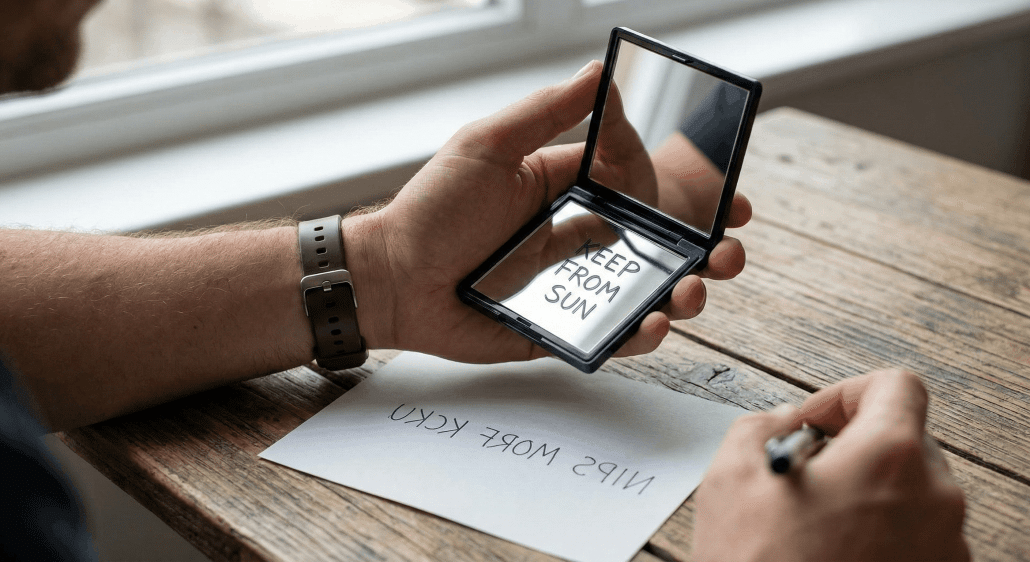
5. Mirror Writing: Write backwards. Players must find a mirror in the bathroom or a compact.
Category B: Observation & Hidden Clues
6. Red Filter: Scribble in red and blue. The message is only visible through a red transparency film.
7. Jigsaw Map: Cut a map into pieces. The back of the assembled puzzle reveals a code.
8. Blacklight Graffiti: Write a code on the wall that is only visible when players find the UV flashlight.
9. Magnetic Fishing: Place a key inside a glass bottle. Players must use a magnet to “drag” the key up the side.
10. Book Cipher: A series of numbers like 14-2-5. Page 14, Line 2, Word 5.
Category C: Logic & Math
11. Pattern Recognition: A sequence like 2, 4, 8, 16… The next number (32) is part of a lock code.
12. Directional Lock: Players find a diary describing a journey (North to the lake, East to the hills). The directions N-E-S-W open a lock.
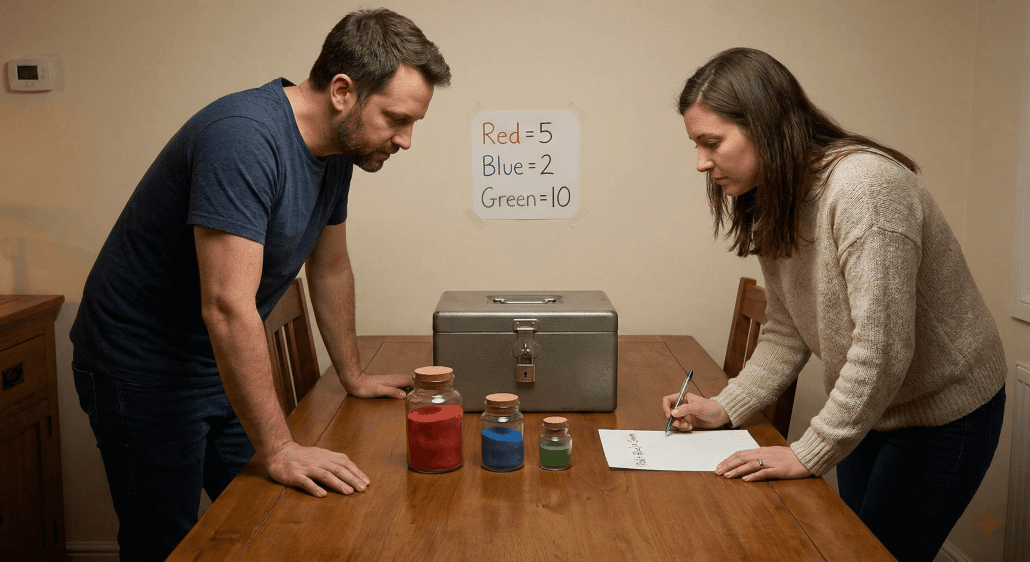
13. Color Weighting: Three colored jars filled with different amounts of sand. Weighing them reveals the sequence (Heaviest to Lightest).
14. Sudoku Key: Solve a small Sudoku. Specific circled squares provide the 4-digit code.
15. The Transparency Overlay: Two sheets of plastic with random dots. When stacked perfectly, the dots form numbers.
Category D: Tech & Sensory Puzzles
16. QR Code Hunt: Hide a QR code that plays a voice message from the “kidnapper.”
17. Audio Cues: A looping sound of a ticking clock. The rhythm or “beeps” translate to a Morse code.
18. Touch & Feel: Players must reach into a “mystery box” to feel shapes that correspond to symbols on a wall.
19. The Phone Number: Players find a fake business card. Calling the number (or texting a friend acting as an NPC) gives them the next clue.
20. Flashlight Shadow: Shine a light through a specific object (like a 3D-printed shape) to cast a numerical shadow on the wall.
How to make an escape room: A 5-Step Setup Guide
Building escape room puzzles and answers is fun, but putting them together is where the magic happens. Follow this simple framework:
- The Story: Why are they locked in? (e.g., “The Mad Scientist’s Lab”).
- The Goal: What is the “Win Condition”? (e.g., “Find the vaccine”).
- The Flowchart: Connect your puzzles. Puzzle A leads to Clue B, which opens Lock C.
- The Ambiance: Use a themed playlist and dim the lights.
- The Dry Run: Test it yourself! If it takes you 10 minutes, it will take your players 30.
💡 Pro Strategy: Linear vs. Non-Linear
For small groups (2-3 people), a linear path works best (one puzzle at a time). For larger groups (4+), use a non-linear setup where players can solve different common escape room puzzles simultaneously. This prevents the “crowding” effect where one person works and everyone else just watches.
Save Time with a “Plug-and-Play” Kit
If you’re feeling overwhelmed by the DIY route, don’t worry. You can still host a legendary night without spending 20 hours on crafts. Our printable escape room puzzles are professionally designed, tested by thousands of players, and ready to print in minutes.
DIY Game Flow Estimator ⏱️
Planning your own puzzles? See if your adventure is ready or if you should save time with a pro kit.
FAQ: DIY Escape Room Puzzles
Are escape room puzzles and answers always provided in kits?
Yes! Every Escape Kit comes with a full answer key and a hint system, so the host can play along or act as the “Game Master” with ease.
What if players get stuck?
We recommend the “Hint Card” system. Give players 3 cards at the start. They can “spend” a card to get a specific escape room clue from you. It keeps the game moving without making it too easy.
Can I use these escape room ideas at home for kids?
Absolutely. For kids under 10, focus more on searching (Physical/Observation) and less on complex ciphers. Visual puzzles like the “Red Filter” or “Mirror Writing” are always a hit!
Final Thoughts
Whether you choose to spend your weekend crafting diy escape room puzzles or decide to use a ready-to-print kit, the goal is the same: creating a moment of pure, unplugged fun. The best escape room clues aren’t the most expensive ones—they’re the ones that make your players go “Aha!”
 By ClémentFan of family board games and new technologies. My favorite Escape Kit is for sure the one about Arsène Lupin, "Arsène's Masterpiece"!