Dinosaur Coloring Pages: 10 Free Printables by Age
What you are about to discover...
There is a phase, somewhere between 3 and 9, when a child talks about nothing else. They know every name by heart, they correct you when you say « flying dinosaur », and they ask you for the fifteenth time which one was strongest.
A dinosaur coloring page keeps that exact child busy for twenty to thirty minutes, with no screen and no supplies : one sheet, a few markers, done. Provided the drawing suits their hand. A Triceratops crammed with tiny details gives you a four-year-old who quits after two minutes, and a chubby round dino gives you a nine-year-old who finds it babyish.
So here are 10 free dinosaur coloring pages to print, sorted by age, each with what you need to answer the questions that will arrive mid-coloring : how big was it, when did it live, what did it eat. The PDF holds all ten pages at once.
For ages 3 to 5 : thick lines, big areas
At this age the marker goes outside the lines, and that is normal : the hand cannot hold a line yet. What they need are thick outlines and wide areas, where a slip does not ruin the drawing. Three dinosaurs work particularly well.
The baby dinosaur hatching from its egg
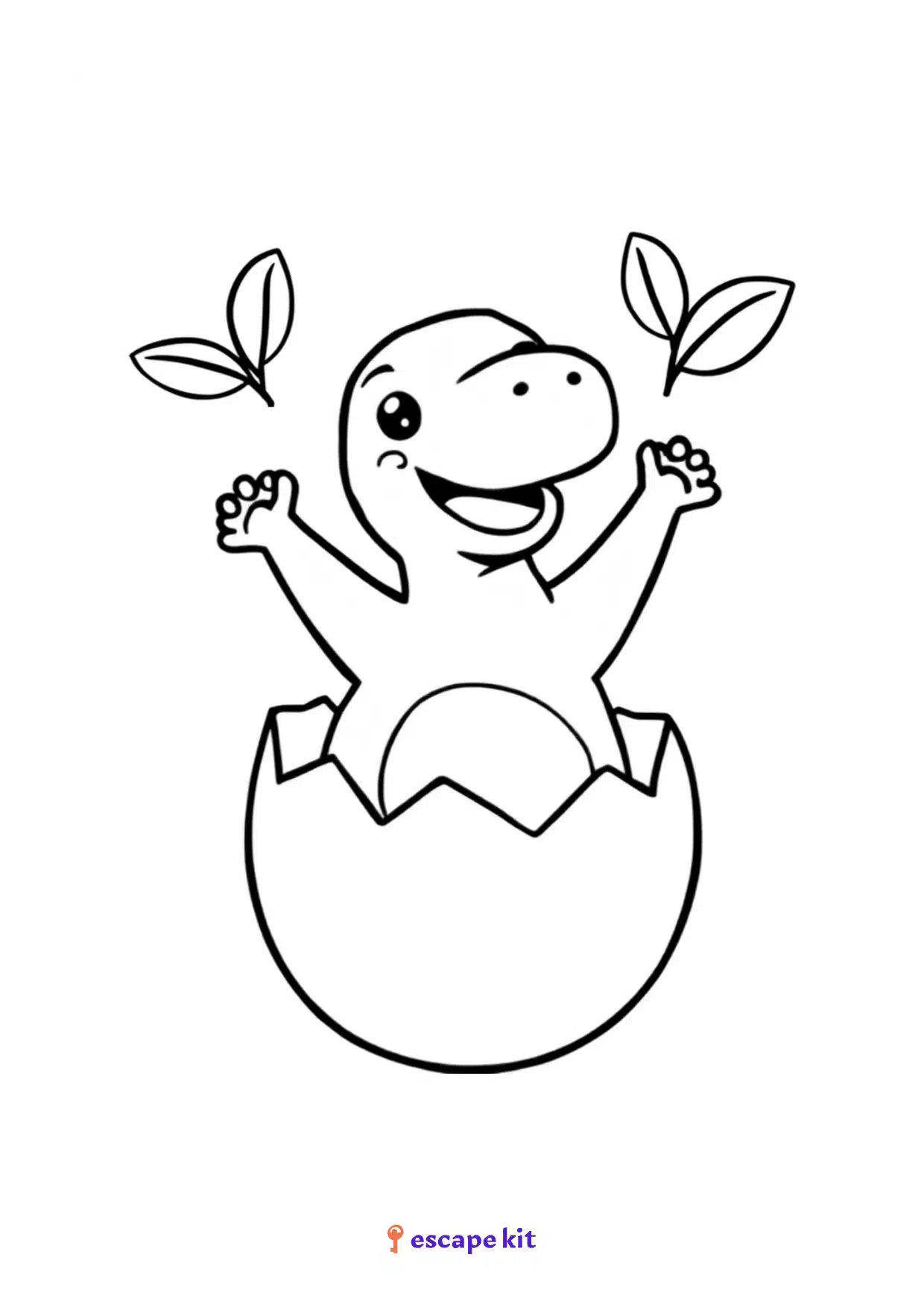
This is where you start before the fourth birthday : four large areas, an egg, two leaves, nothing else. And it opens the one piece of palaeontology a child that age actually remembers : yes, every dinosaur hatched from an egg, and the largest dinosaur egg ever found measures about thirty centimetres, barely more than a rugby ball. For an animal that weighed several tonnes as an adult, that lands every time.
The Diplodocus and its endless neck
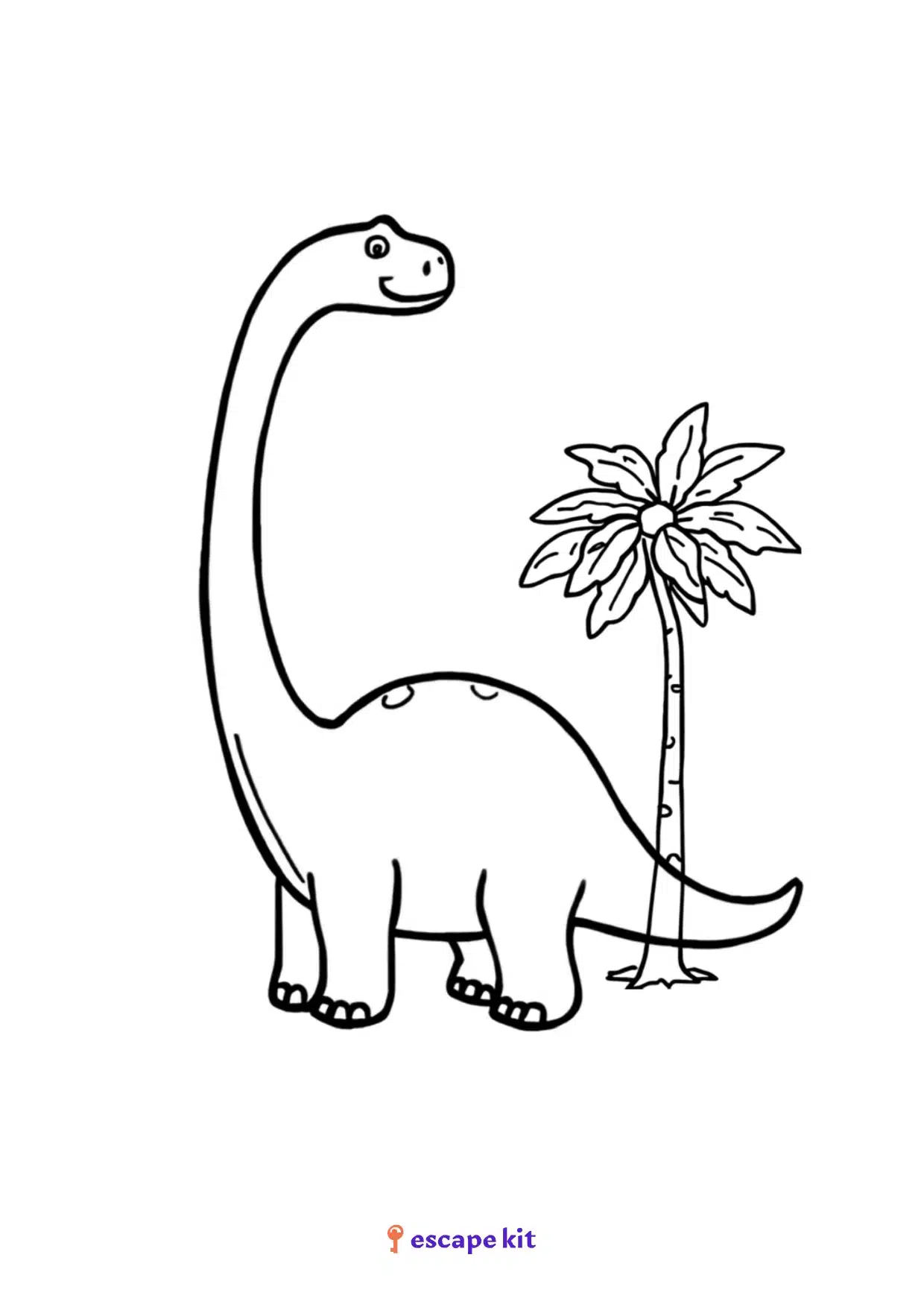
The Diplodocus measured around 26 metres, the length of two buses end to end, but a good half of that was neck and tail. It lived in the Jurassic about 150 million years ago and ate only plants. Its whip-shaped tail is the part children always colour last, usually switching colour every ten centimetres.
The Brachiosaurus, the giraffe of prehistory
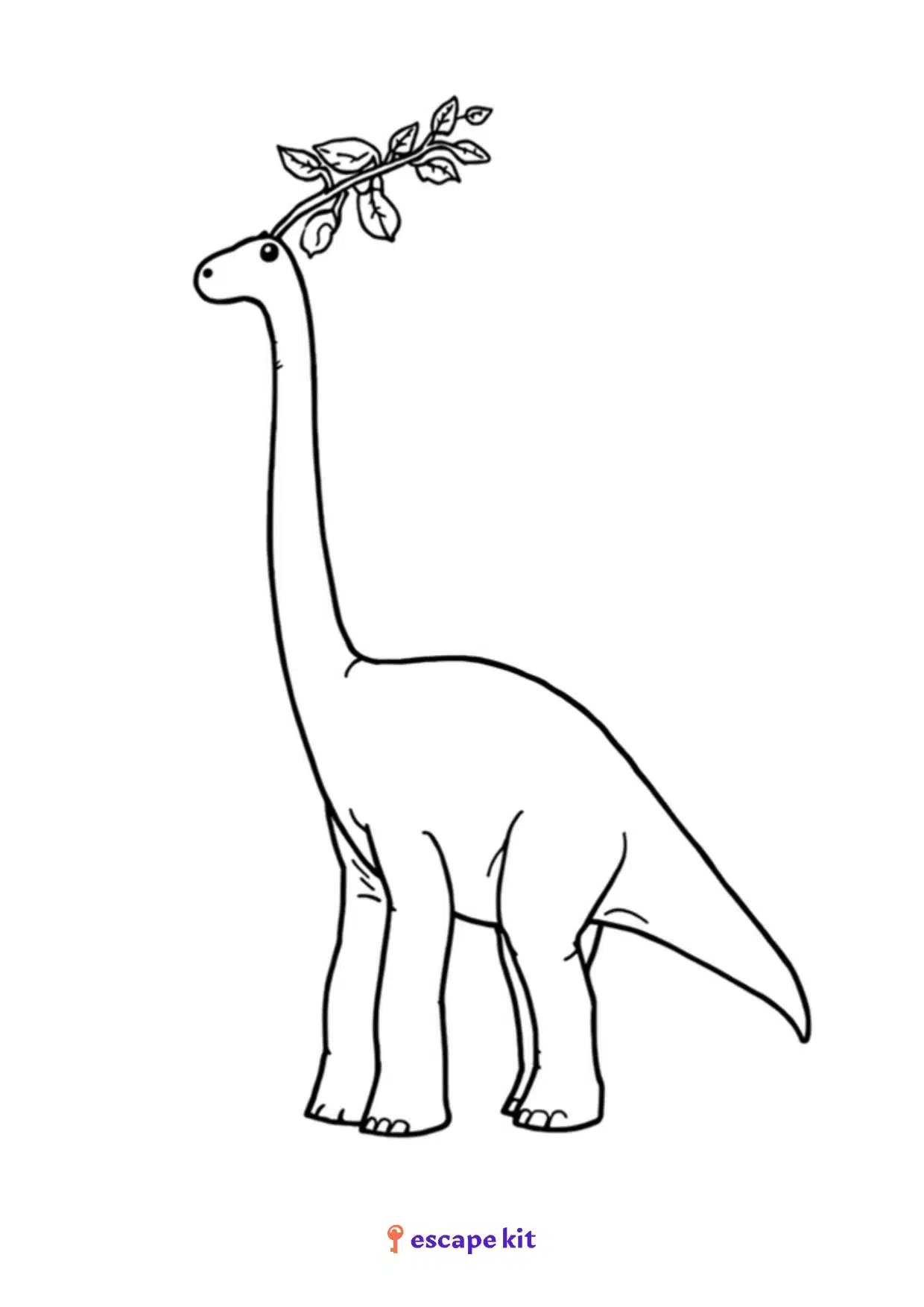
It gets mixed up with the Diplodocus constantly, yet the neck alone tells them apart : the Brachiosaurus holds its neck almost vertical to reach leaves high up, while the Diplodocus keeps its own stretched out horizontally. It could lift its head 13 metres, the height of a four-storey building, and grazed the treetops nobody else could reach.
For ages 6 to 8 : the five stars
This is the golden age of dinosaur colouring. The child holds the line, knows the names, and wants detail without spending an hour on it. These five are the ones we get asked for most.
The T-Rex, obviously
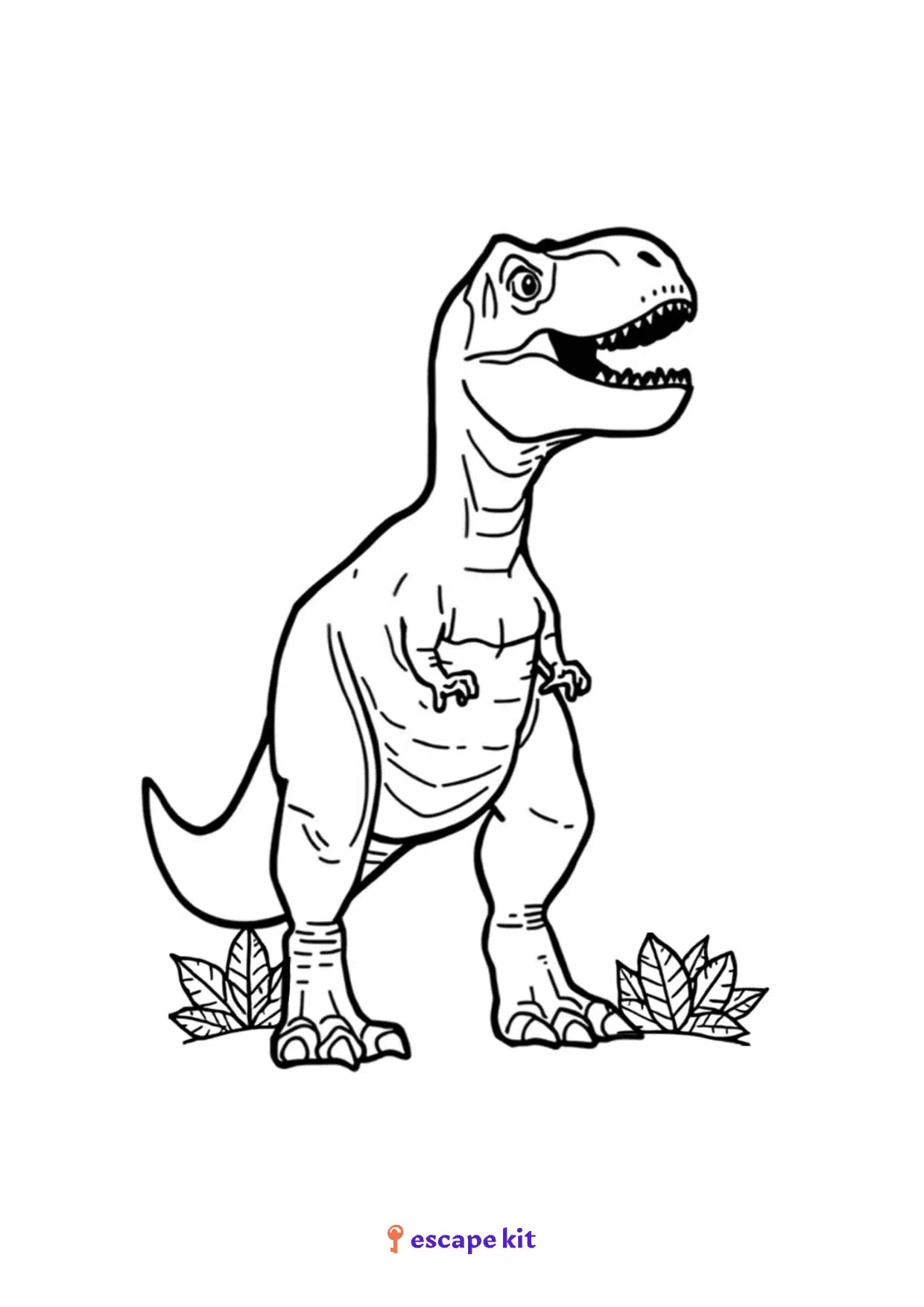
Tyrannosaurus rex, 12 metres long, up to 6 tonnes, with teeth reaching 20 centimetres including the root. It lived at the very end of the Cretaceous around 66 million years ago, which means something children love learning : the T-Rex is closer to us in time than it is to the Stegosaurus. More than 80 million years separate the two.
The Triceratops and its three horns
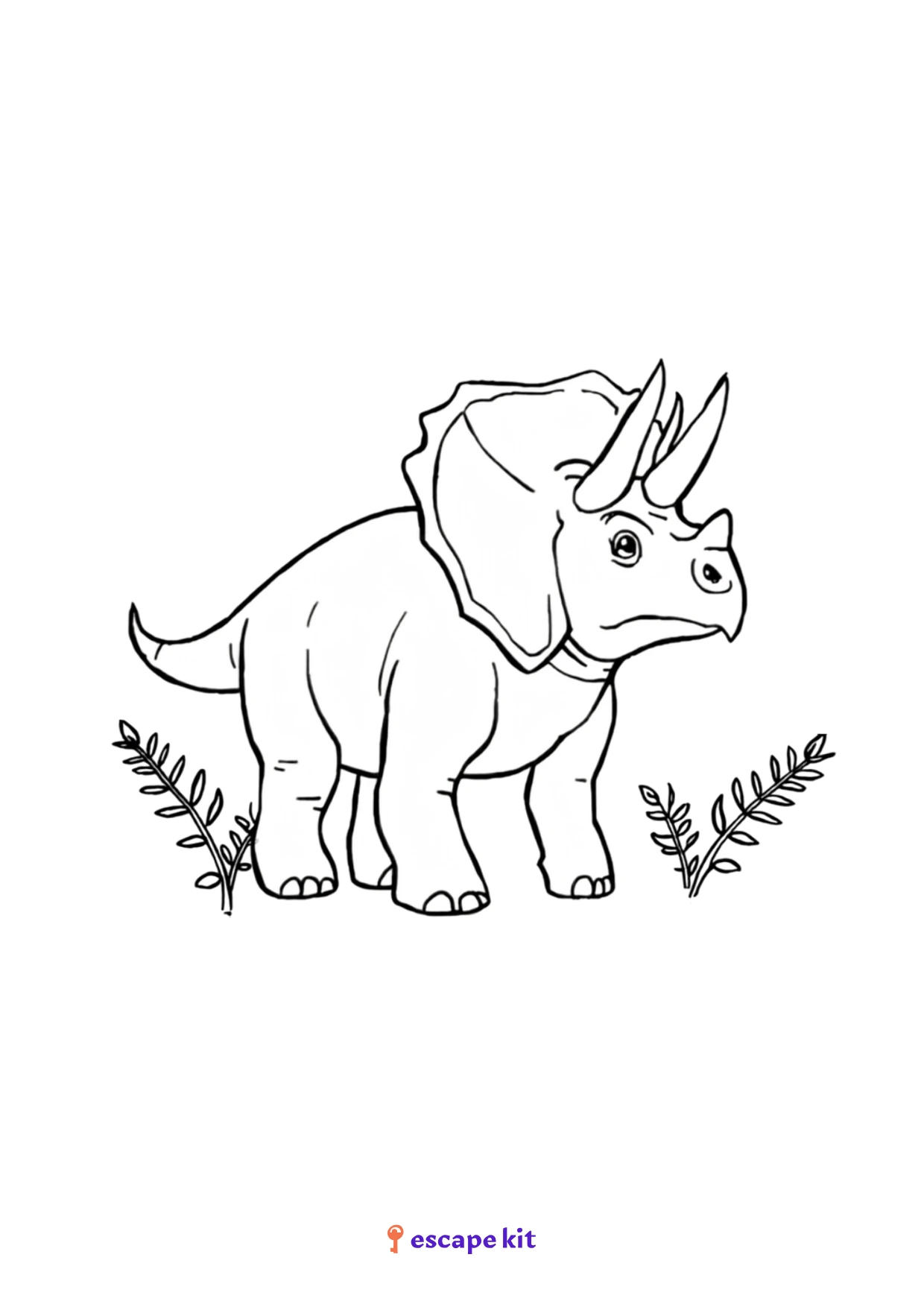
Its name means « three-horned face », and if you look closely, the one on the nose is noticeably shorter than the other two. It measured 9 metres and weighed as much as one and a half elephants, yet ate nothing but plants. Its large frill is the area children invest in most : the only surface wide enough for patterns of their own.
The Stegosaurus and its plates
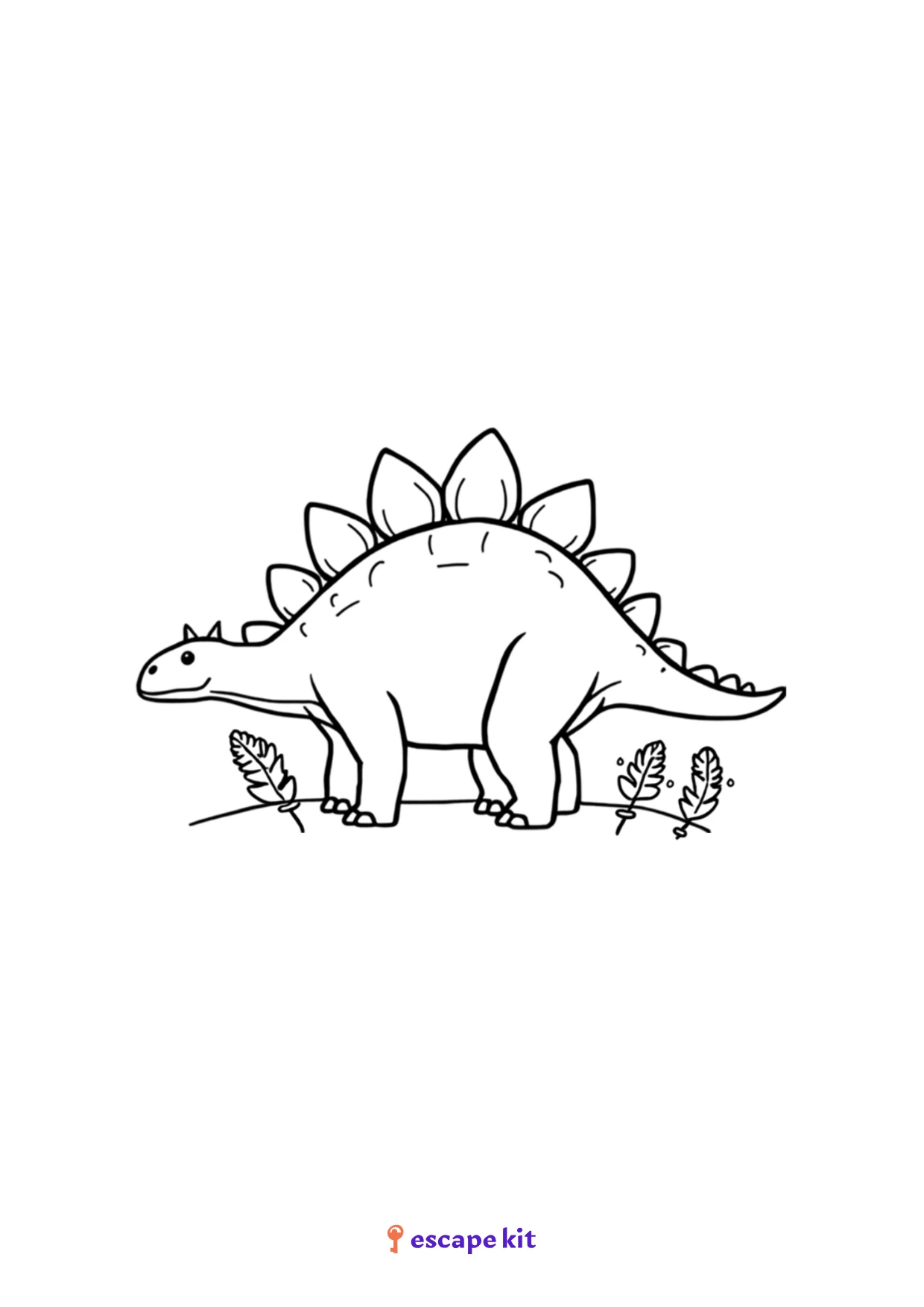
A double row of bony plates along the back, spikes at the end of the tail, and a tiny brain for a nine-metre animal. What the plates were actually for, palaeontologists still cannot say for certain : temperature regulation, display to rivals, or both. The ideal page when a child just wants to cycle through colours without thinking.
The Pterodactyl, which is not a dinosaur
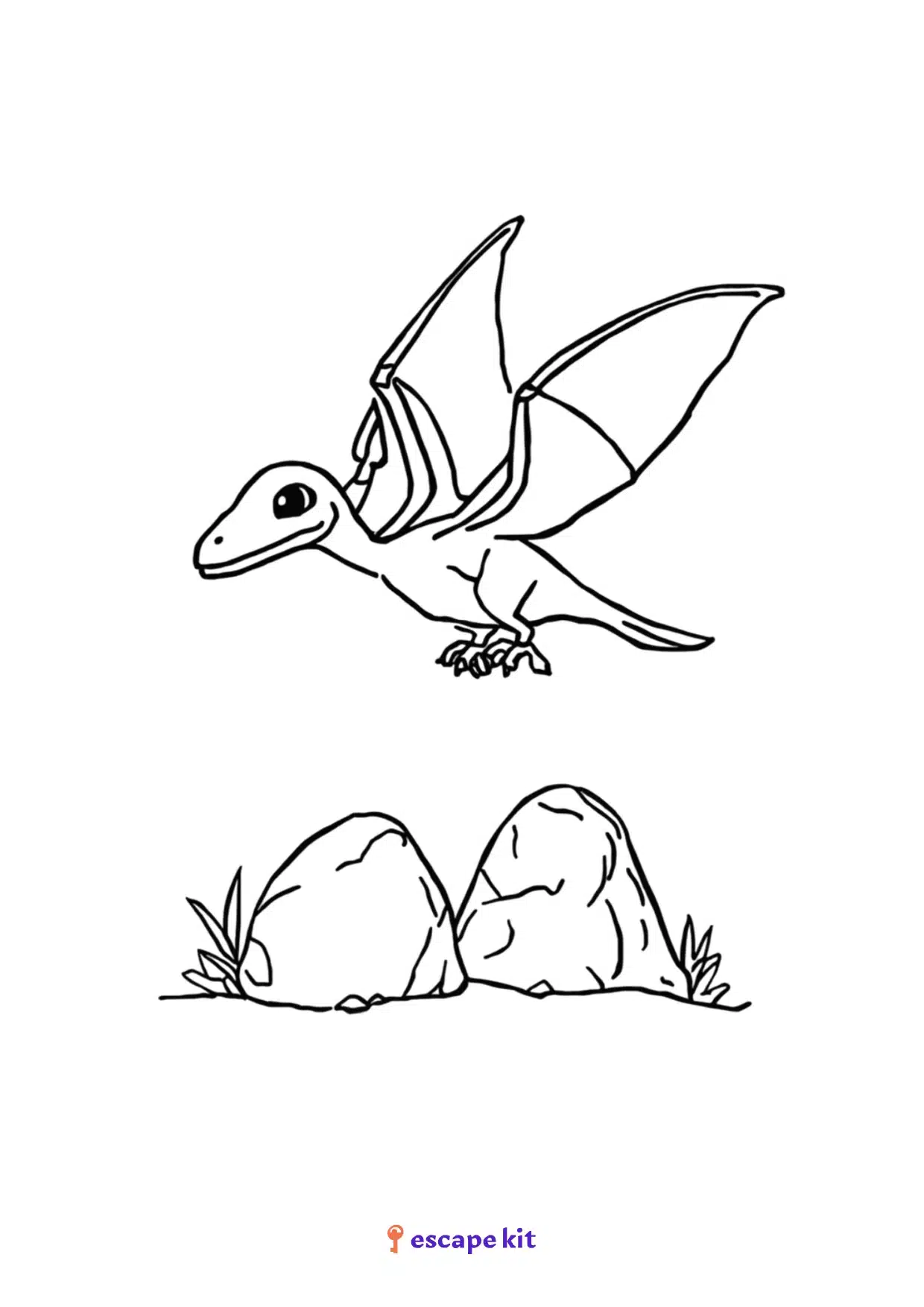
Here is the fact that wins your next dinner-table argument : the pterodactyl is not a dinosaur. It is a flying reptile, a pterosaur, a cousin. And the real Pterodactylus was small : about one metre of wingspan, the size of a buzzard. The giants with ten-metre wings from the films are other, much later species.
The Ankylosaurus, the armoured tank
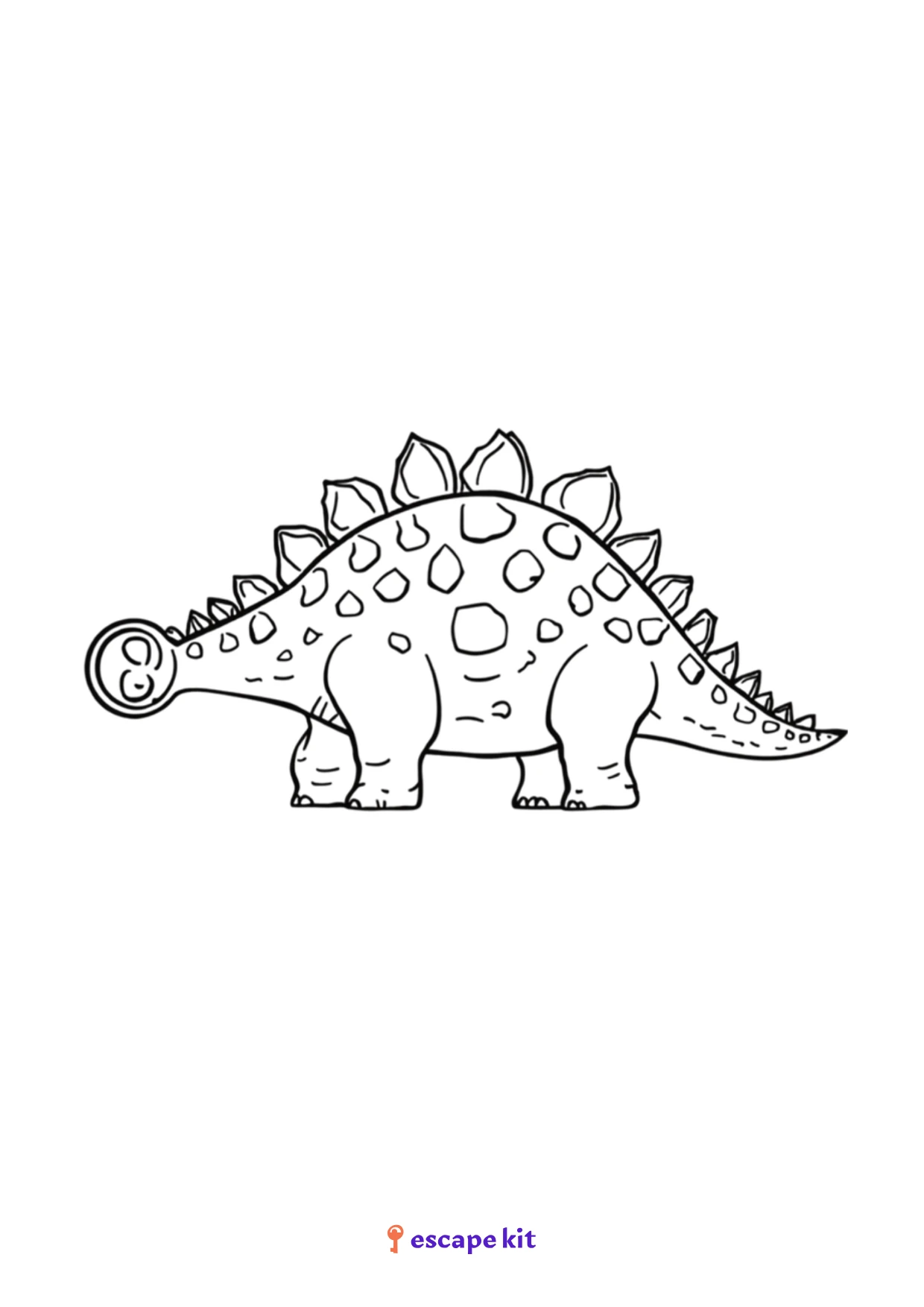
Covered in bony plates from head to tail, with spikes along its flanks. It lived at the same time as the T-Rex and was by far the hardest prey to attack : its only weak spot was its belly, and you would have had to flip it over to get there. Good news for colouring : all those plates make dozens of small cells to fill.
For 9 and up : the ones that take time
Past nine, a page that is finished in ten minutes goes in the bin. These two have enough detail for three quarters of an hour, and enough scientific truth to interest a child who has already read three books on the subject.
The Velociraptor, far smaller than in the films
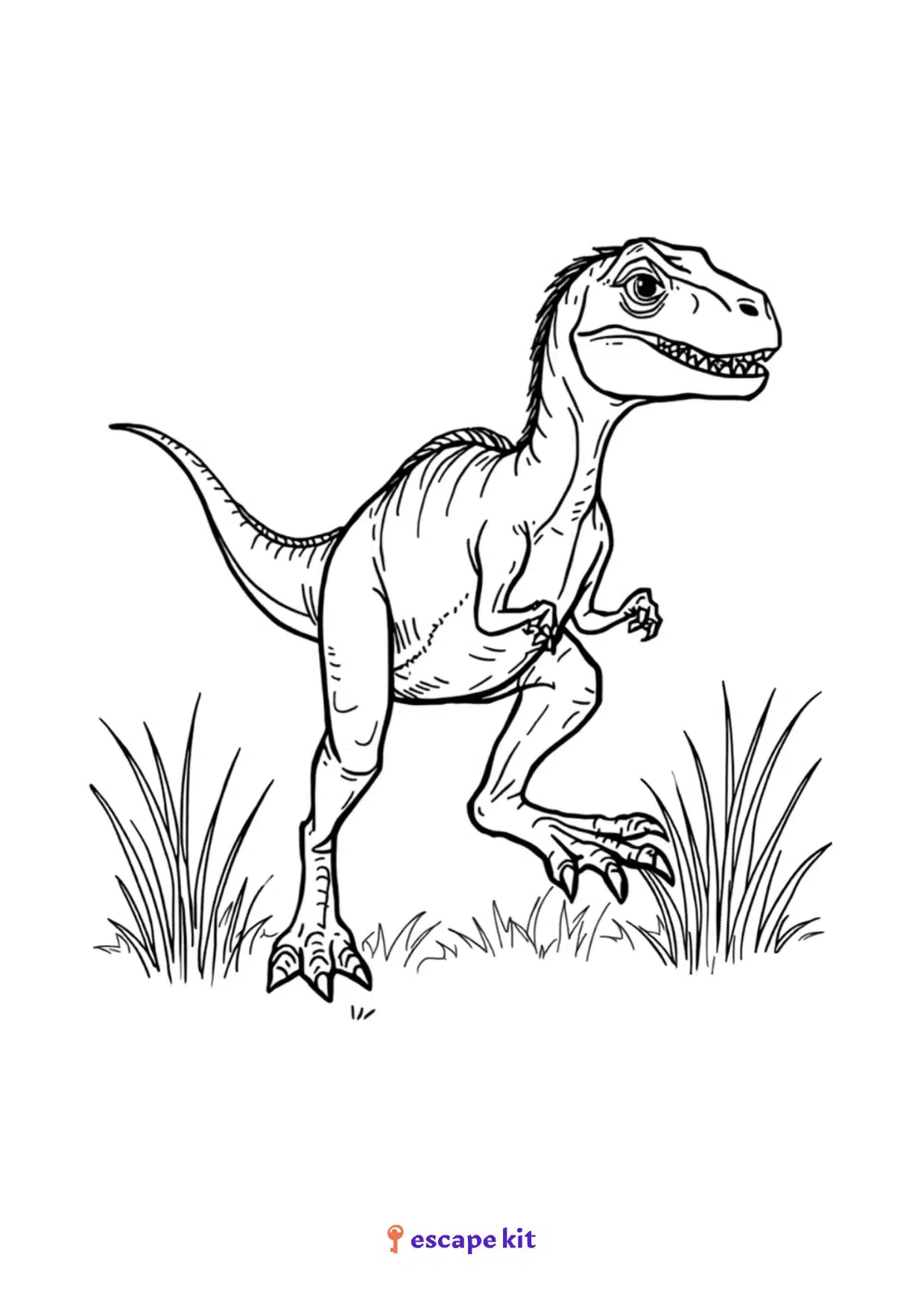
The real Velociraptor was 2 metres long, 50 centimetres at the hip, and weighed about fifteen kilos : the size of a large turkey. And it was covered in feathers, which we know since quill knobs were found on its forearm bone. The raptors in the films are based on a much larger cousin. It is the fact that impresses a ten-year-old most, and it happens to be exactly right.
The Spinosaurus, the giant fisher
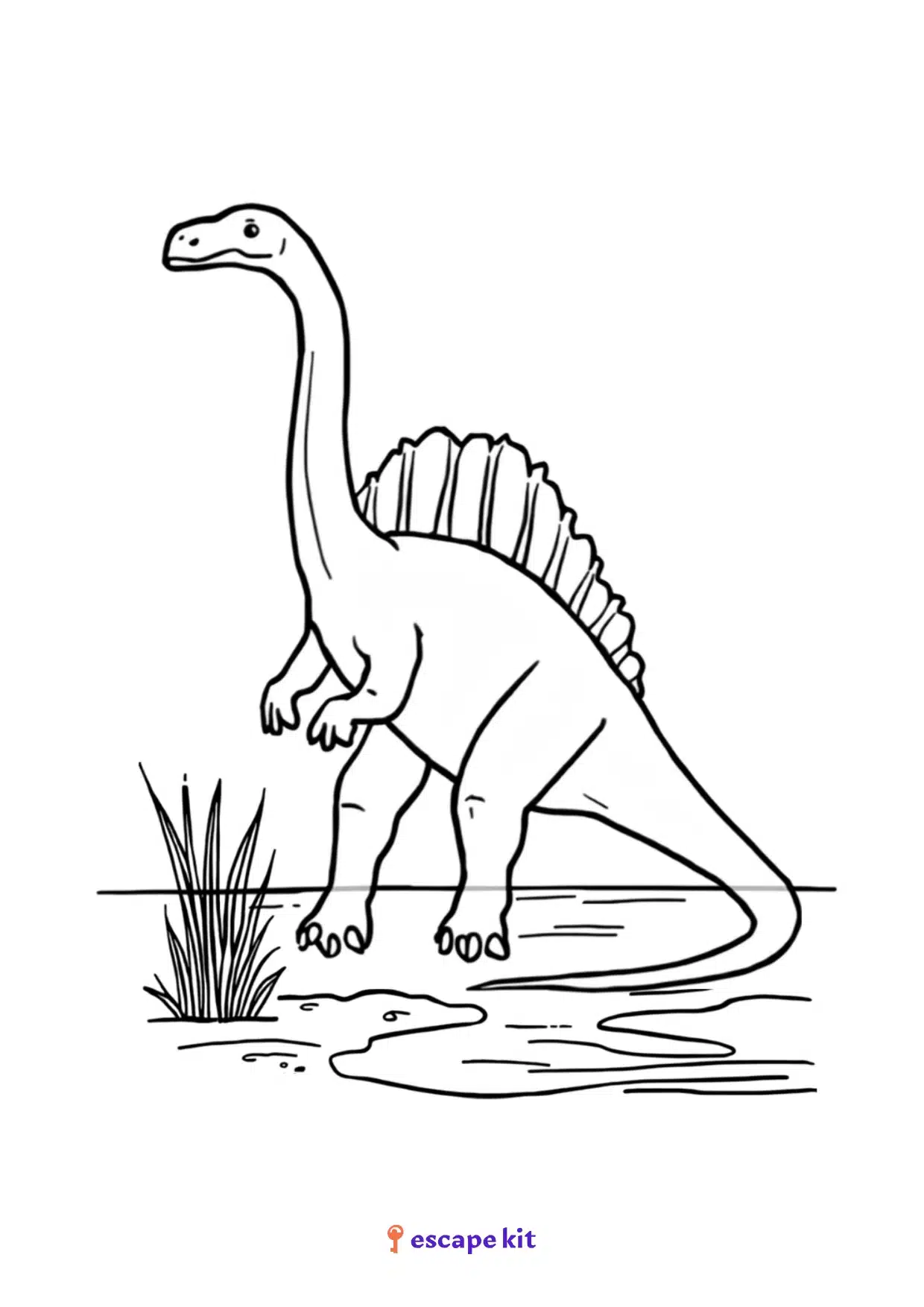
Longer than the T-Rex, up to 15 metres, with an elongated crocodile snout and an enormous sail down its back. It spent much of its life in water and fed mostly on fish, which makes it the dinosaur least like the picture we carry in our heads. Its sail is the finest surface to colour on this whole page : stripes, gradients, whatever the child wants, since nobody knows what colour it was anyway.
The 10 dinosaurs at a glance
Print it alongside the coloring pages, or just keep it within reach. The questions always come in the same order : how big was it, what did it eat, when did it live.
| Dinosaur | Size | Period | Diet | The detail worth keeping |
|---|---|---|---|---|
| T-Rex | 12 m | Cretaceous | Meat | Teeth 20 cm long, root included |
| Triceratops | 9 m | Cretaceous | Plants | The nose horn is the shortest of the three |
| Stegosaurus | 9 m | Jurassic | Plants | Plates along the back, spikes on the tail |
| Diplodocus | 26 m | Jurassic | Plants | A whip tail, half its total length |
| Brachiosaurus | 22 m | Jurassic | Plants | Neck near vertical, head 13 m up |
| Ankylosaurus | 7 m | Cretaceous | Plants | Back entirely covered in bony plates |
| Spinosaurus | 15 m | Cretaceous | Fish | It swam, and was longer than the T-Rex |
| Velociraptor | 2 m | Cretaceous | Meat | Feathered, the size of a large turkey |
| Pterodactyl | 1 m | Jurassic | Fish | Not a dinosaur but a flying reptile |
| Baby dino | 30 cm | — | — | The largest known egg is the size of a rugby ball |
How to print them properly
Three settings make the difference, and they are exactly the ones nobody thinks to change.
Paper first. On standard 80 gsm, a marker bleeds through and marks the next sheet. 120 gsm costs barely more and changes everything, especially if your child presses hard. If all you have is 80 gsm, slide a blank sheet underneath.
Scaling second. In the print dialog, choose « Fit to page » rather than « Actual size ». Without it, part of the drawing runs past the margin and the Diplodocus loses its tail.
Black and white last. These drawings contain no colour at all : printing in greyscale saves your colour cartridges, and the line work often comes out crisper.
One last piece of parental advice : with two children, always print two copies of the same page. A child whose drawing went wrong, sitting next to a sibling’s finished sheet, does not start over. They stop.
One file, ten A4 pages, ready to print. Free, no sign-up and no email address to hand over.
Download the PDF →And once the colouring is done ?
This is the delicate moment. Twenty quiet minutes, then the child puts the marker down and looks at you. Colouring occupies well, but it never fills a whole afternoon.
What works next is keeping the theme and changing the activity : the drawings go up on the wall, and the expedition moves into the house. A treasure hunt with clues to find runs on exactly the same instinct as a dinosaur coloring page, which is exploring, except it gets them moving and it holds a full hour.
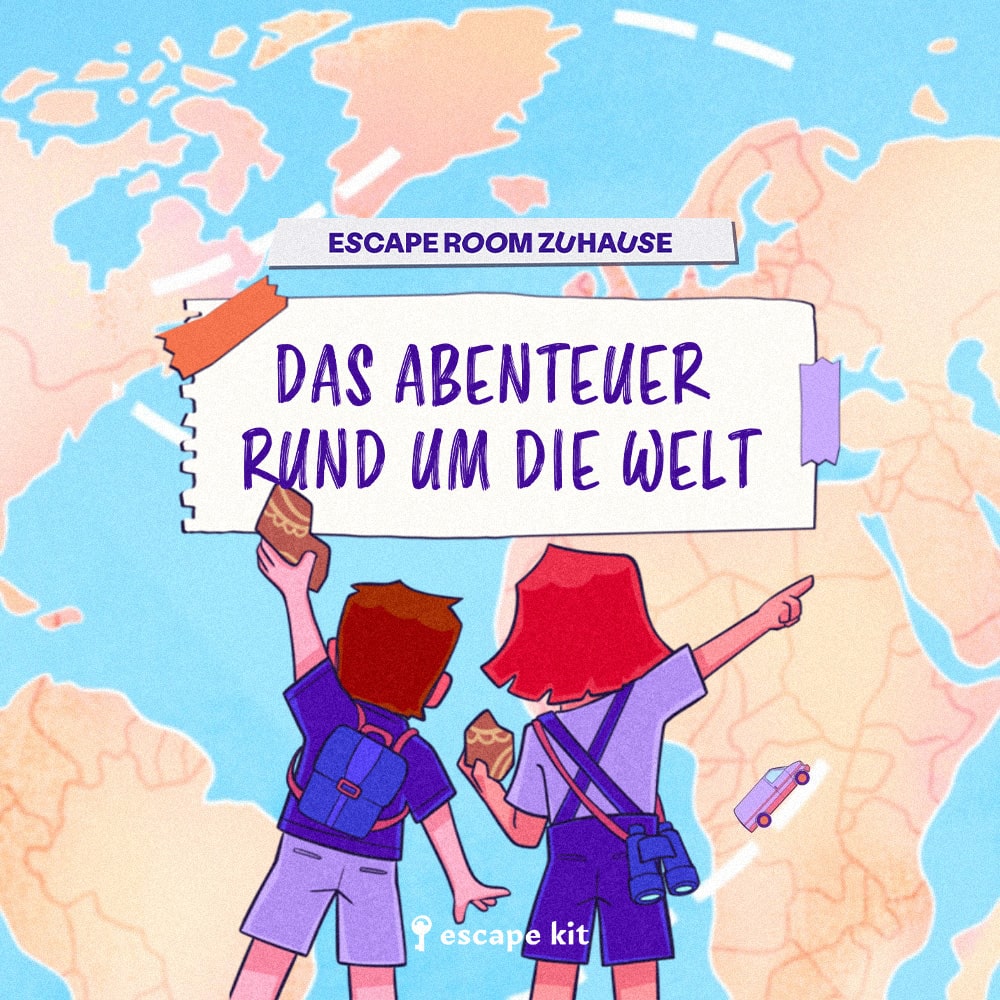
Adventure Around the World, for ages 6 to 10
A printable treasure hunt built around five continents, for the same children who colour the T-Rex and the Triceratops. You download it, you print it, you set it up in twenty minutes, and you have nothing left to run on the day. One purchase, unlimited players : the PDF prints again next year.
For the older ones, those who take on the Velociraptor and the Spinosaurus, The Quest for the Magic Diamond holds a full hour of puzzles. And if you would rather build the game yourself, our indoor scavenger hunt ideas give you a complete route without buying anything.
Looking for more indoor ideas ? Our guide to building a DIY escape room is the natural next step for a child who has outgrown the dinosaur phase.
Frequently asked questions
Where can I find free dinosaur coloring pages to print?
The ten drawings on this page can be downloaded and printed freely, one by one or as a single ten-page PDF, with no sign-up and no email address. They are A4 sized and designed for black and white printing.
Which dinosaur coloring page suits a three-year-old?
The baby dinosaur in its egg, then the Brachiosaurus and the Diplodocus. These three have thick outlines and wide areas, where a slip of the marker does not ruin the drawing. Leave the Ankylosaurus and the Velociraptor until 6 or older: too many small cells.
Is a pterodactyl a dinosaur?
No, and it is the most widespread mistake there is. The pterodactyl is a pterosaur, a flying reptile related to dinosaurs but not part of the group. The real Pterodactylus was small too: about one metre of wingspan, the size of a buzzard.
Which dinosaur on this page is the biggest?
The Diplodocus, at 26 metres long, the length of two buses end to end. The tallest, though, is the Brachiosaurus, which could lift its head 13 metres up, the height of a four-storey building. The Spinosaurus, for its part, was longer than the T-Rex.
Should I print in colour or black and white?
Black and white, or more precisely greyscale. The drawings contain no colour at all: printing in colour burns your cartridges for nothing, and the line work often comes out crisper in greyscale.
What colour were dinosaurs really?
For the vast majority, nobody knows, because skin fossilises very rarely. Traces of pigment have been found on a few feathered species, which established that at least one of them was reddish-brown with a striped tail. So your child can colour their T-Rex purple and no one can argue.
How long does a coloring page keep a child busy?
Count ten to fifteen minutes between 3 and 5, twenty to thirty minutes between 6 and 8, and up to three quarters of an hour from 9 on a detailed page like the Velociraptor. Beyond that, plan something that gets them moving.
Can these coloring pages be used in a classroom or after-school club?
Yes, they are free to print for family, school and after-school use. In a group, always print more copies than there are children, and offer at least two difficulty levels side by side, or the youngest drop out after five minutes.
 By ClémentFan of family board games and new technologies. My favorite Escape Kit is for sure the one about Arsène Lupin, "Arsène's Masterpiece"!