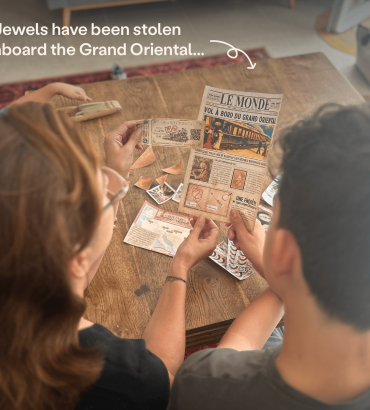
Murder Mystery for Kids: How to Host a Thrilling Detective Party
What you are about to discover...
- What is a murder mystery for kids?
- What age is murder mystery right for?
- How to run a kids' murder mystery game: step by step
- How to write clues that kids will actually love
- The best murder mystery kits for kids
- Tips by age group to make it run smoothly
- 🎲 Build your murder mystery scenario in seconds
-
Frequently asked questions
- How do you make a murder mystery for kids?
- What age is murder mystery appropriate for?
- How many players do you need for a kids murder mystery?
- Do you need special props for a kids murder mystery?
- What's the difference between a murder mystery and an escape room for kids?
- Can I run a murder mystery at a birthday party?
- Where can I find a printable murder mystery for kids?
- Ready to play detective tonight?
Your child wants a party that’s more exciting than cake and balloons — and honestly, so do you. A murder mystery for kids is hands-down one of the most memorable party experiences you can create at home: everyone gets a secret role, a mystery unfolds, and the kids become the heroes of the story. No venue needed, no expensive tickets — just a good story, some clues, and a lot of laughter.
In this guide, you’ll find everything you need: how to choose the right mystery, how to write clues that actually work for your child’s age, how to run the game so it stays fun (not frustrating), and which kits save you hours of prep. Whether you’re hosting 4 kids or 20, ages 6 or 12, this is your complete playbook.
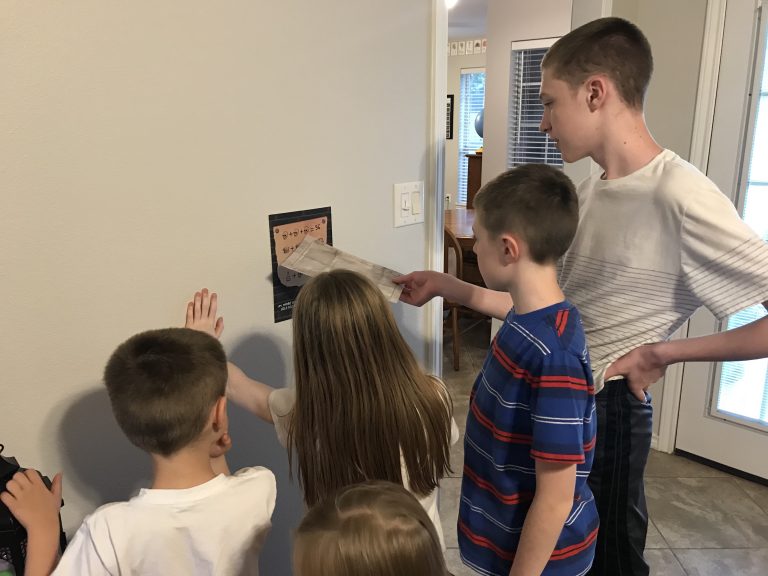
What is a murder mystery for kids?
A murder mystery game is a roleplay game where players take on characters in a story — and one of them is secretly the culprit. The other players (the detectives) have to gather clues, ask questions, and figure out whodunit before the game ends.
For kids, the format is slightly adapted: the “murder” usually becomes a theft, a disappearance, or a riddle (nobody actually dies — it’s all storytelling). The tension comes from the mystery itself, not from dark themes. Think Scooby-Doo more than Agatha Christie.
What makes it brilliant as a party game: every child has a role and feels important. There’s no sitting on the sidelines waiting for your turn. Everyone is investigating at the same time.
What age is murder mystery right for?
Short answer: from age 6, with the right setup. Here’s how to calibrate by age:
| Age | Format | Clue complexity | Game duration |
|---|---|---|---|
| 6–8 | Simple theft or missing object — 1 suspect per player | Visual clues (pictures, symbols), short riddles | 30–45 min |
| 8–10 | Small group mystery with 4–6 suspects | Short written clues, simple codes (letters shifted by 1) | 45–60 min |
| 10–12 | Full mystery with alibi cards, motive cards | Maps, coded messages, logic puzzles | 60–90 min |
| 12+ | Adult-style format with surprise twists | Full cipher puzzles, red herrings, testimony contradictions | 90+ min |
One key rule: the murderer should be a “nice” character — someone who had a funny reason for stealing, not a scary villain. For younger kids especially, the game should feel like an adventure, not a horror story.
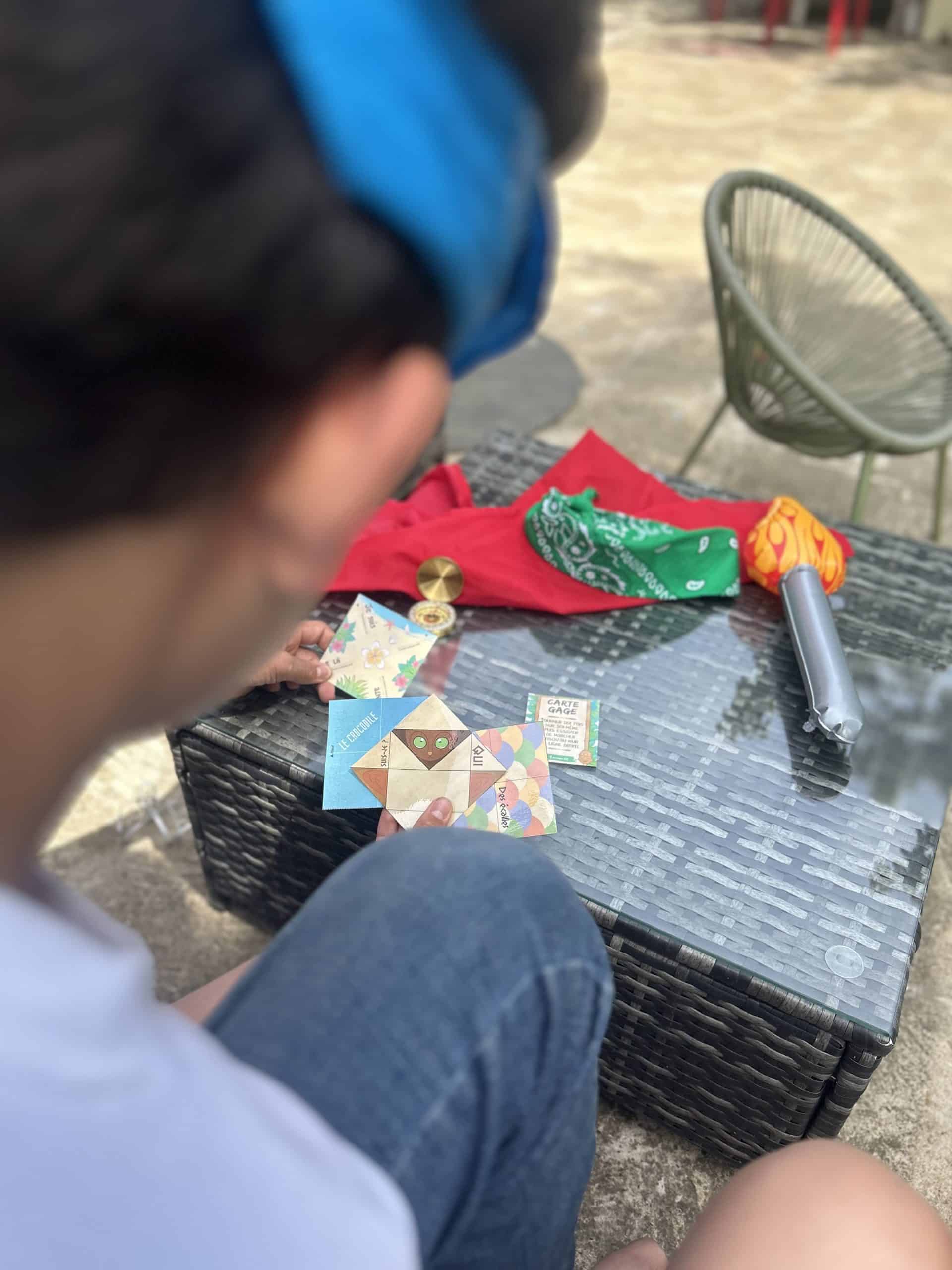
How to run a kids’ murder mystery game: step by step
You don’t need theatrical experience or a director’s hat — but a little structure goes a long way. Here’s how to run a smooth game:
Step 1 — Choose your story
Pick a theme your kids will instantly connect with: a missing painting from a museum, a stolen birthday cake, a vanished puppy, a spy mission gone wrong. The best themes are ones where the kids say “oh no!” when they hear the setup. Keep the scenario to 3–4 sentences max.
Step 2 — Create the characters
Each player gets a character card with: their name, their role in the story, one secret they’re hiding, and their alibi (where they were when the crime happened). For 6–8 players, aim for 4–6 suspects plus 1–2 “witnesses.” Keep the secret and alibi to 2 lines — kids lose interest in walls of text.
Step 3 — Plant the clues
Scatter 6–10 clues around the room. Some point toward the culprit; 2–3 are red herrings (they lead nowhere, but make the game more interesting). Good hiding spots: under a plate at the table, inside a folded envelope labeled “evidence bag,” or under a chair with a post-it that says “pssst — look here.”
Step 4 — Run the investigation
Give the kids their character cards. Read the scenario out loud (the host plays the “detective inspector” and sets the scene). Then let them loose! Set a timer for 20–30 minutes. During this time they can search for clues, question each other, and compare notes.
Step 5 — The big reveal
Gather everyone. Each player gives their verdict — who did it, and why? Then the culprit reveals themselves (or you reveal the solution). Give a small prize to anyone who guessed correctly. Keep it light and funny — the culprit character should be embarrassed, not in trouble.

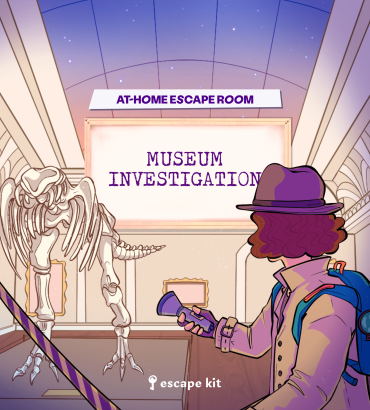
🔍 Museum Investigation — Ready-to-play detective kit for kids
Don’t want to write the whole mystery yourself? Museum Investigation is a complete printable detective game for kids aged 7+. Your child and their friends become investigators solving the theft of a priceless artefact from a museum. Everything is included: character cards, suspect dossiers, clue envelopes, a floor plan to explore — fully printable in minutes. Perfect for birthday parties or a rainy weekend.
How to write clues that kids will actually love
This is where most DIY mysteries fall apart — the clues are either too easy (solved in 10 seconds) or too hard (kids give up and ask to play Minecraft instead). Here’s the sweet spot:
The 4 types of clues that work best
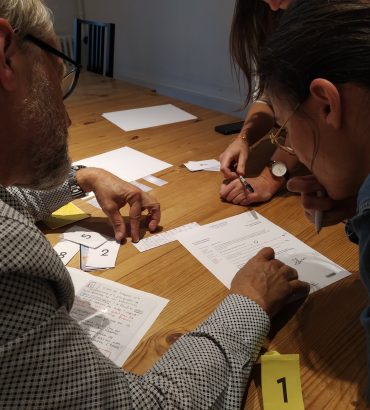
1. Physical evidence clues — A footprint drawn on paper, a torn piece of fabric, a suspicious shopping list. Kids love holding “evidence.” Put it in a ziplock bag and label it with a number for extra drama.
2. Coded messages — A simple letter-shift cipher (A=B, B=C…) or a word written backwards. For ages 6–8, use picture codes instead (a sun symbol = “morning,” a moon = “night”). Free cipher tools are available online.
3. Witness testimonies — Give each player a card with 2 true statements and 1 lie. The detectives have to figure out which statements they can trust. This creates natural conversation between players.
4. Map clues — A simple hand-drawn floor plan with an X marking where something was found. Kids aged 8+ love the spatial puzzle of “if the footprints start here and go there, the person must have come from…”
One rule for all clues: each clue should give them one piece of information, not solve the whole mystery. The solution emerges when they combine 3–4 clues — that “aha!” moment is the whole point of the game.

The best murder mystery kits for kids
If you’d rather not spend 4 hours writing clues and character cards from scratch, a ready-made kit is the way to go. Here’s what to look for — and our top picks:
What makes a good kids’ mystery kit
- Age-appropriate complexity — clues should be solvable in 2–3 steps, not 10
- Clear host instructions — you shouldn’t need to read 12 pages before running the game
- Printable format — so you can play tonight, not wait for delivery
- Replayable or multi-use — if you’re hosting a big group, can you print extra sets?
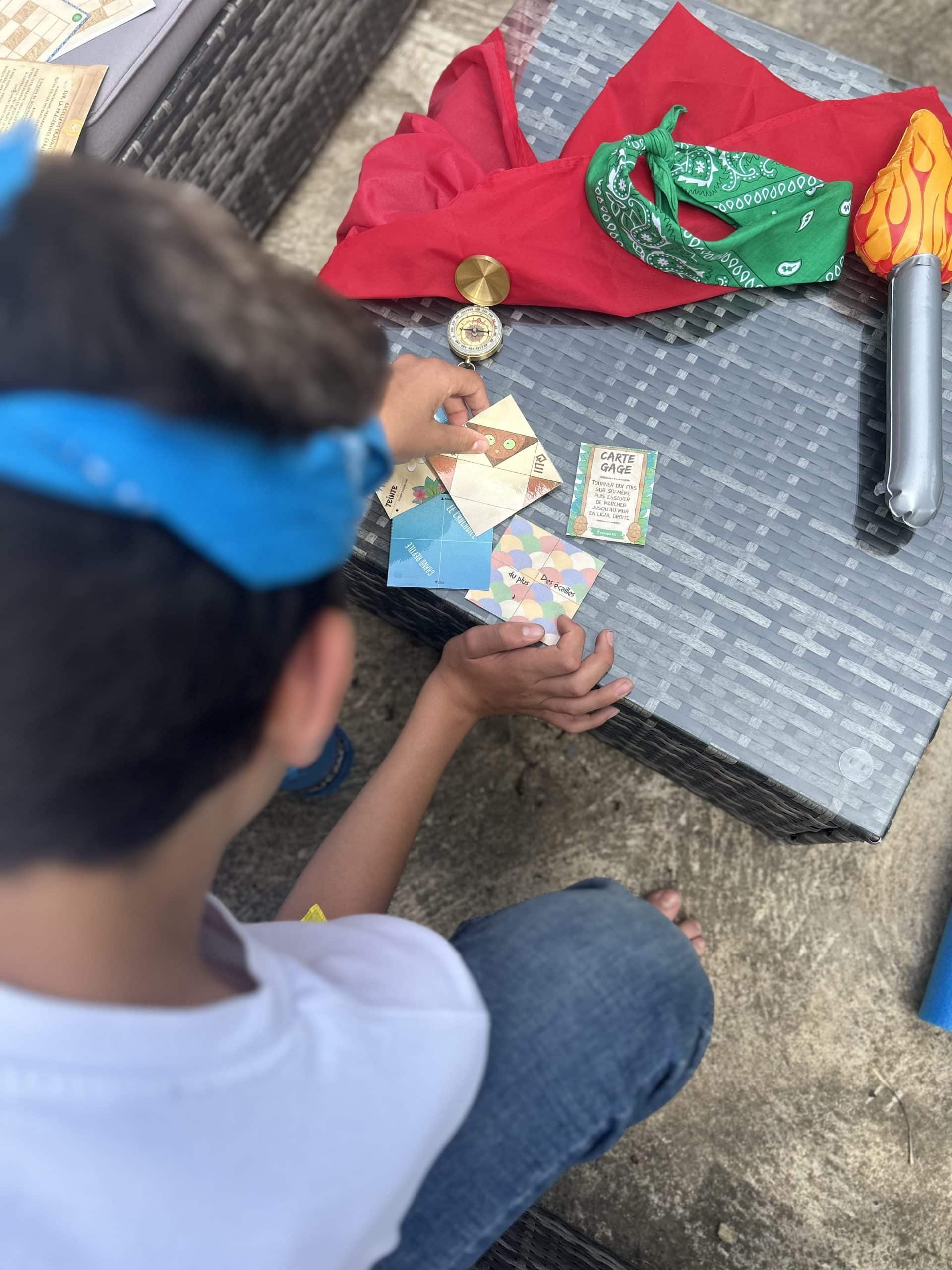
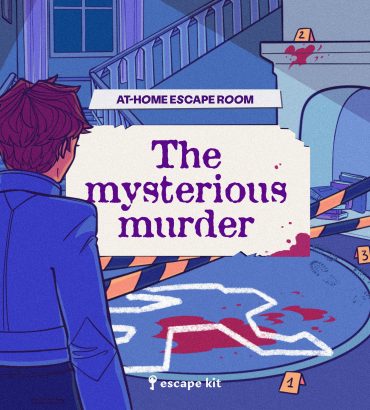
🕵️ The Mysterious Murder — For ages 12+
For older kids (12+) ready for a real whodunit experience, The Mysterious Murder is a fully immersive escape-room-style murder mystery. Players take on the roles of suspects in a classic detective story, complete with alibi cards, interrogation sheets, and a final accusation round. It reads like a proper mystery novel — but everyone gets to play a character. Ideal for birthday parties of 4–10 players.
Tips by age group to make it run smoothly
Ages 6–8: Keep it visual and physical
Young kids struggle to hold complex information in their heads. Help them out by giving each player a small “detective notebook” (a folded A4 sheet) where they can draw or stick clues as they find them. Keep the investigation area small — one or two rooms max. And give the host a cheat sheet: if kids get stuck for more than 5 minutes, drop a hint (“have you checked under the cushions yet?”).
Ages 8–10: Add competition (gently)
This age group loves to win, but doesn’t handle being wrong in front of peers particularly well. Create a points system: 2 points for correctly naming the culprit, 1 point for correctly naming the method or location. Everyone gets a small prize for participating, and the winner gets bragging rights. This keeps the tension alive without making anyone feel bad for getting it wrong.
Ages 10–12: Add depth and red herrings
Preteens can handle (and love) being misled. Include 2–3 red herrings: a suspicious-looking clue that turns out to be completely irrelevant. Add a “plot twist” mid-game — a new piece of evidence that changes what they thought they knew. You can also let them write 1 question to ask any suspect, answered secretly on a slip of paper. This makes the questioning phase feel real.
🎲 Build your murder mystery scenario in seconds
🎲 Build Your Murder Mystery Scenario in Seconds
Pick your group size and theme — get a ready-to-use scenario outline instantly.
Frequently asked questions
How do you make a murder mystery for kids?
Start with a simple scenario (a theft or disappearance, not a “murder” for young kids), create 4–6 character cards with roles and one secret each, scatter 6–8 clues around the room, and give everyone 30–45 minutes to investigate. The host plays the “detective inspector” who drops hints if kids get stuck. For a ready-made version, printable kits like Museum Investigation handle all the writing for you.
What age is murder mystery appropriate for?
Murder mystery games work well from age 6 upwards — as long as the theme matches the age. For children under 10, replace “murder” with a theft or disappearance and keep the tone light and funny. Ages 10–12 can handle a more complex storyline with coded messages and red herrings. For ages 12+, you can use a full mystery format similar to adult games.
How many players do you need for a kids murder mystery?
The sweet spot is 4–10 players. Below 4, there aren’t enough suspects to make the investigation interesting. Above 10, some children may not get enough screen time in the story. For larger groups (birthday parties of 15–20), consider splitting into two teams running the same mystery in parallel — first team to solve it wins.
Do you need special props for a kids murder mystery?
Not at all — but props make it much more fun. A magnifying glass, ziplock bags labelled “Evidence,” a detective badge for each player (printable), and some manila envelopes for clue cards go a long way. The most important “prop” is a good scenario — which is why a ready-made printable kit can be worth it.
What’s the difference between a murder mystery and an escape room for kids?
In an escape room, the players work together as a team against the clock to solve puzzles and “escape.” In a murder mystery, each player has a secret role, and one of them is the culprit — so there’s an element of social deduction and roleplay. Escape rooms tend to be more puzzle-focused; murder mysteries are more story and character-focused. Both are brilliant for kids, and some kits combine both formats.
Can I run a murder mystery at a birthday party?
Absolutely — it’s one of the best birthday party formats for kids aged 7+. Send character cards with the invitations so each child arrives already knowing their role. Decorate around the theme (magnifying glasses, “crime scene” tape, detective hats). The mystery becomes the centrepiece of the party, and kids talk about it for weeks. Use a printable kit if you want to minimize prep.
Where can I find a printable murder mystery for kids?
Escape Kit offers several printable mystery games designed specifically for kids — all digital, print-and-play in minutes, with full hosting instructions included. The most popular for the murder mystery format is Museum Investigation (ages 7+), and for older kids, The Mysterious Murder (ages 12+).
Ready to play detective tonight?
A murder mystery for kids is one of those rare activities that gets better the more you put into it — but it doesn’t have to take long to set up. Whether you build your own from the tips above or grab one of our printable kits, the result is the same: a room full of focused, excited, laughing kids who feel like real detectives. That’s hard to beat.
 By ClémentFan of family board games and new technologies. My favorite Escape Kit is for sure the one about Arsène Lupin, "Arsène's Masterpiece"!