Organizing an Escape Room for large groups!
What you are about to discover...
- I. The strategic timeline: From D-30 to the big day
- II. Scaling the game: One kit, 100 players?
- III. The "Master of Ceremony" (MC) vs. The Game Master (GM)
- IV. Why this works for schools and summer camps
- V. Post-game: The debrief and the rewards
- VI. The real-time orchestration: what to do during the game
- VII. Mixed-age groups: the secret to making it work for everyone
- VIII. Budget breakdown: what does a large group escape room actually cost?
- Frequently asked questions about large group escape rooms
Organizing an activity for 5 people is a hobby. Organizing one for 50, 80, or 100 people is a mission. Whether you are a school teacher looking to foster collaboration, a summer camp director planning the highlight of the week, or a bride-to-be wanting to break the ice at a wedding, the challenge is the same: how do you keep everyone engaged at the same time without total chaos?
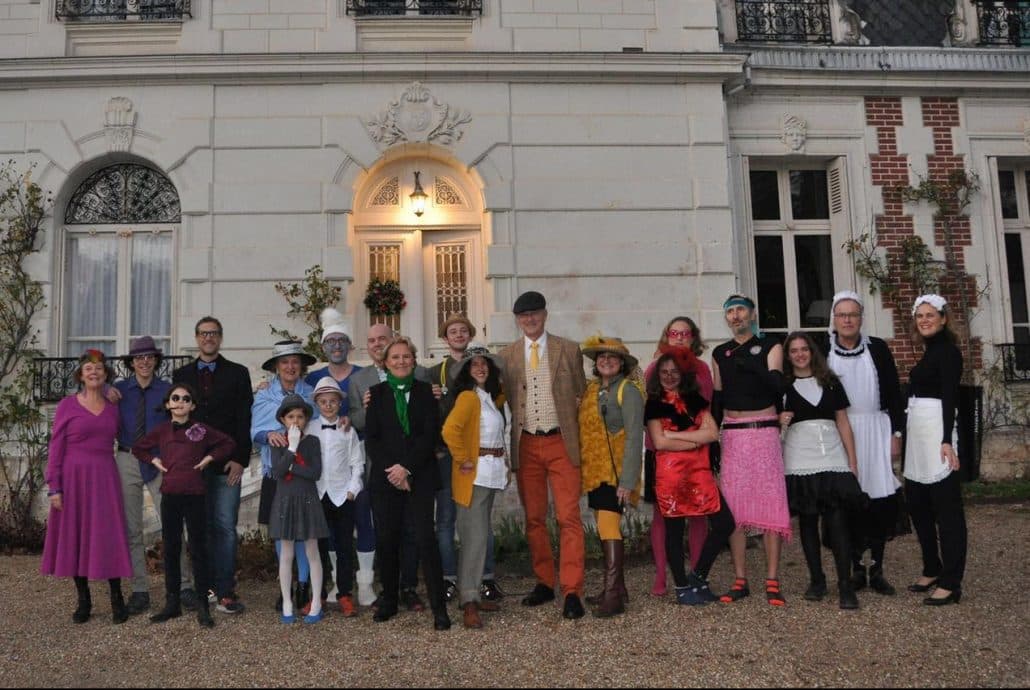
At Escape Kit, we’ve seen it all. We know that the traditional “locked room” model doesn’t scale. That’s why we’ve perfected the “Escape-Room-in-a-Box” (or rather, in a printer) concept. By following this guide, you will transform any space—a forest, a gymnasium, or a banquet hall—into a high-stakes adventure where every single guest is the protagonist.
I. The strategic timeline: From D-30 to the big day
Success in large-group events is 90% preparation. Don’t leave your logistics to chance. Here is your professional roadmap:
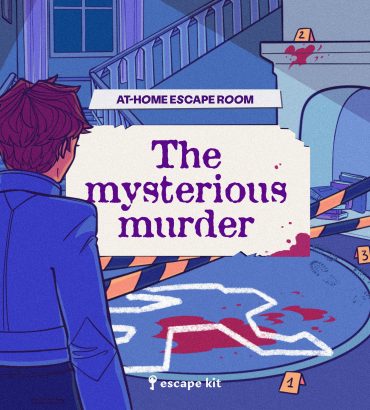
- 30 Days Before: The Theme. Choose a theme that fits the age group. For younger children (3-6), The Journey of the Little Prince is magical. For teens or adults, something like The Mysterious Murder adds that necessary edge.
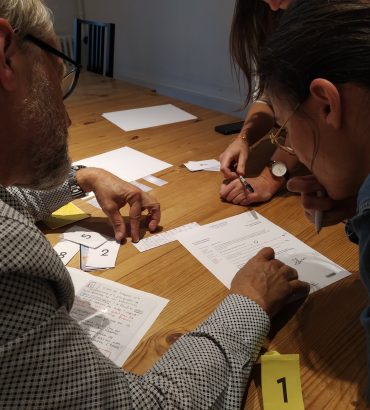
- 15 Days Before: The Team Split. Don’t wait for guests to arrive to form teams. Pre-assigning teams of 4 to 6 people ensures a balanced mix of “thinkers” and “doers” and prevents “cliques” from forming.
- 7 Days Before: The Print Audit. Calculate how many “Game Kits” you need. Each team needs their own physical copy. Pro tip: Print one extra copy just in case of spills or lost clues!
II. Scaling the game: One kit, 100 players?
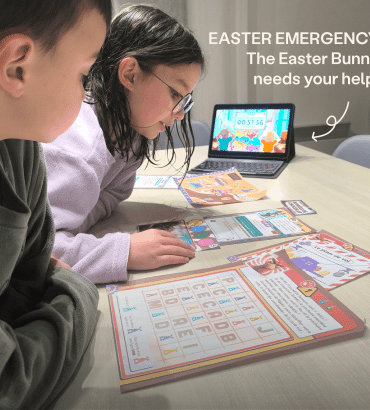
One of the most frequent questions we get is: “Do I need to buy 10 different games?” The answer is no. To host a large group, you simply print the same kit multiple times. Each team (4-5 people) gets their own copy of the puzzles. This creates a thrilling race atmosphere. Who will crack the code first?

III. The “Master of Ceremony” (MC) vs. The Game Master (GM)
In a standard Escape Room, the GM sits behind a screen. In a large group event, you are the Master of Ceremony. Your role is to be theatrical!
- The Intro: Don’t just read the instructions. Dress the part. If you’re playing Quest for the Magic Diamond, wear a crown or a cape. Set the stakes high!
- The Hint System: With 50 people, you can’t be everywhere. Create “Hint Envelopes” with 3 levels of clues (Small nudge, Big help, The Answer). Teams can choose to open them but they “lose” 5 minutes from their final score for each one opened.
- The Soundtrack: Use our YouTube Countdown. Seeing the seconds tick away on a big screen or projector is the ultimate adrenaline booster.
IV. Why this works for schools and summer camps
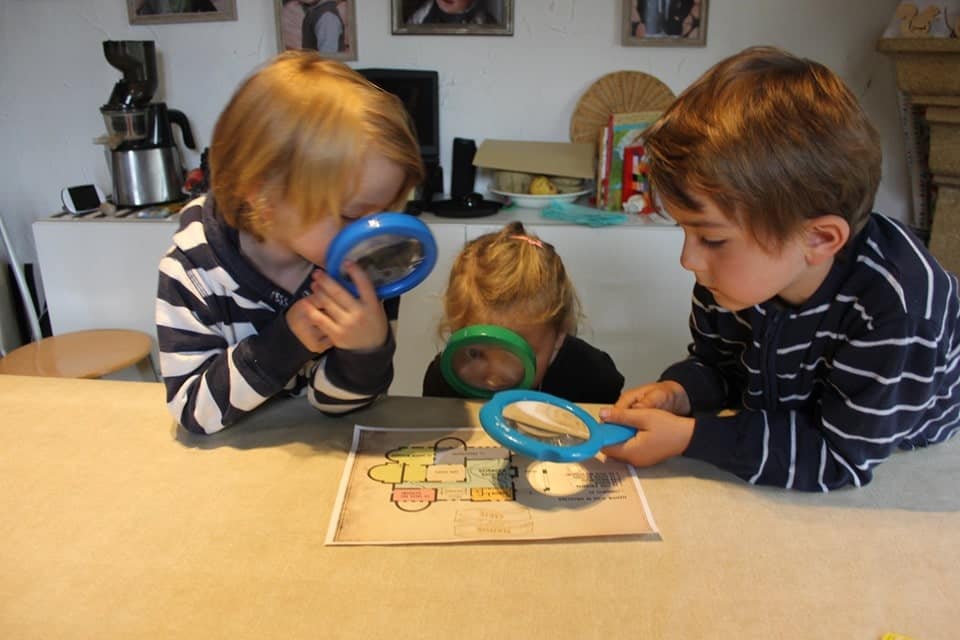
Teachers and camp counselors love Escape Kits because they are “stealth learning.” While children think they are just playing The Sleeping Curse, they are actually practicing:
- Reading Comprehension: They must analyze the texts to find the hidden logic.
- Delegation: In a team of 5, someone usually becomes the “scribe,” someone else the “searcher,” and another the “strategist.”
- Resilience: Failing to solve a puzzle on the first try and trying again is a vital life skill.
V. Post-game: The debrief and the rewards
The fun shouldn’t stop when the clock hits zero. The “cool down” is where the memories are solidified. Organize a photo session with our printable props. Ask the winning team to explain how they solved the hardest puzzle. It’s also the perfect time for rewards—themed snacks, certificates, or even just bragging rights!
VI. The real-time orchestration: what to do during the game
Once the countdown starts, your job shifts from logistics to theatre. Here’s how to run the room — or the field, or the gymnasium — without losing control.
The first 5 minutes are everything. Energy is contagious. If you launch the intro with conviction — a dramatic reading of the mission briefing, a prop, a sound effect — teams will mirror that energy for the next 60 minutes. If you mumble through it, expect the same vibe from them.
Announce milestones out loud. “Team 3 has just cracked the first padlock!” — even if you made it up. It fires up the other teams and keeps the stakes alive. In a large group, the spectacle is part of the experience.
The 20-minute mark is your check-in moment. Walk the room. Any team visibly stuck? Give them a subtle nudge — not the answer, but a direction. “Have you tried reading that clue backwards?” The goal is to keep everyone in the game, not to separate winners from losers.
Build in a 10-minute buffer before the end. Stop the game with 10 minutes to spare for a clean reveal. Teams that didn’t finish don’t feel humiliated — they were “this close.” Teams that finished early become allies in the debrief.
VII. Mixed-age groups: the secret to making it work for everyone
School trips, family reunions, company events with kids — mixed-age groups are a different beast. A puzzle that challenges a 14-year-old bores a 30-year-old and frustrates a 7-year-old. Here’s how to balance it.
Assign roles by strength, not by age. The youngest member of a team can hold the flashlight, read the clue cards aloud, or be the “keeper of the keys.” They’re part of the story — they just have a different role in solving it. Adults should resist the urge to take over.
Choose themes with universal appeal. Pirates, detectives, haunted mansions — these work across age groups because the narrative carries everyone. Avoid abstract or number-heavy puzzles as the main mechanic when you have kids under 8 in the mix.
Our escape room kits are calibrated by age. If your group spans 6-year-olds to adults, pick a kit rated for the youngest player and add a “bonus puzzle” layer for the adults. One kit, two levels of engagement. No one is left behind.
VIII. Budget breakdown: what does a large group escape room actually cost?
Here’s the math that makes event organisers do a double-take: a downloadable escape room kit for a group of 50 costs less than a single commercial escape room ticket.
One kit at €24.90. Print it 10 times — one copy per team of 5 — at roughly €2–3 per print at a copy shop. Total for 50 players: under €55, or just over €1 per person. Compare that to a commercial escape room at €25–30 per person for a group of 6.
For 100 players: 20 printed copies + one kit = approximately €85. Decorations, snacks, and props are the real budget variables — not the game itself. This is why schools, summer camps, and HR teams have made Escape Kit a recurring line item.
Frequently asked questions about large group escape rooms
How many people can play the same escape room kit?
There is no ceiling. One kit can serve 4 people or 400 — you simply print additional copies, one per team of 4 to 6 players. Every team plays the same puzzles simultaneously, which creates a race atmosphere that a commercial room can never replicate.
Do I need professional equipment to run it?
No. A printer, scissors, and optionally a few padlocks or envelopes are enough. The kit comes with everything: the story, the clues, the solution guide, and hosting tips. If you want to go further, a Bluetooth speaker for the countdown music and a projector for the timer are nice additions — not requirements.
What if teams finish at very different times?
This is normal and expected. Have a “debrief card” ready for early finishers: questions like “What was the hardest clue? Who had the key idea?” They keep talking, laughing, and reliving the experience while you wrap up with other teams. The game doesn’t end when the last puzzle is solved — it ends when everyone has had their moment.
Can I use the same kit for multiple events?
Yes. The digital file is yours indefinitely. Schools often run the same kit across three different classes in the same week. Summer camps reuse kits across sessions. You buy it once — it serves every group you’ll ever host.
 By MargotI love everything about organization and sharing lovely moments with my loved ones.
Fan of Harry Potter & magic The Sleeping Curse is my favorite Escape Room.
By MargotI love everything about organization and sharing lovely moments with my loved ones.
Fan of Harry Potter & magic The Sleeping Curse is my favorite Escape Room.