Building an escape room at home is not the same job as writing one. The writing is the hard part, and it is where most people give up: you need six or eight puzzles that chain into each other, each one producing a code that opens the next step, with no dead ends and no gap that stops the whole game.
This page walks through the whole thing, step by step, with the puzzle types that actually work and the traps that waste an afternoon. If you would rather skip the writing, the same structure comes ready made as a printable kit at the bottom.
On this page: the six steps, which puzzles work at which age, the kit you need, how long each stage really takes, and the four mistakes that break a game.
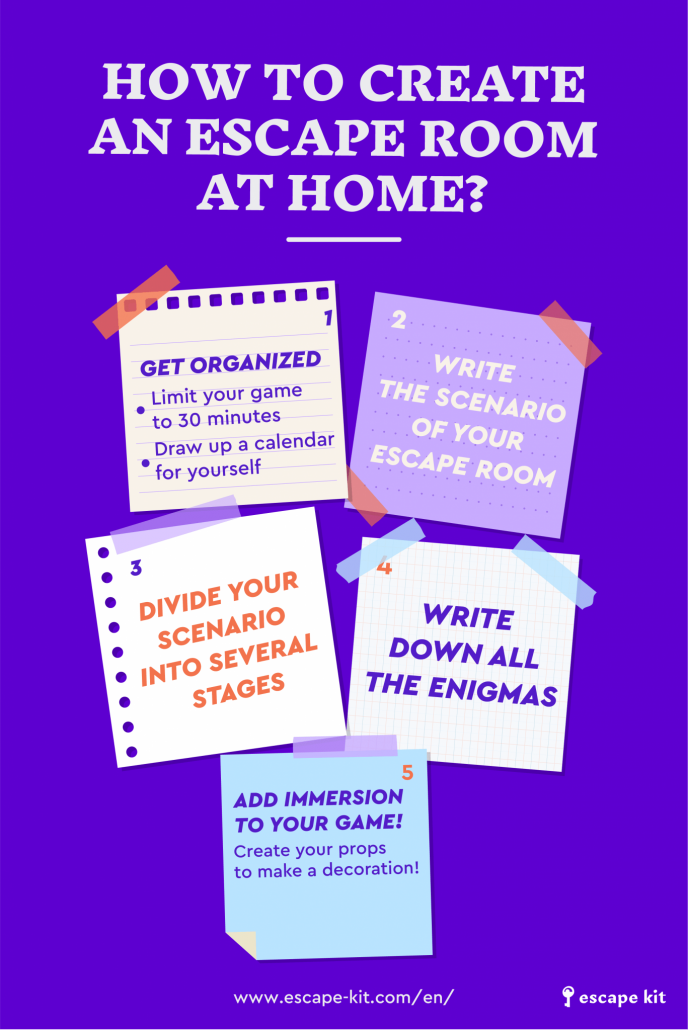
The six steps to make an escape room
Work in this order. Skipping straight to the puzzles is the single most common reason a home made game falls apart halfway through.
| Step | What you do | How long |
|---|---|---|
| 1. Pick the ending | Decide what the last code opens and what is inside. Everything works backwards from here | 10 min |
| 2. Write the story | Three or four sentences. Why are they here, what do they have to find, what happens if they fail | 20 min |
| 3. Chain the puzzles | 6 to 8 puzzles, each producing one code that opens the next. Write the chain on paper first | 2 to 3 h |
| 4. Make the material | Print, cut, age the paper if you like, put each puzzle in its own envelope | 1 h |
| 5. Hide everything | Place the envelopes in order around the room and note where each one is | 20 min |
| 6. Test it | Run one person through it who has not seen it. You will find two broken puzzles | 30 min |
Start from the end, not the beginning
Decide what the final code opens before you write a single puzzle. A game built forwards tends to wander and finish on something flat. A game built backwards has a point to reach, and every puzzle you write knows where it is going.
Chaining puzzles so the game holds together
The mechanic behind every escape room is the same. A puzzle produces a code. The code opens the next envelope, box or padlock. That step contains the next puzzle. Repeat until the last code opens the prize.
Write the chain on a single sheet before you make anything: puzzle one gives 4 7 2, which opens envelope two, which holds a cipher giving the word RAVEN, which opens envelope three. If you cannot fit the whole chain on one page, the game is too complicated for an hour.
Never let one puzzle block everything
If a single puzzle stops the entire game, one stuck team stops dead. Run two or three puzzles in parallel in the middle of the game, each giving one digit of the same final code. Teams can then split up and nobody sits watching.
Writing your own takes four to six hours and two puzzles will break at the first test. A ready made kit gives you the same structure, already run by other groups.
Browse the kits →Escape room puzzle ideas that actually work
You do not need clever puzzles. You need puzzles that produce a code and that a stranger can solve without you explaining them. These eight cover almost every game ever written.
| Puzzle | How it works | Best for |
|---|---|---|
| Hidden object | A number written on something in the room: a book page, a clock face, the back of a photo frame | Any age, always works |
| Substitution cipher | Each symbol stands for a letter. Give the key somewhere else in the room | Ages 8 and up |
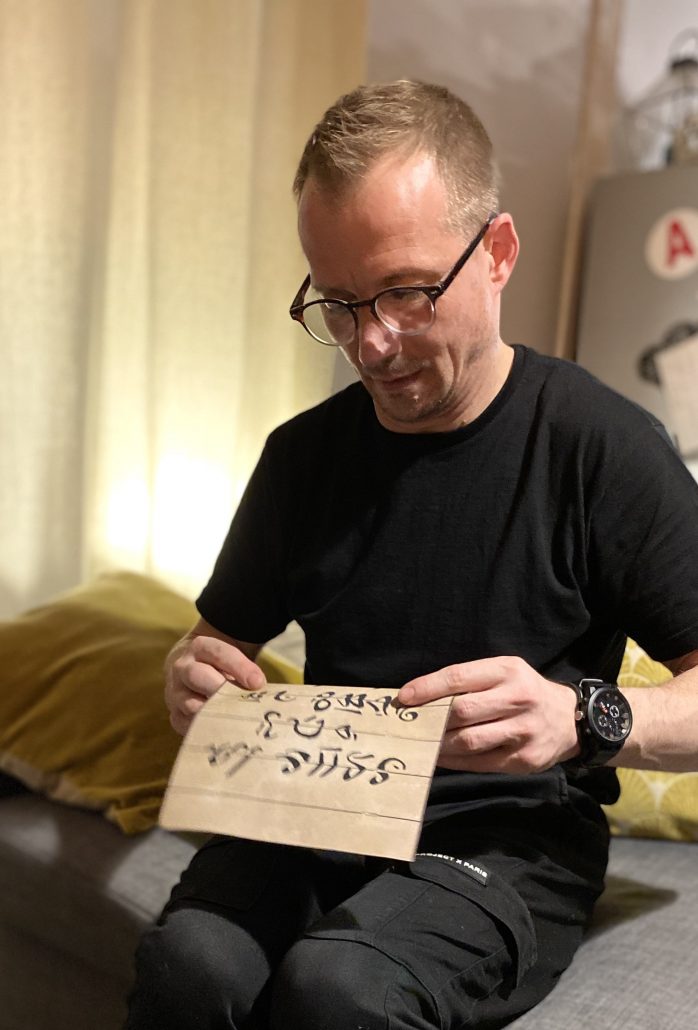
| Mirror writing | Text only readable held up to a mirror. Costs nothing to make | Ages 6 and up |
| Invisible ink | Written with a UV pen, read with a UV torch. The one that gets the loudest reaction | Any age |
| Jigsaw message | Cut a printed message into pieces and scatter them in different envelopes | Ages 5 and up |
| Riddle | A worded clue whose answer is the code. Easy to write, easy to get wrong | Ages 8 and up |
| Pattern or sequence | Numbers or shapes following a rule. Keep it simple or it stalls the game | Ages 10 and up |
| Physical search | Something taped under a chair, inside a shoe, behind a radiator | Any age, breaks up the sitting |
Mix at least three types in one game. Eight riddles in a row is a quiz, not an escape room. What makes the hour feel varied is switching between reading, searching, decoding and moving around.
Matching the puzzles to the age of the players
This is where most home made games go wrong. The gap between a six year old and an eleven year old is enormous, and a puzzle pitched two years too high stops the game dead.
| Age | What works | What to avoid |
|---|---|---|
| 3 to 6 | Pictures, colours, shapes, matching. An adult reads everything aloud | Anything needing reading or arithmetic |
| 6 to 8 | Simple letter puzzles, counting, spot the difference | Ciphers, multi step logic |
| 8 to 11 | Codes, mirror writing, maps, light logic | Anything requiring outside knowledge |
| 11 to 13 | Investigation, clues to cross reference, multi step puzzles | Childish themes, they switch off fast |
| 13 and up | Ciphers, red herrings, real tension | Hand holding of any kind |
Build for the youngest player
In a mixed group, aim the game at the youngest child and put one older player or adult in each team. A game slightly too easy still gets finished and enjoyed. A game too hard gets abandoned at puzzle three.
Two companion pages go deeper than this one: a full list of escape room puzzles and clues with how each one works, and a set of escape room themes if the story is what you are stuck on. For a build in the garden, see running one outdoors. There is also a DIY escape room walkthrough and the free soundtrack we use for the countdown.

Arsène’s masterpiece
An art heist built the way this page describes: short puzzles running side by side rather than one long chain, so a group of six can split up instead of queuing behind one sheet.
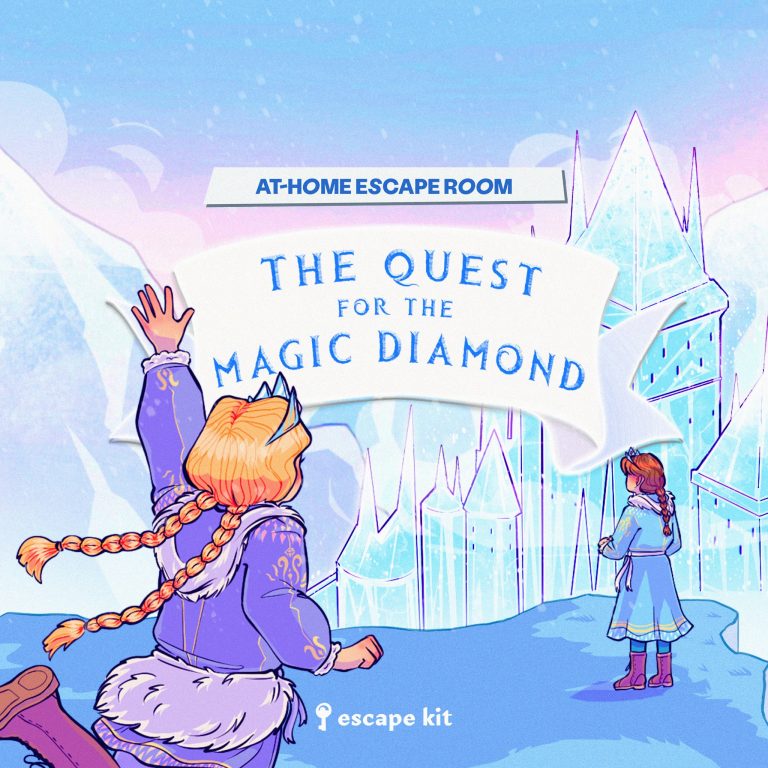
The quest for the magic diamond
Ages 6 to 10, and a good one to run first if you want to see how a tested puzzle chain is put together before writing your own.
What you need to set it up
Less than the photos suggest. Everything below except the printer is optional.
| Item | What for | Essential? |
|---|---|---|
| A printer and paper | The puzzles themselves | Yes |
| Envelopes | One per step, numbered on the front | Yes |
| Scissors and pens | Cutting out and writing down codes | Yes |
| A phone or speaker | A 60 minute timer, ideally with music | Recommended |
| A UV pen and torch | Invisible ink, the highest reaction for the lowest effort | No |
| Combination padlocks | Makes opening things physical instead of honour based | No |
| A box or chest | Holds the prize at the end | No, a shoebox works |
A labelled envelope that nobody opens until they have the right code does the same job as a padlock. Padlocks are nicer, not necessary. If you want the full list of props with what each one is actually for, we keep one on the escape room props page.
How long it really takes
Writing your own game from scratch takes four to six hours the first time, spread over a couple of evenings. Most of it goes into step three, chaining the puzzles, and into the testing that follows, because the first test always breaks two of them.
| Writing your own | Using a printable kit | |
|---|---|---|
| Preparation | 4 to 6 hours | 30 minutes |
| Cost | Paper and whatever props you buy | 20.69 for the whole group |
| Puzzle testing | On you, and it will need it | Already done |
| Group size | Whatever you write for | Unlimited, print one set per team |
| Reuse | You know all the answers now | Reprint for another group any time |
| Audio and decoration | Find or make your own | Included, countdown and soundtrack |
Both are worth doing
Writing your own is genuinely satisfying and you should try it once. But if the party is Saturday and it is already Thursday, a ready made kit is the honest answer. The structure is the same, the puzzles are tested, and you spend the evening playing instead of writing.
Three questions, one kit that actually fits. Nothing is sent anywhere.
DIY escape room or a ready made kit: how to choose
Both work. The question is not which is better but what you are short of, time or the wish to build something yourself.
| DIY escape room | Printable kit | Commercial venue | |
|---|---|---|---|
| Prep time | 2 to 4 hours of writing and testing | 10 minutes: download, print, cut | None, but you travel |
| What it costs | Padlocks, card stock, printer ink | One file, printed as often as you like | Per person, booking required |
| Players | As many as you want | As many as you want | Usually capped at 6 to 8 |
| Play it twice | Yes, if you keep the props | Yes, reprint it | No, you know the answers |
| Best part | You wrote it, and they know it | A story that has been play tested | The set design |
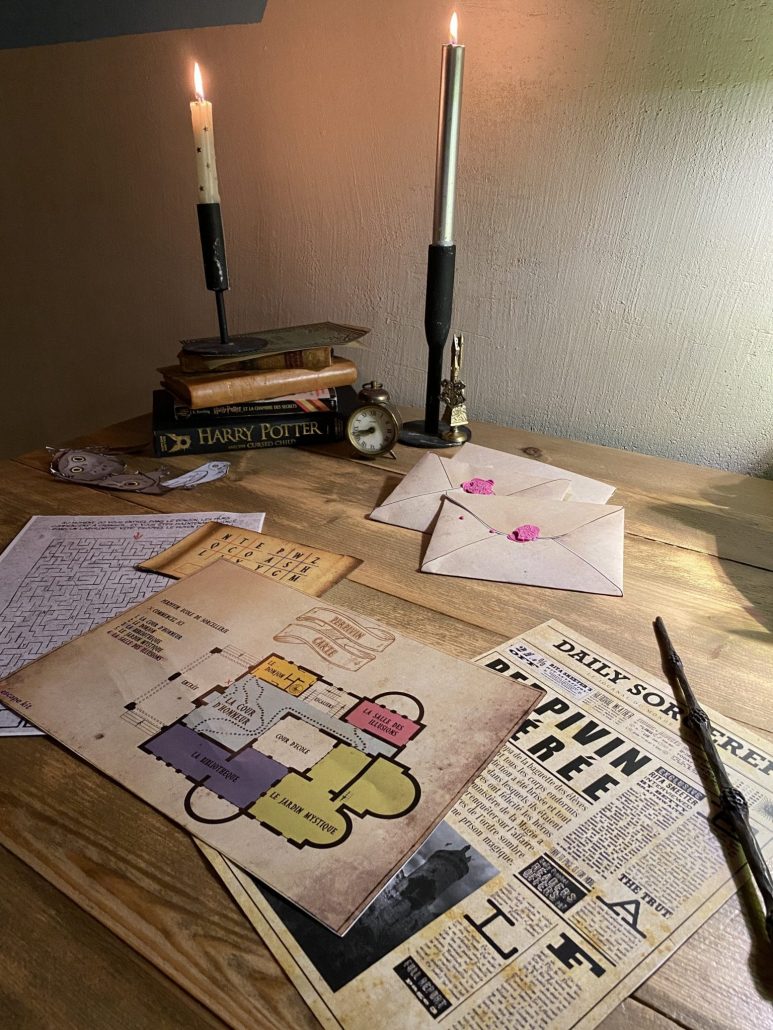
Writing your own is worth every minute if you enjoy the making. The catch is that nobody plans for the props: combination padlocks come in threes and fours, printer ink runs out faster than expected, and the wax sealed envelope that looked so good in the photo is not something you have at home. Make the list a week early, not the night before.
If the party is the day after tomorrow, an escape room at home kit gives you the same evening in ten minutes. The story, the puzzles and the answer key come written and play tested, and you print one set per team.
Free staging trick, either way: soak a sheet of paper in coffee and dry it with a hairdryer. You get a convincingly aged parchment, and it is the detail children mention afterwards more often than the treasure itself.
Ready made kits, by age
Same mechanic as everything above: a chain of puzzles, one code per step, a 60 minute countdown. The difference is that the chain is already tested and you print it instead of writing it.
For adults and teenagers
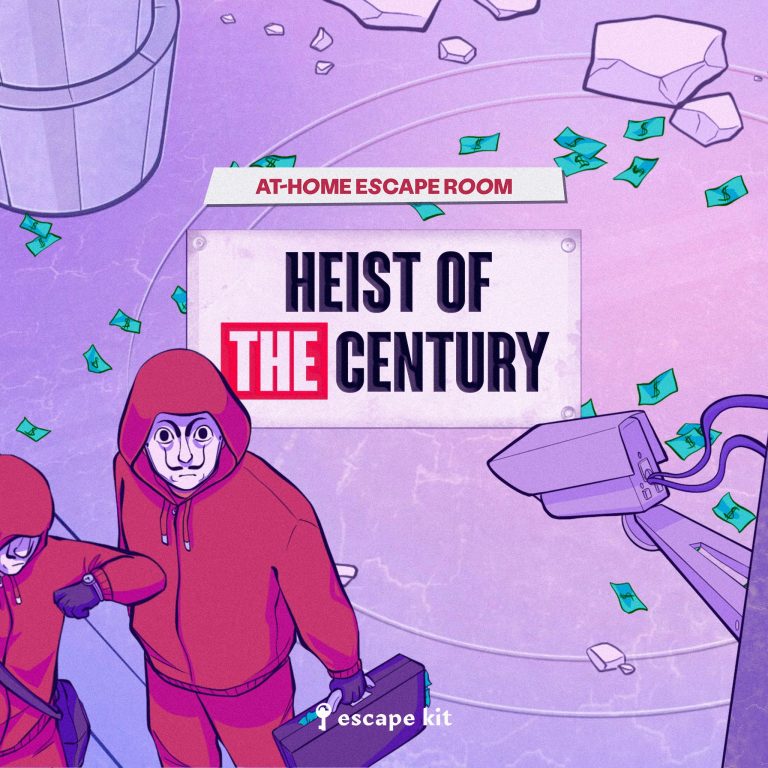 Heist of the Century16 + years oldA bank job, the go to kit for adult groups
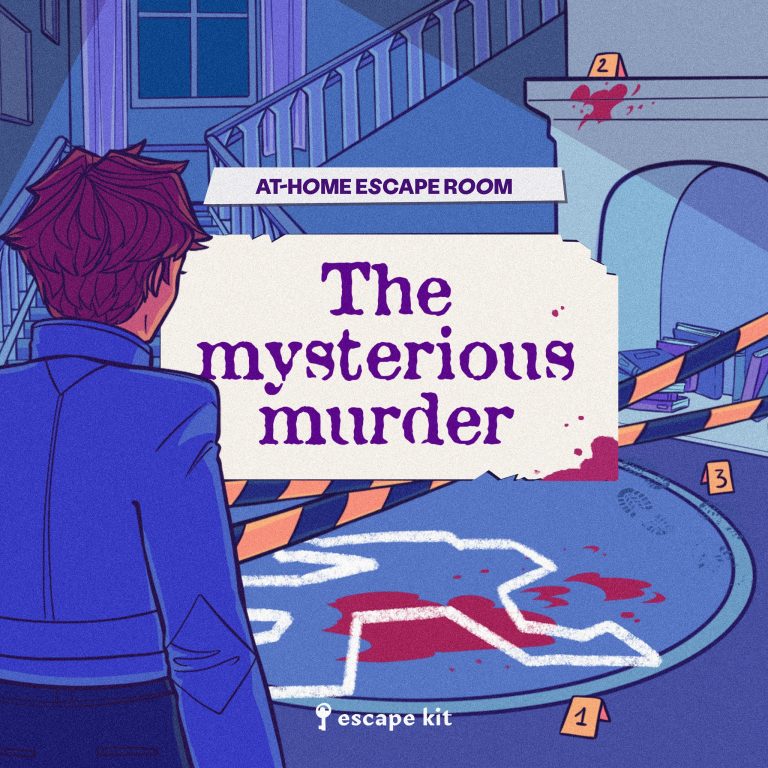 The Mysterious Murder14 + years oldA murder mystery in printable formArsene’s Masterpiece14 + years oldAn art heist, short puzzles running in parallel
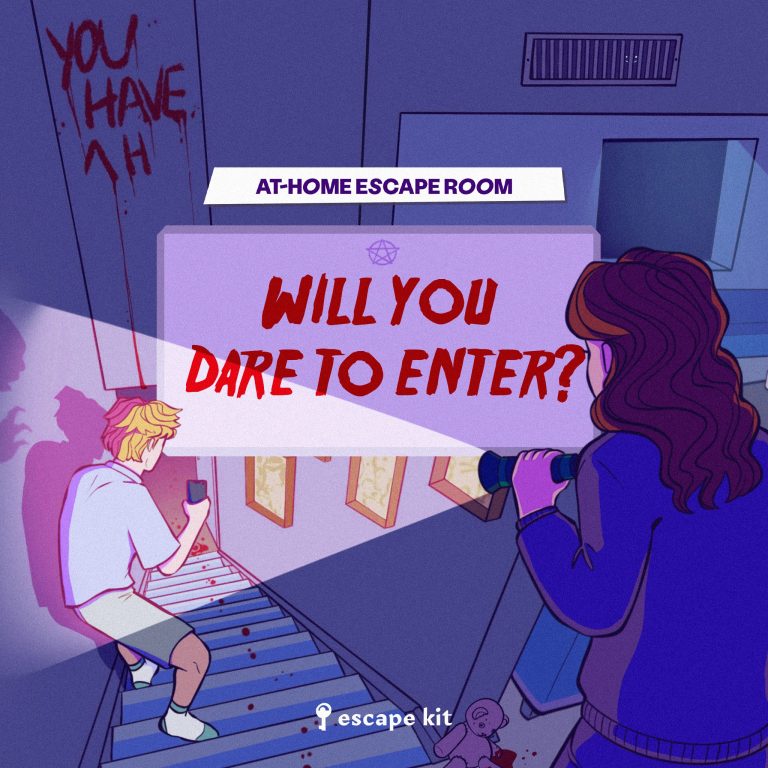 Will You Dare to Enter14 + years oldA haunted house, ages 14 and up
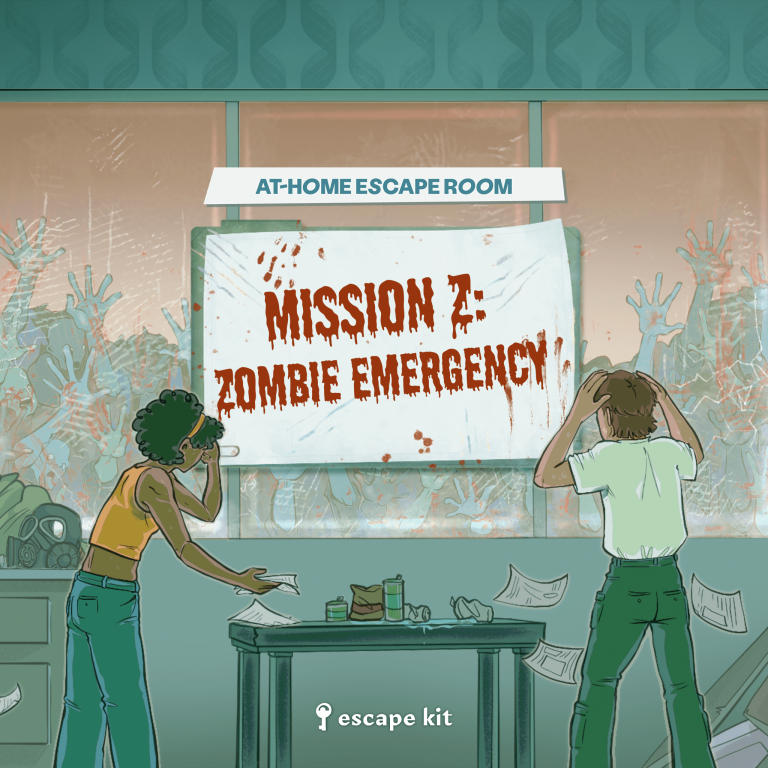 Mission Z: Zombie Emergency+13 years oldA zombie outbreak, ages 13 and up
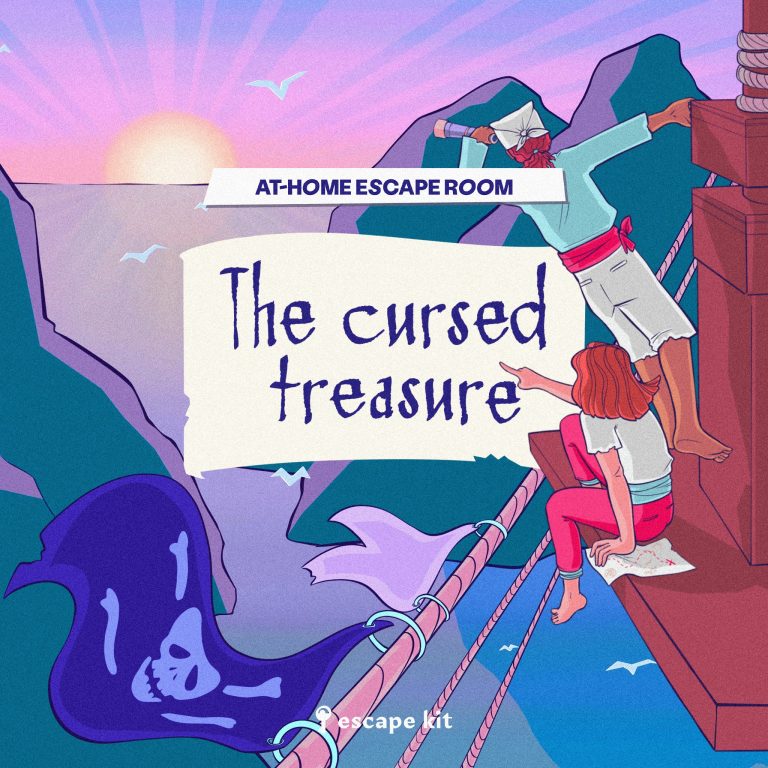 The Cursed Treasure8-14 years oldPirates, ages 8 to 14, works outdoors too
For children
 The Little Prince’s Journey3-6 years oldPicture based puzzles, no reading needed
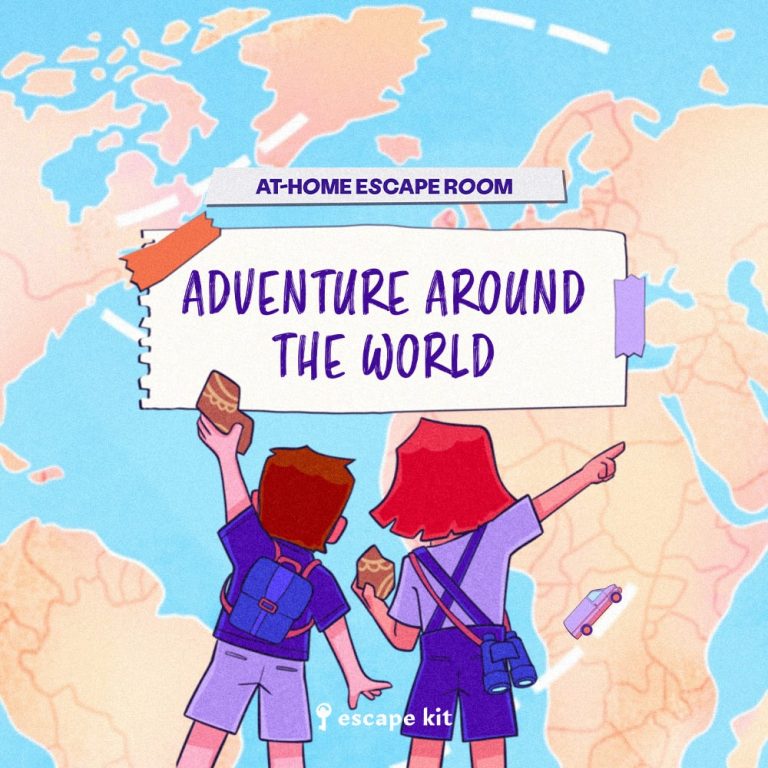 Adventure Around the World6-10 years oldMaps and countries, ages 6 to 10
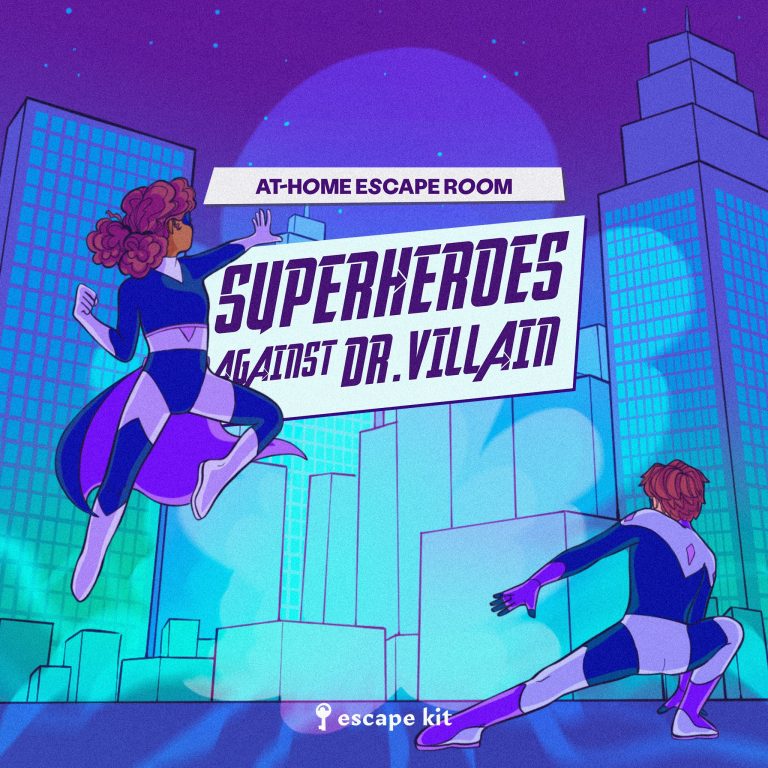 Superheroes against Dr Villain7-11 years oldSuperheroes, plenty of moving around
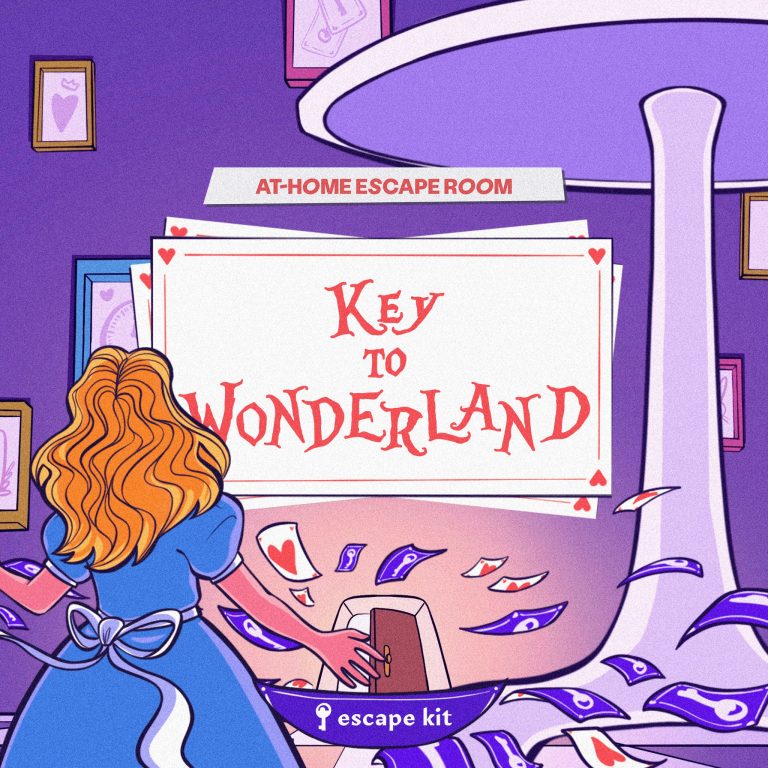 Key to Wonderland8-11 years oldWonderland, for children who like a proper puzzle
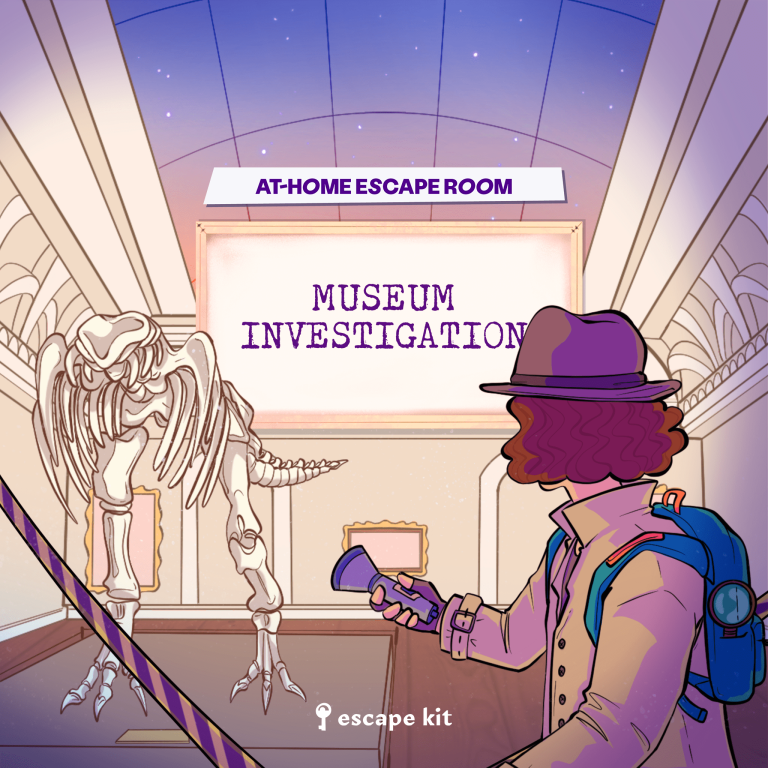 Museum Investigation4-6 / 7-12 years oldAn investigation, two versions by age
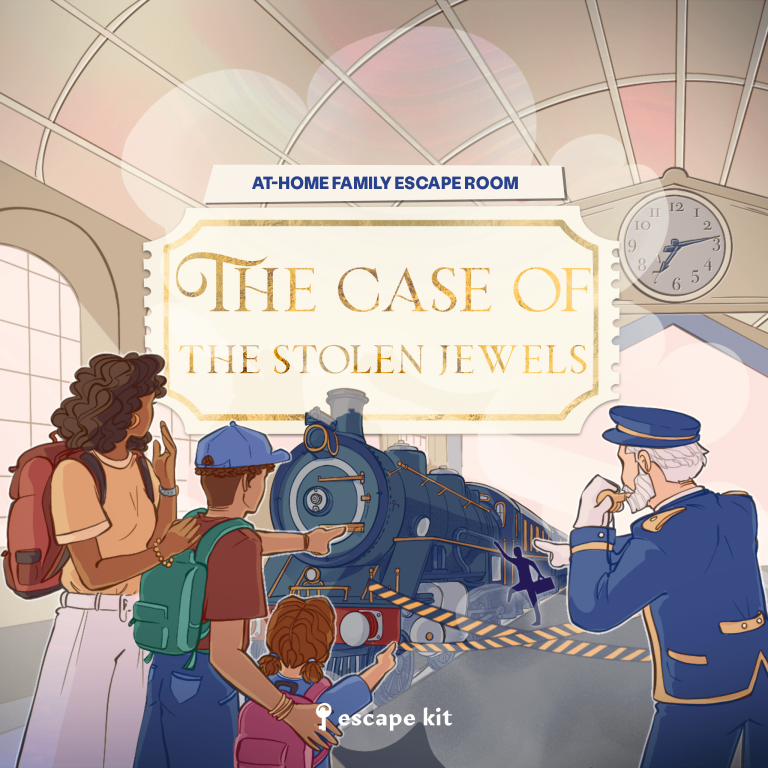 The Case of the Stolen JewelsFamilyA family format across mixed ages
Testing it before anyone plays
This is the step everyone skips and the one that decides whether the game works. You wrote the puzzles, so you cannot see them any more: what looks obvious to you is obvious only because you know the answer.
Find one person who has not seen anything, sit them down with the whole chain and watch without speaking. Do not explain, do not hint, do not correct. Write down every place they hesitate for more than a minute.
| What you see in the test | What it means | What to do |
|---|---|---|
| They stall on the first puzzle | The entry point is unclear, not the puzzle | Add one obvious starting clue, or number the first envelope |
| They give two different answers | The puzzle has more than one plausible solution | Rewrite it so only one answer fits, or change the code |
| They find the answer by accident | The puzzle is decorative, not a puzzle | Either cut it or give it a real mechanism |
| They finish in 25 minutes | Too few puzzles, or too easy for that group | Add two puzzles, or add a step to the middle of the chain |
| They are still going at 75 minutes | Too many puzzles, or one is a wall | Cut the weakest puzzle instead of making the others easier |
Expect to change two puzzles after the first test. That is normal and it is the whole point of testing. If nothing needs changing, you probably watched too closely and helped without noticing.
Test the chain, not just the puzzles
A puzzle can be perfect and the chain still broken, because the code it produces does not obviously belong to the next envelope. Check that each answer visibly matches where it goes: a four digit code for a four digit lock, a word for a word lock. Mismatches are what make players think they got it wrong.
Running the game on the day
Once the game is written, your job changes. You are no longer the author, you are the game master, and that is an actual role for the whole hour rather than something you do between rounds of drinks.
| What the game master does | When | Why it matters |
|---|---|---|
| Reads the opening aloud | At the start, 2 minutes | Sets the story and the clock. Do not hand it out on paper |
| Starts the countdown | Straight after the briefing | One timer for the room, visible or audible to everyone |
| Watches without speaking | Throughout | You are looking for teams that have stopped moving, not for wrong answers |
| Gives graded hints | When a team stalls 3 minutes | A nudge first, a stronger clue second, the answer only as a last resort |
| Keeps the pace | At the halfway mark | Announce the time left out loud. It restarts a group that has drifted |
| Calls the finish | At the end | Even if nobody solved it, stop on time and walk through the ending |
The three minute rule is the one that matters. A team that has not touched anything for three minutes is not thinking, it is stuck, and every extra minute makes them less likely to recover. Step in before the frustration, not after.
Give hints in stages, never the answer
First a nudge towards the right object: “have you looked at everything on the desk?”. Then a nudge towards the method: “that symbol appears somewhere else too”. The answer itself only if the clock is nearly out. A team that gets handed an answer stops trying on the next puzzle.
With one team this is a light job you can do while doing something else. With three or four it is a full hour of walking between tables, and you will not get to play. That is the trade, and it is worth knowing before you start rather than discovering it at minute ten.
Four mistakes that break a home made escape room
Puzzles with more than one plausible answer. If a riddle could reasonably give two different words, half your players will find the wrong one and decide the game is broken. Every puzzle needs exactly one answer, and it has to be the obvious one once you see it.
No game master. Whoever wrote the game cannot play it, and whoever plays cannot give hints. Somebody has to watch the clock and step in before a stuck team gives up. That is a real job once there are three teams.
No testing. Run one person through it who has never seen it. You will discover that puzzle four only makes sense to you because you wrote it. Every single time.
Too many puzzles. Eight is an hour. Twelve is two hours and a group that stops caring around puzzle nine. Cut. Do not add.
💡 The expert’s tip
Write three hints per puzzle before the game starts, going from a nudge to the answer, and keep them in your pocket. Improvising a hint in front of a stuck team almost always means handing over the answer, and that team stops trying on the next puzzle.
Frequently asked questions
How do you make an escape room at home?
Pick what the final code opens, write a short story around it, then chain 6 to 8 puzzles where each one produces a code that opens the next step. Print the material, put each puzzle in its own envelope, hide them in order and test the whole thing on someone who has not seen it.
How many puzzles does an escape room need?
Six to eight for a one hour game. Fewer than five ends too quickly, more than ten drags and the group loses interest before the finish.
How long does it take to create an escape room?
Four to six hours the first time, most of it spent chaining the puzzles and testing them. A printable kit takes about 30 minutes because the writing and testing are already done.
What puzzles work best in a home escape room?
Hidden objects, substitution ciphers, mirror writing, invisible ink, jigsaw messages and physical searching. Mix at least three types so the hour does not feel like one long quiz.
A shortcut worth knowing
If you want to see how a tested puzzle chain is put together before writing your own, run a ready made kit first. An hour of playing one teaches more about pacing than any guide, including this one.
Do I need padlocks and boxes?
No. A numbered envelope that only gets opened once the team has the right code does the same job. Padlocks make it more physical, which is nice but not necessary.
Can you make an escape room for young children?
Yes, from about three years old, as long as the puzzles use pictures, colours and shapes instead of text and an adult reads the story aloud. Plan 30 to 40 minutes, not a full hour.
Is it cheaper to make your own or buy a kit?
Making your own costs only paper, but takes four to six hours of your time and needs testing. A printable kit costs 20.69 for the whole group however many people play, and can be reprinted for other groups later.
Same structure as everything on this page, with the chain already run by other groups and every puzzle checked against a single clean answer.
See the kits →
Who writes this page
Clément Pontegnier
Founder of Escape Kit
I have been writing printable escape rooms since 2018 and I still test every puzzle chain on someone who has not seen it. More than 250,000 players have run our games, from birthday parties to company evenings.