25 Indoor Scavenger Hunt Ideas for Kids (Easy & Fun!)
What you are about to discover...
- What is an indoor scavenger hunt for kids?
- Why kids go absolutely wild for scavenger hunts
- 25 indoor scavenger hunt ideas for kids — by theme
- How to organise an indoor scavenger hunt: step by step
- 20 ready-to-use indoor scavenger hunt clues
- Scavenger hunt tips by age — how to get it right every time
- Want the full adventure without the prep? Our printable kits do it all
-
Frequently asked questions about indoor scavenger hunts
- What are the best indoor scavenger hunt ideas for kids on a rainy day?
- What is the difference between a scavenger hunt and a treasure hunt?
- How long should an indoor scavenger hunt last for kids?
- What should the final prize be at the end of a scavenger hunt?
- How do I keep younger kids from getting frustrated during a scavenger hunt?
It’s a Tuesday afternoon, the kids are fighting over the remote, and you’ve already said “go play outside” three times. Sound familiar? The first time I organised an indoor scavenger hunt — completely on the fly, clues scribbled on post-its in five minutes — I watched my two completely forget the screen existed for over an hour. I’ve been hooked ever since.
An indoor scavenger hunt for kids is one of the simplest, cheapest, and most genuinely exciting activities you can pull off at home. No garden needed, no special equipment, no party entertainer. Just clues, curiosity, and the look on their face when they finally crack a riddle. In this guide, I’m sharing 25 ideas, ready-to-use clues, and step-by-step tips for every age group — plus the shortcut for when you want the full adventure without the prep work.
What is an indoor scavenger hunt for kids?
A scavenger hunt (also called a treasure hunt) is a game where players follow a chain of clues to find hidden objects or a final prize. It can be played solo or in teams, works for any age from 3 to 14+, and transforms your home into a genuine adventure zone — no extra props required.
Think of it as a mini escape room spread across your living room, hallway, and kitchen. Each clue solved is a small victory. The final treasure? Pure joy — and a very proud little explorer.
Want to skip straight to the ready-made version? Our printable kids treasure hunt kits are designed for exactly this — download, print, play tonight. From €20.69, satisfaction guaranteed.
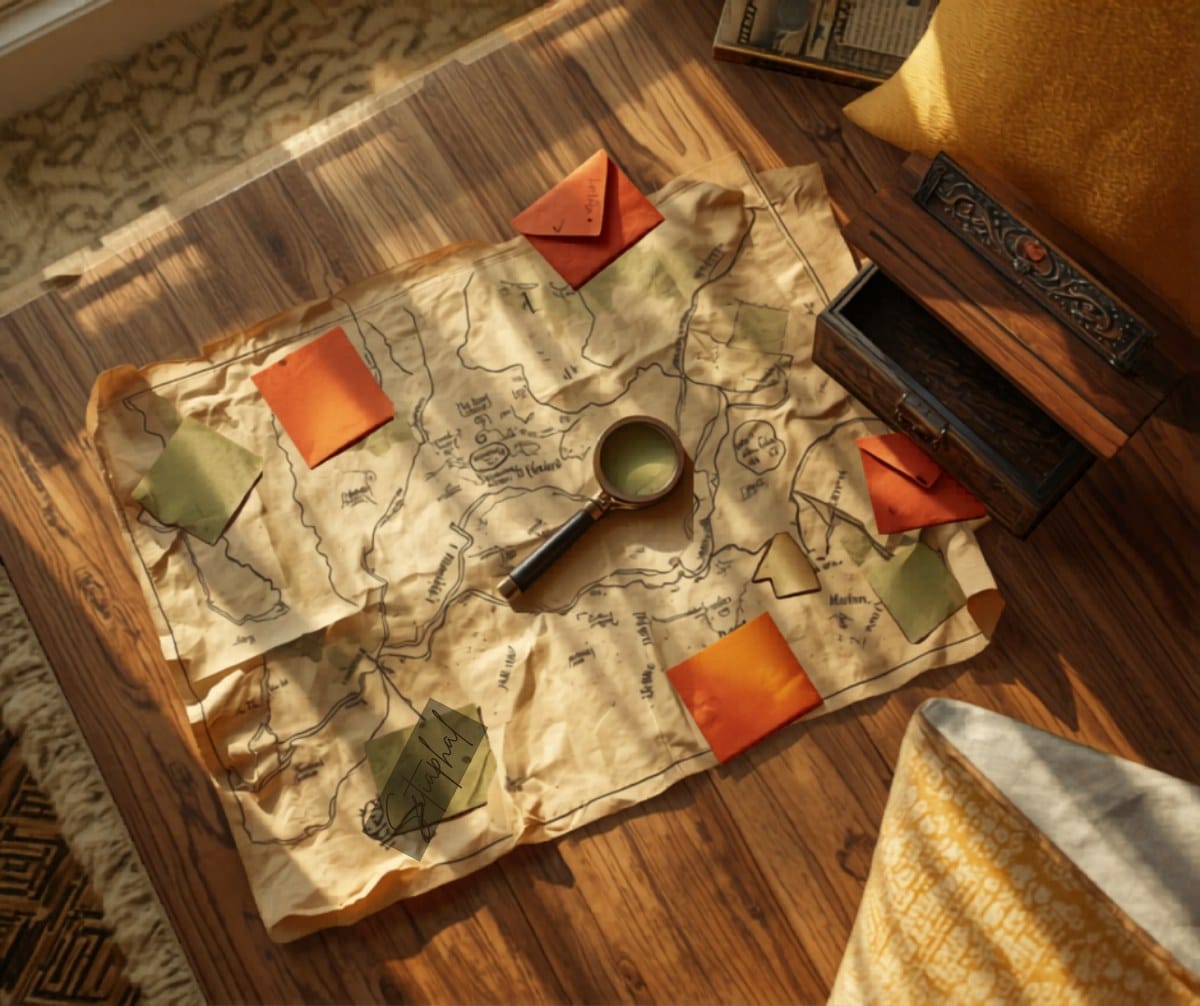
Why kids go absolutely wild for scavenger hunts
Every single time I set one up, the same thing happens: kids forget they’re at home. They become detectives, pirates, explorers. The outside world disappears. My eldest, who usually loses interest in activities within ten minutes, once spent 90 minutes hunting down clues I’d hidden around the flat — and asked to do it again the next day.
Beyond the fun, there’s real developmental value here. Scavenger hunts build reading comprehension (for written clues), spatial reasoning, team communication, and the kind of resilience that comes from trying a puzzle multiple times before cracking it. All of which they’re doing while thinking they’re just playing. That’s the magic.
25 indoor scavenger hunt ideas for kids — by theme
Here are my favourite themes, with specific ideas for each. Mix and match to build exactly the right hunt for your crew.
🌟 Classic clue-chain hunt (ages 5–10)
Each clue leads to the next hiding spot. Simple, endlessly replayable, and brilliant for building reading confidence in younger kids. Some starter rhyming clues:
- “I keep things cold and your drinks even colder — look behind me to find the next folder.” → Fridge
- “Every morning I help you wake up fresh — look underneath to find the next mesh.” → Pillow
- “Books are my friends and I hold them tight — look to my left to find your next site.” → Bookshelf
- “You stare at me for hours but I never talk back.” → TV
- “When it’s cold, I’m your best friend.” → Heater / radiator
🖼️ Picture scavenger hunt (ages 3–6)
No reading needed. Draw or print a simple picture of each hiding spot — the bath, the toy box, the front door — and let little ones match the image to the real place. A checklist version also works brilliantly: find something red, something soft, something that makes a noise, something square. Twenty minutes of focused, happy searching, guaranteed.
🎂 Birthday scavenger hunt
Hide small gifts or birthday surprises around the house, with each clue building anticipation. The final reveal — the birthday cake, a special present, or even just a bowl of popcorn before movie night — lands with incredible drama. Theme it around their current obsession (pirates, unicorns, dinosaurs) and watch the magic happen. For a truly special birthday hunt with a full printed scenario, puzzles, and props, our kids birthday escape room kits are designed exactly for this.
🏴☠️ Pirate treasure hunt (ages 6–12)
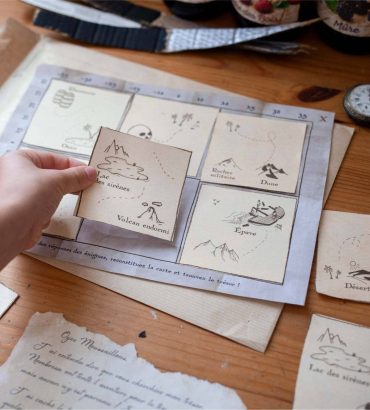
Turn your living room into a ship deck. Give everyone a pirate name. Sketch a treasure map on a piece of paper (kids love helping draw it, and lightly burning the edges for drama is a surprisingly effective touch). Send them on a quest for the “lost treasure of the seven seas.”
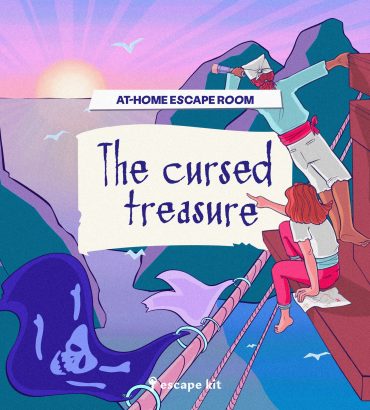
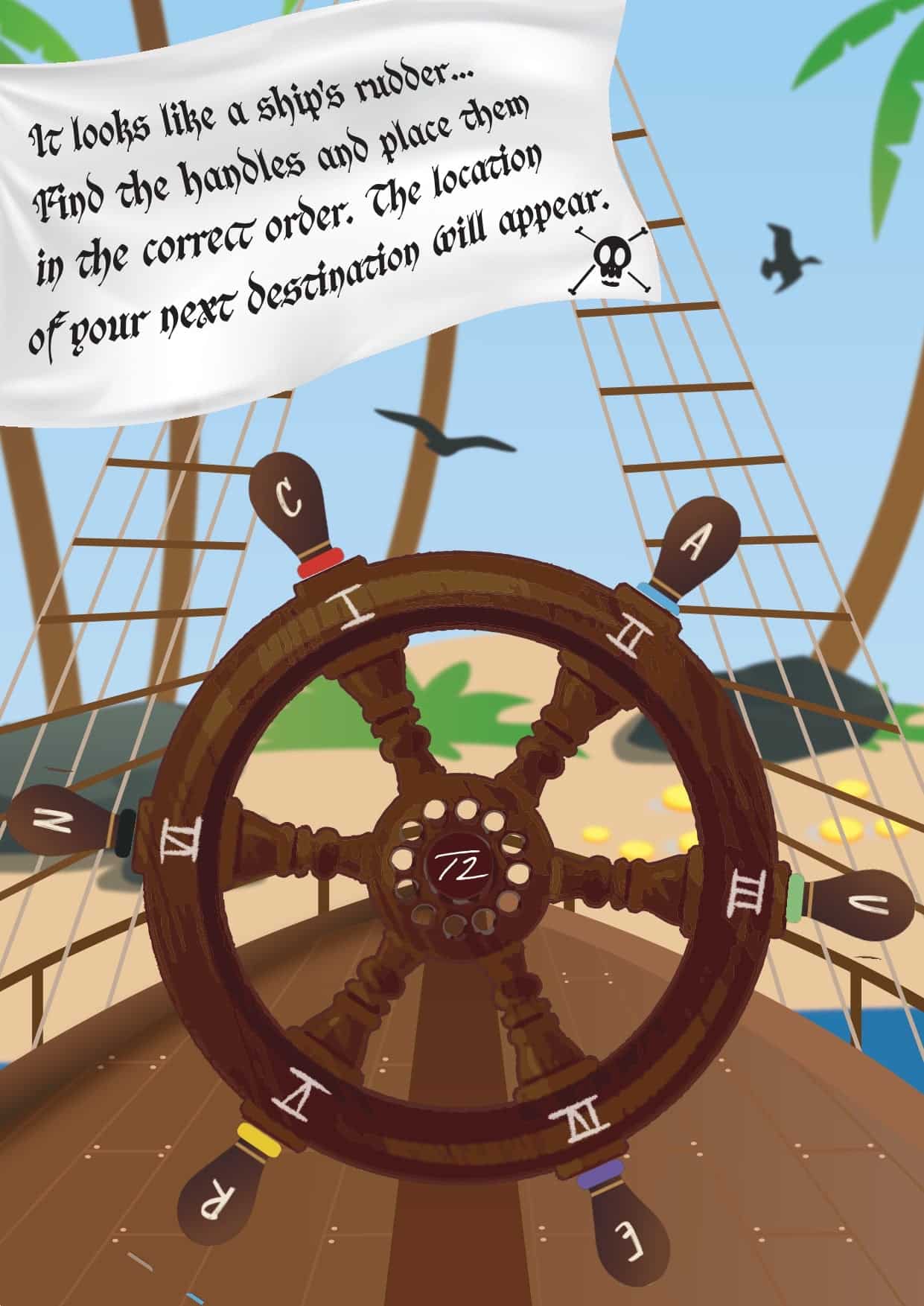
If you want the full experience — complete storyline, printable props, puzzles that escalate in difficulty — our pirate adventure kit is the one kids ask to replay:
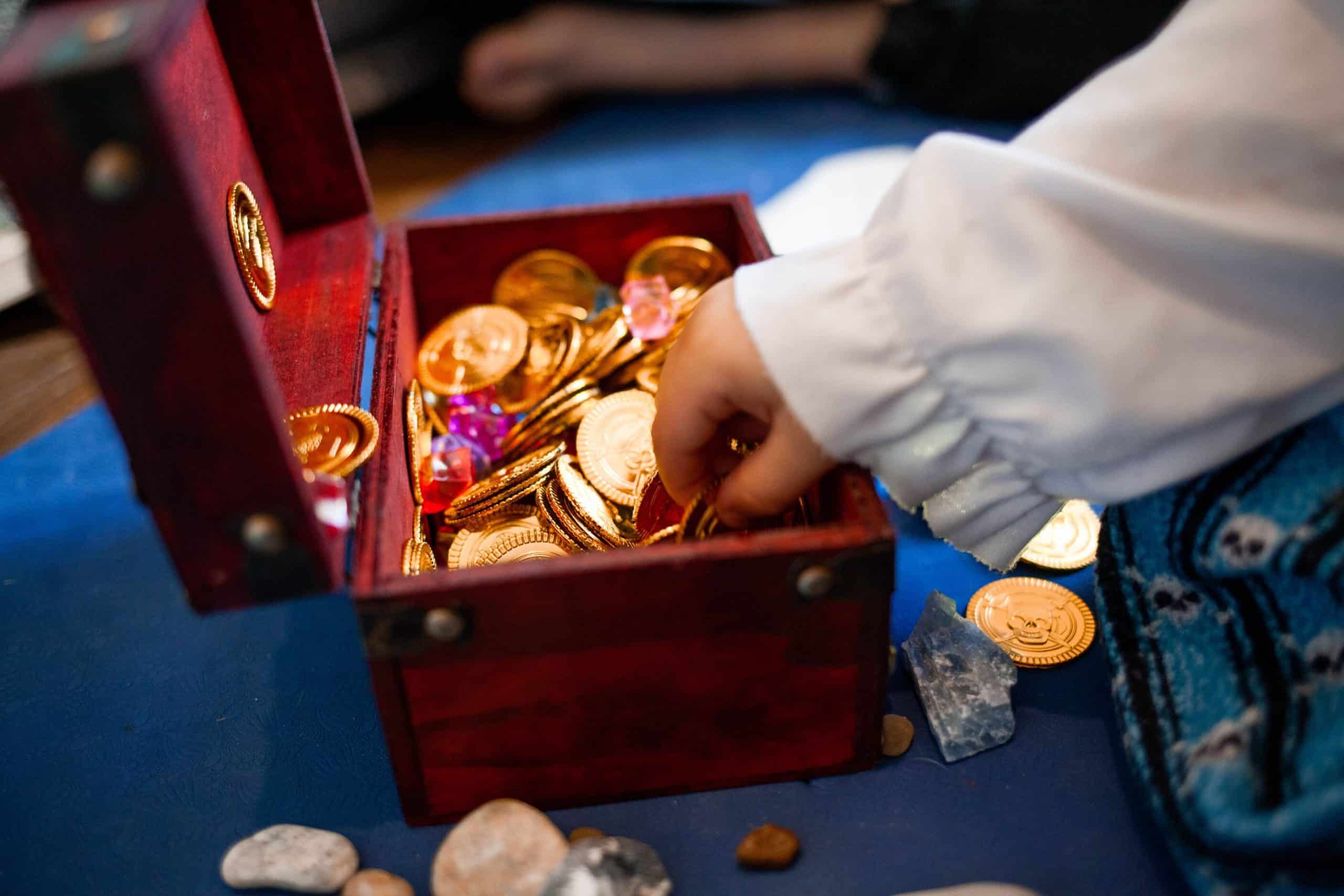
The Cursed Treasure
A full pirate treasure hunt with maps, coded clues, and a final treasure reveal. Print at home, set up in 30 minutes.
Ages 8–14 · From €20.69 · Download instantly
🧪 Science scavenger hunt (ages 7–12)
Clues are mini-experiments that reveal the next location. Mix baking soda and vinegar to uncover a hidden wax-crayon message. Use a phone blacklight app to read a clue written in lemon juice. Solve a maths puzzle where the answer equals the number of steps from the kitchen door. Science-loving kids will be in heaven.
🌍 Around-the-world hunt (ages 6–10)
Name each room after a country: the kitchen is France (boulangerie), the bathroom is Japan (onsen), the bedroom is Brazil (rainforest). Each clue is a mini cultural fact about that place. Kids learn geography without realising it — and you feel like a quietly brilliant parent.
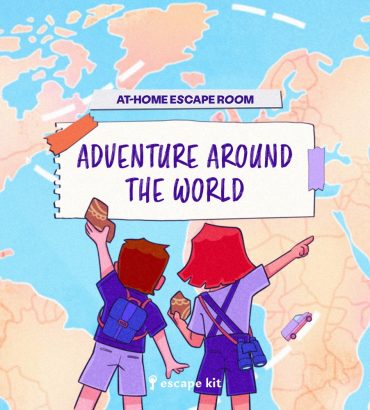
Our Adventure Around the World kit takes this concept to a fully built-out adventure — maps, passports, country puzzles, and printable props for ages 6–10. One of our most-loved kits for a good reason.
🕵️ Detective mystery hunt (ages 8–14)
There’s a mystery to solve — a stolen item, a missing pet, a suspicious disappearance. Kids gather clues, eliminate suspects, and piece together the evidence. This is the scavenger hunt format closest to a real escape room, and it works brilliantly for older kids who want a genuine challenge. Our Museum Investigation kit is perfect for this age group — a full detective scenario with a compelling whodunit storyline.
More theme ideas to spark inspiration
- Superhero mission — kids must recover a stolen object to save the world (great with our Superheroes kit for ages 7–11)
- Story-based hunt — base clues on a favourite book or film (Harry Potter, Jungle Book, Narnia)
- Glow-in-the-dark hunt — lights off, torches only, clues written in UV ink (phone blacklight app works)
- Backwards hunt — clues are partially visible and kids must “un-hide” them in reverse order
- Nature hunt indoors — find a smooth stone, a feather, something brown, something that smells nice
How to organise an indoor scavenger hunt: step by step
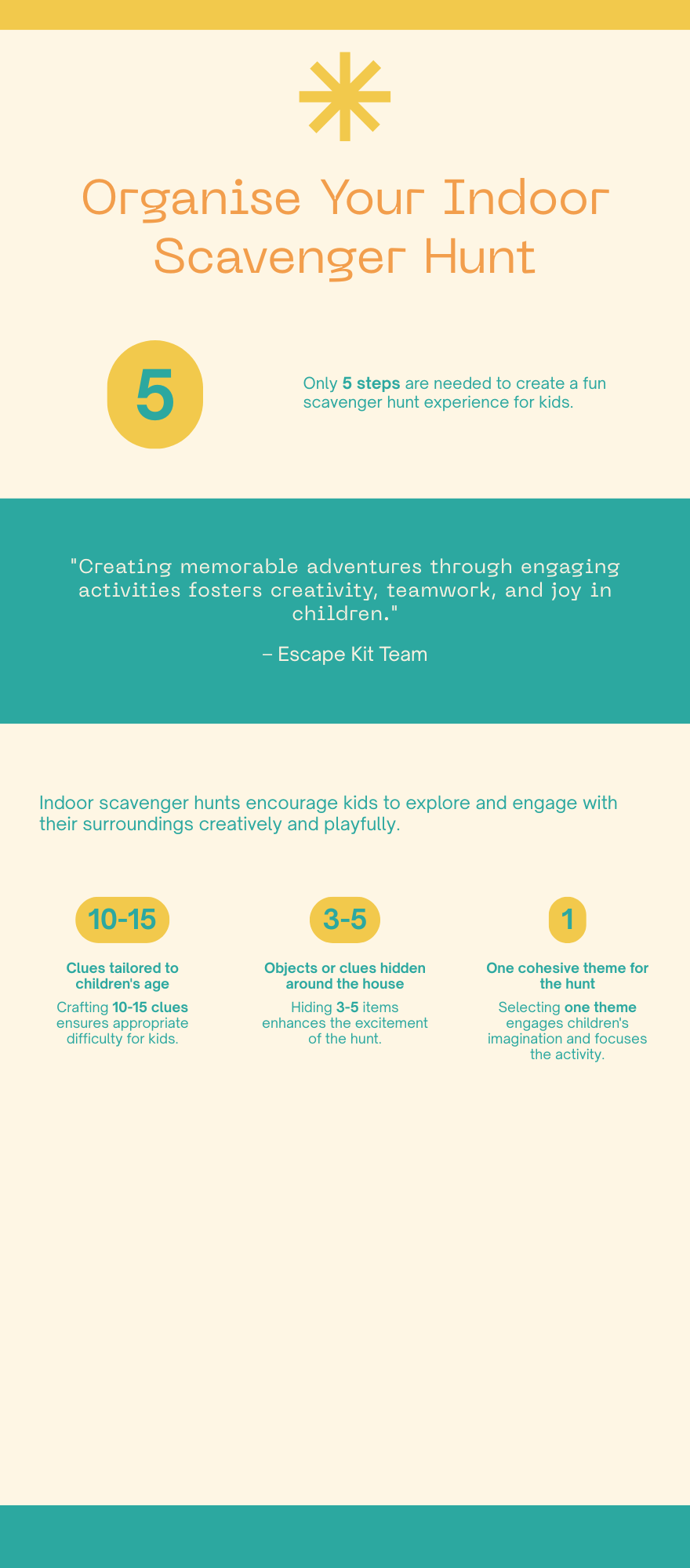
Step 1: Choose a theme
Theme everything — the clues, the prize, even the snacks. A themed hunt has ten times the energy of a generic one. Ask your child what world they’d love to enter right now: pirates? space? wizards? A good theme costs nothing but changes everything.
Step 2: Map out 6–10 hiding spots
Walk around your home and list spots where you can tuck a clue: under the sofa cushion, inside a shoe, behind the bathroom mirror, in the cereal box. Keep spots distinct enough that kids don’t stumble on a later clue by accident.
Step 3: Write clues — always work backwards
Here’s the single most useful tip I can give you: write your clues in reverse order. Start with the final prize location, write the clue that leads to it, then work backwards to the first clue. Each clue describes the next hiding spot. This is a genuine game-changer for flow and pacing. Use rhymes for younger kids, riddles or ciphers for older ones.
Step 4: Set the scene (5 minutes, worth every second)
Play themed background music (pirate shanties, space ambience, jungle sounds — all free on YouTube). Sketch a treasure map. Put on a costume element. You don’t need much — kids fill in the rest with their imagination. The atmosphere you create in the first 60 seconds sets the tone for the entire hunt.
Step 5: Brief your players dramatically
Gather everyone and build the stakes: “A fearsome pirate has hidden a legendary treasure somewhere in this very house. Only the cleverest adventurers in the land can find it before midnight…” Hand over the first clue and step back. The chaos that follows is entirely intentional.
20 ready-to-use indoor scavenger hunt clues
No time to write your own? Use these as-is or adapt them to your theme:
- “I’m cold inside but warm your heart — open me to find your start.” → Fridge
- “My job is to hold all the coats you wear. Look in my pocket if you dare.” → Coat pocket
- “I shine when it’s dark and I sit by your bed.” → Bedside lamp
- “Walk through me every morning to start your day.” → Front door
- “You stare at me for hours but I never talk back.” → TV
- “I’m tall and green and I live inside — but I’m not a person.” → Houseplant
- “I keep the soap and toothpaste in sight.” → Bathroom cabinet
- “Look where the shoes sleep at the end of the day.” → Shoe rack
- “Every good story starts with me.” → Bookshelf
- “When it’s cold, I’m your best friend.” → Radiator / heater
- “I hear everything but say nothing.” → Phone
- “I keep the time even when everyone sleeps.” → Clock / alarm
- “What’s the first thing you touch in the morning?” → Light switch
- “I catch the rain before it hits the floor.” → Umbrella
- “Look where the cat likes to sleep.” → Cat’s favourite spot
- “The thing you look in when you want to see yourself.” → Mirror
- “Where does mum or dad keep the teabags?” → Kitchen cupboard
- “I’m always on but I never get hot.” → Fridge (twist ending!)
- “I catch the mess before it reaches the floor.” → Bin
- “Everything starts and ends here.” → Front door (final clue)
Scavenger hunt tips by age — how to get it right every time
Ages 3–5: short, visual, magical
Five to six clues maximum, picture-based, and you stay close to guide them gently. At this age the adventure is everything — the actual puzzle is almost secondary. Always end with a treat and a big celebration. The Little Prince’s Journey kit (ages 3–6) is designed precisely for this age group — gentle, beautiful, and completely manageable for tiny hands and big imaginations.
Ages 6–9: the golden age for hunts
This is when scavenger hunts really sing. Old enough to read clues independently, young enough to be completely swept up in the story. Use 8–10 hiding spots, introduce a proper theme, and consider a competitive team format if you have multiple kids. Expect significant noise. That’s normal. That’s the point.
Ages 10–14: raise the stakes
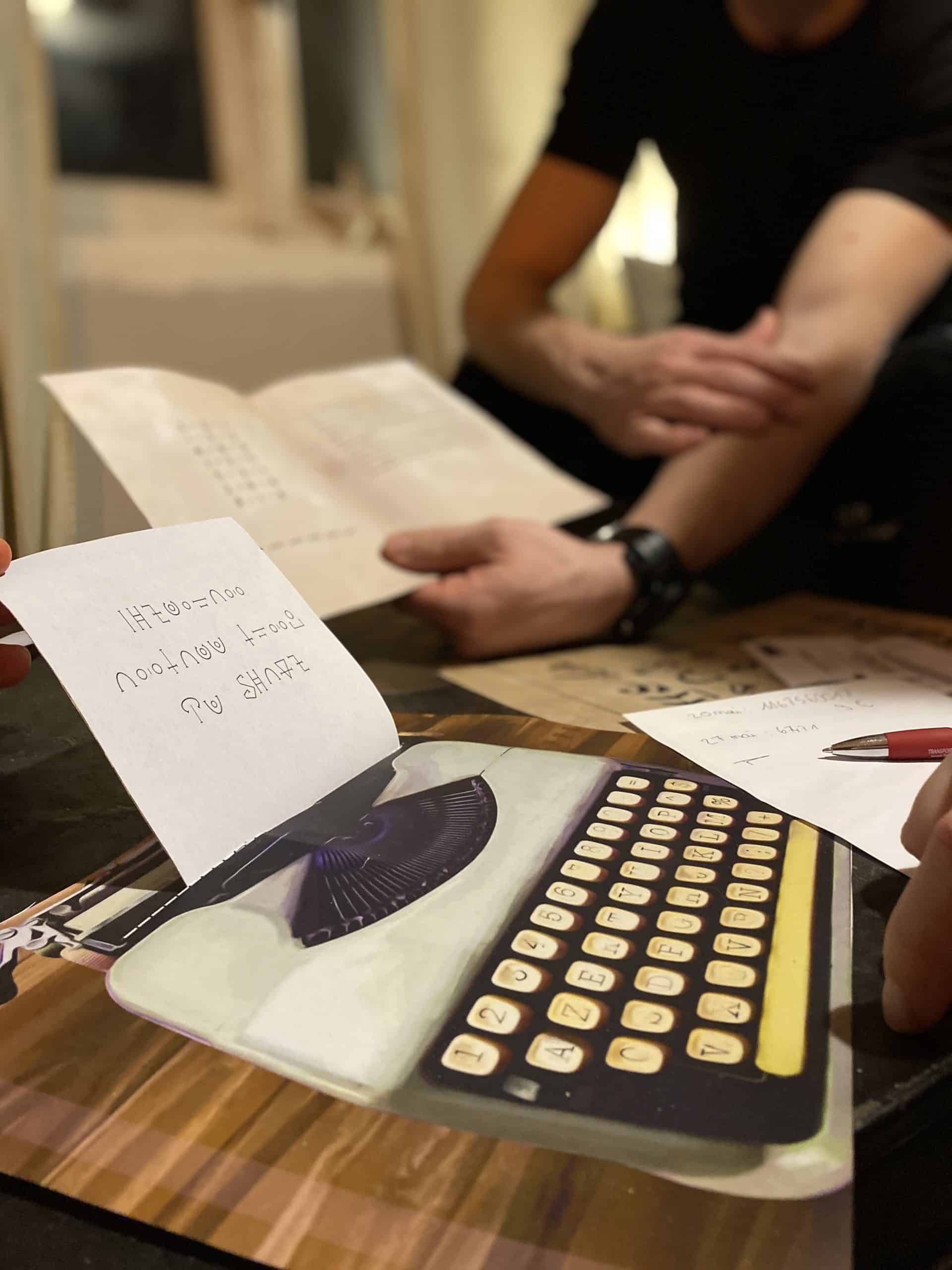
Older kids need more. Swap rhymes for ciphers, number codes, and logic puzzles. Add a visible countdown timer on a phone or tablet for time pressure. A detective-style mystery with a genuine “whodunit” element works brilliantly — and I say this having watched a group of 12-year-olds spend two hours completely absorbed in exactly this format.
Mixed ages: team them up, not against each other
Mixed-age groups work best when older kids are given a “mentor” role — they help the younger ones solve the harder clues rather than racing against them. Everyone feels needed and capable. It also, quietly, teaches the older ones some patience. Win-win.
Want the full adventure without the prep? Our printable kits do it all
Writing 10 custom clues on a weekday evening is completely doable — but if you’d rather spend that time doing literally anything else, that’s exactly what our kits are for. Every Escape Kit treasure hunt comes with a complete storyline, graduated puzzles, printable props, a countdown soundtrack, and a setup guide. Download the PDF, print it out, set up in 30 minutes, play for an hour. Kids rated them 9.3/10 across 250,000+ reviews. Satisfaction guaranteed or your money back.
Here are the kits that work best as indoor scavenger hunts, matched by age:
| Age | Kit | Theme | Price |
|---|---|---|---|
| 3–6 ans | The Little Prince’s Journey | Magical adventure | €20.69 |
| 7–11 ans | Superheroes Against Dr. Villain | Superhero mission | €20.69 |
| 8–14 ans | The Cursed Treasure | Pirate treasure hunt | €20.69 |
| 6–10 ans | Adventure Around the World | World explorer | €20.69 |
🎲 Try our interactive clue generator
Pick an age group and a theme — get 5 ready-to-use clues instantly.
Want 25+ professionally written clues with a full adventure storyline? See our kits →
Frequently asked questions about indoor scavenger hunts
What are the best indoor scavenger hunt ideas for kids on a rainy day?
A rainy day is genuinely the perfect scavenger hunt moment — no garden needed, the house becomes the world. All-time rainy day favourites: a glow-in-the-dark torch hunt with lights off, a multi-room hunt where each room has its own mini-treasure, or a fully printable kit from Escape Kit that turns into a 60-minute adventure with zero creativity required from you. Pair with hot chocolate and you’re golden.
What is the difference between a scavenger hunt and a treasure hunt?
In everyday life, the terms are interchangeable and both are correct. Technically, a scavenger hunt involves collecting a list of items or completing challenges, while a treasure hunt follows a chain of clues leading to a single final prize. Most home versions mix both. Call it whatever gets your kids most excited — the adventure is what matters.
How long should an indoor scavenger hunt last for kids?
For ages 3–6: 15–20 minutes with 5–6 clues is perfect — attention spans are short but the joy is real. For ages 6–12: 45–60 minutes with 10–15 clues is a sweet spot that keeps energy high without dragging. Our ready-made kits are designed to last around an hour, which is ideal for a birthday activity or a weekend afternoon.
What should the final prize be at the end of a scavenger hunt?
Honestly? The hunt itself is usually the real prize — kids get so invested in the journey that the final discovery is almost secondary. A small treat, a favourite snack, a book, or a printed “Official Treasure Hunter” certificate are all brilliant finishers. For a birthday hunt, the final clue leading to the birthday cake is the best possible reveal. Every single time.
How do I keep younger kids from getting frustrated during a scavenger hunt?
Keep clues short and hiding spots reasonably obvious. Stay nearby as the “Game Master” and offer gentle warm/cold hints if they get stuck — “ooh, you’re getting warmer!” keeps the energy alive without spoiling anything. For very young children, being the excited narrator of their adventure (“Oh! I think the next clue might be somewhere cold… very, very cold…”) makes you their favourite person in the room.
Looking for more family adventure ideas? Explore our guides on organising an escape room for large groups, how to create your own escape room at home, and the best kids escape room birthday party ideas.
 By ClémentFan of family board games and new technologies. My favorite Escape Kit is for sure the one about Arsène Lupin, "Arsène's Masterpiece"!